

The research team analyzed ancient melt inclusions and conducted advanced simulations to reconstruct the Hadean Eon, which spanned from 4.6 to 4.0 billion years ago. This era, which opened with the birth of the planet and was quickly followed by a dramatic collision with a Mars-sized object, has long been shrouded in mystery. The team's findings, published in Nature Communications, provide new insights into the Earth's infancy and suggest that the planet was not locked under a rigid stagnant lid, as previously thought.
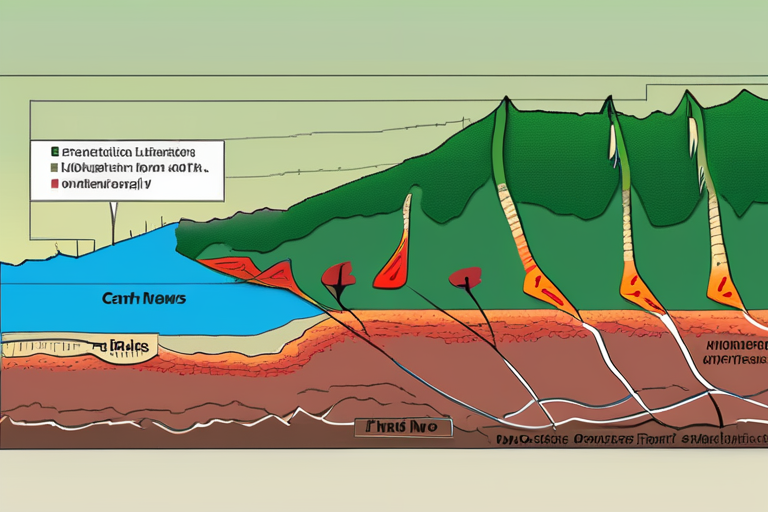
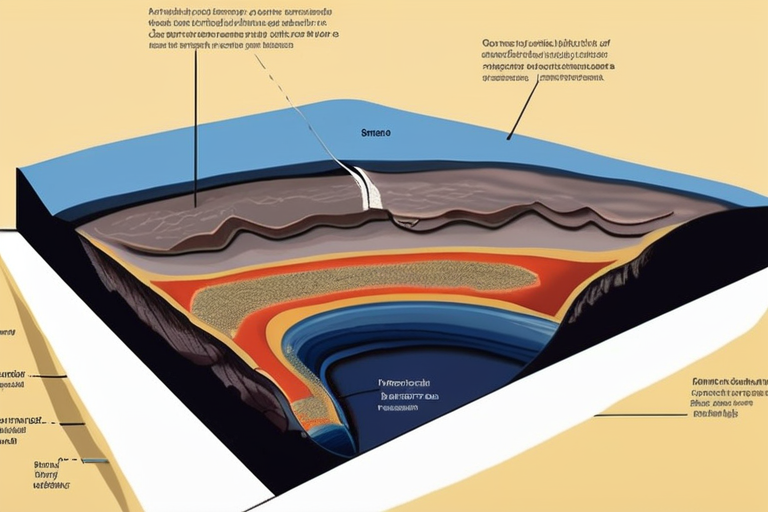
"We were surprised to find that the early Earth was already experiencing intense subduction, which is a process that shapes the Earth's surface by recycling crust," said Dr. A. Vezinet, lead author of the study. "This discovery has significant implications for our understanding of the Earth's evolution and the formation of continents."
The team's analysis of olivine cumulates from the Weltevreden Formation revealed that these ancient rocks still contain preserved unaltered olivine cores, despite being significantly altered over time. This finding suggests that the early Earth was already experiencing intense geological activity, including the formation of continents and the recycling of crust.
The discovery has significant implications for our understanding of the Earth's evolution and the formation of continents. "This study provides new evidence that the early Earth was a dynamic and active world, with processes that shaped the planet's surface in ways that we previously thought were impossible," said Dr. J. W. Morgan, a geologist at the University of California, Berkeley.
The findings also have implications for our understanding of the Earth's climate and the potential for life on the planet. "The early Earth was a very different place from the one we know today, with a much hotter and more hostile environment," said Dr. Vezinet. "However, our discovery suggests that the planet was already capable of supporting complex geological processes, which could have implications for the emergence of life."
The research team plans to continue studying the ancient rocks and conducting simulations to further understand the Earth's evolution. "We are excited to continue exploring the mysteries of the early Earth and to uncover new insights into the planet's history," said Dr. Vezinet.
The study's findings have been met with excitement and interest from the scientific community, with many experts hailing the discovery as a major breakthrough in our understanding of the Earth's evolution. As researchers continue to study the ancient rocks and conduct simulations, we can expect to learn more about the early Earth and its place in the history of our planet.
Ancient Crystals Unveil a Turbulent Early Earth, 3.3 Billion Years in the Making
1
0

Multi-Source Journalism
This article synthesizes reporting from multiple credible news sources to provide comprehensive, balanced coverage.

















Share & Engage Share
Share this article