

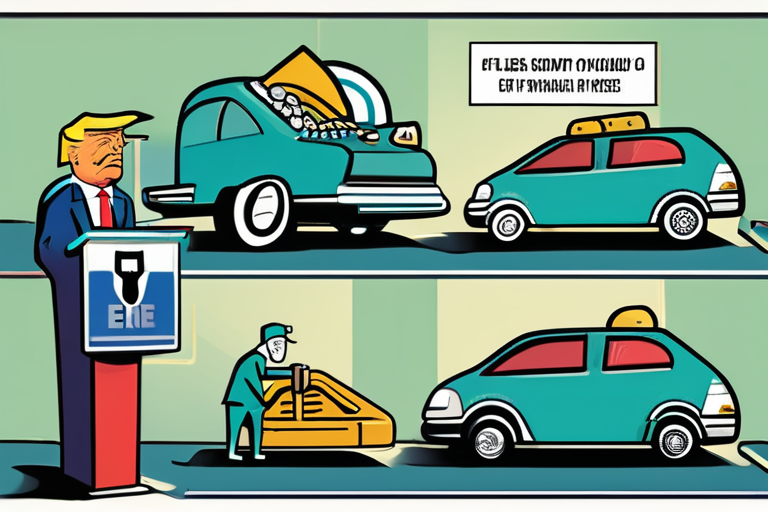
President Donald Trump announced a rollback of fuel economy standards for cars, undoing one of President Joe Biden's signature climate policies. The proposal would weaken emissions regulations for cars and light trucks that would otherwise encourage carmakers to produce more electric vehicles.
According to the White House, the Biden-era regulations would raise the cost of a new car by $1,000, and the repeal would save car owners $109 billion over the next five years. The move has been met with criticism from environmental groups, who argue that it will undermine efforts to reduce greenhouse gas emissions and combat climate change.
"We are rolling back a very bad regulation that was imposed by the previous administration," said a White House spokesperson. "This regulation was going to make cars more expensive, and it was going to make them perform worse. We are taking a step in the right direction by rolling it back."
However, environmental groups and some lawmakers disagree with the White House's assessment. "This is a devastating blow to our efforts to address climate change," said a spokesperson for the Sierra Club. "By rolling back fuel economy standards, the Trump administration is essentially giving a green light to the oil industry to continue polluting our air and our planet."
The rollback of fuel economy standards is just the latest example of the Trump administration's long-running hostility to environmental rules. The administration has also rolled back regulations on methane emissions, coal mining, and other environmental issues.
The proposal to weaken fuel economy standards was first announced in 2023, but it has been met with opposition from carmakers and environmental groups. The National Automobile Dealers Association has argued that the rollback will lead to higher costs for consumers and make it more difficult for carmakers to produce electric vehicles.
The current status of the proposal is unclear, but it is expected to face opposition from lawmakers and environmental groups. The proposal must still be approved by the Federal Register and will likely face legal challenges from environmental groups.
Trump Rolls Back Fuel Economy Standards, Boosting Car Costs and Emissions
1
0
Multi-Source Journalism
This article synthesizes reporting from multiple credible news sources to provide comprehensive, balanced coverage.















Share & Engage Share
Share this article