

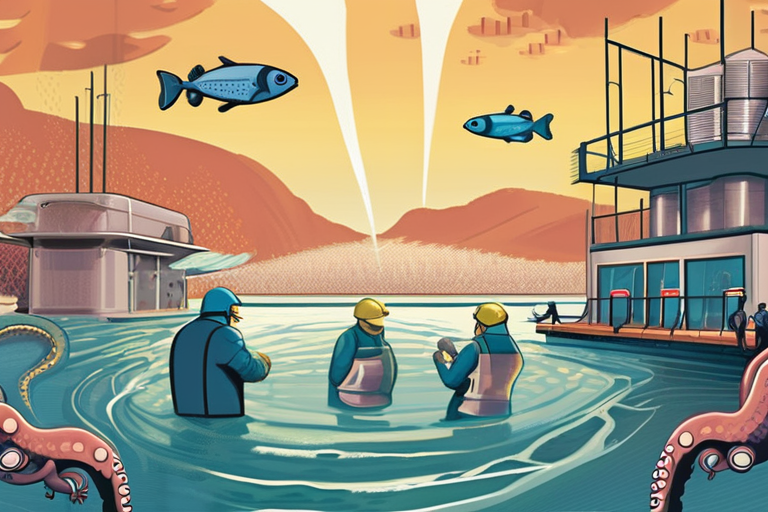
A Spanish seafood company, Nueva Pescanova, has announced plans to build the world's first octopus farm in the Canary Islands, sparking widespread opposition from animal welfare activists, ocean conservationists, and academics. The proposed farm would raise around 1 million octopuses annually in small tanks, where the animals would be kept for months until killed slowly and painfully in ice slurry.
According to Dr. Rachel Smolker, a marine biologist and member of the coalition opposing the farm, "Octopuses are highly intelligent and social creatures that are capable of complex behavior. Keeping them in small tanks for extended periods would be a form of prolonged torture, and their eventual death in ice slurry would be a slow and agonizing process." Dr. Smolker emphasized that the farm's design would not only be inhumane but also unsustainable, as octopuses are highly sensitive to their environment and would require constant monitoring and care.
The proposed farm has also raised concerns about the environmental impact of large-scale octopus farming. Dr. Smolker noted that octopuses are apex predators that play a crucial role in maintaining the balance of their ecosystems. "If we were to introduce a large number of octopuses into a controlled environment, it could have unintended consequences on the local ecosystem," she said.
The idea of octopus farming has been met with resistance from lawmakers in several countries. Last year, California and Washington state banned farming octopuses for their meat, and bills have been introduced in seven other states plus the US Senate to do the same. Lawmakers in Chile and Spain are also weighing a prohibition on farming octopuses.
Nueva Pescanova has defended its plans, citing the potential economic benefits of the farm. According to a company spokesperson, "Octopus farming has the potential to provide a sustainable source of protein for the global market, while also creating jobs and stimulating local economies." However, critics argue that the benefits of the farm would be outweighed by the costs, both environmental and social.
The coalition opposing the farm has called on Nueva Pescanova to reconsider its plans and explore more humane and sustainable alternatives. "We urge the company to prioritize animal welfare and environmental sustainability over profits," said Dr. Smolker. "There are better ways to produce seafood that do not involve harming intelligent and social creatures like octopuses."
As the debate over octopus farming continues, the fate of the proposed farm in the Canary Islands remains uncertain. The company has not yet announced a timeline for the project's completion, and it is unclear whether the farm will ultimately be approved. However, one thing is certain: the opposition to octopus farming is growing, and it will be up to lawmakers and industry leaders to decide whether this practice will become a reality.
Octopus Farming Sparks Global Backlash as World's First Facility Nears Completion
2
0

Multi-Source Journalism
This article synthesizes reporting from multiple credible news sources to provide comprehensive, balanced coverage.
























Share & Engage Share
Share this article