

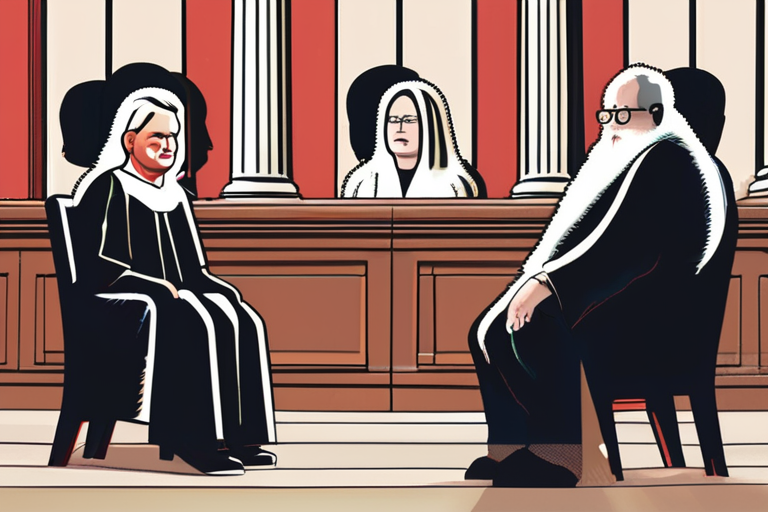
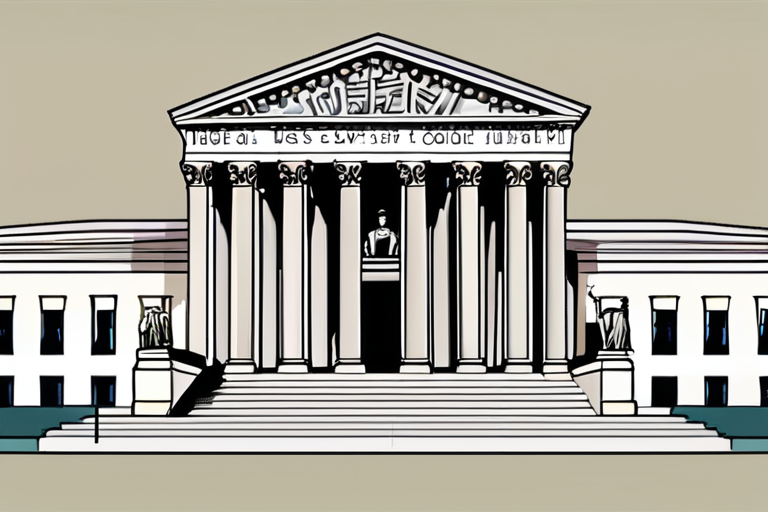
As the Supreme Court prepares to hear arguments in the case of Hamm v. Smith, a quiet revolution is brewing in the nation's highest court. The case, which centers on the constitutionality of executing individuals with intellectual disabilities, has the potential to redefine the concept of "cruel and unusual" punishment in the United States. For those who have been following the twists and turns of this case, the stakes are high, and the implications are far-reaching.
The story begins nearly a quarter century ago, when the Supreme Court issued its landmark decision in Atkins v. Virginia (2002). In a unanimous ruling, the Court held that executing individuals with intellectual disabilities was a form of cruel and unusual punishment, prohibited by the Eighth Amendment to the Constitution. The decision was a major victory for advocates of disability rights, and it marked a significant shift in the Court's approach to capital punishment.
But the Atkins decision was not without its limitations. The Court established a narrow standard for determining intellectual disability, one that has been criticized for being overly restrictive. As a result, many individuals with intellectual disabilities have been denied relief, even when their claims are strong. It is this very issue that the Supreme Court will be grappling with in the case of Hamm v. Smith.
The case centers on the defendant, who was convicted of murder and sentenced to death. His lawyers argue that he is intellectually disabled, and therefore, his execution would be a form of cruel and unusual punishment. However, the state of Texas, where the defendant was convicted, disputes this claim, arguing that the defendant's intellectual disability is not severe enough to warrant relief.
The Supreme Court's decision in this case will have far-reaching implications for individuals with intellectual disabilities who are accused of crimes. If the Court were to adopt a more lenient standard for determining intellectual disability, it could lead to a significant increase in the number of individuals who are granted relief from the death penalty. On the other hand, if the Court were to uphold the current standard, it could lead to a further erosion of the rights of individuals with intellectual disabilities.
Justice Neil Gorsuch, who has been a vocal critic of the Court's approach to capital punishment, has hinted that he may be open to rethinking the Court's approach to excessive punishments. In a 2019 opinion, he wrote, "The Eighth Amendment's prohibition on cruel and unusual punishments is not a static concept, but a dynamic one that must evolve to keep pace with the changing values of our society."
Gorsuch's opinion has been seen as a call to action for those who are seeking to reform the Court's approach to capital punishment. However, it remains to be seen whether the Court's current Republican majority will be willing to take up this challenge.
As the Supreme Court prepares to hear arguments in Hamm v. Smith, advocates for disability rights are holding their breath. They know that the stakes are high, and the implications are far-reaching. But they also know that this case represents an opportunity for the Court to do what is right, and to ensure that individuals with intellectual disabilities are treated with the dignity and respect they deserve.
In the end, the decision in Hamm v. Smith will be a test of the Court's commitment to justice and equality. Will the Court choose to uphold the current standard, or will it take a more lenient approach? Only time will tell. But one thing is certain: this case has the potential to redefine the concept of "cruel and unusual" punishment in the United States, and to have a lasting impact on the lives of individuals with intellectual disabilities.
Supreme Court Set to Redefine "Cruel and Unusual" in Landmark Intellectual Disability Case
2
0
Multi-Source Journalism
This article synthesizes reporting from multiple credible news sources to provide comprehensive, balanced coverage.

























Share & Engage Share
Share this article