

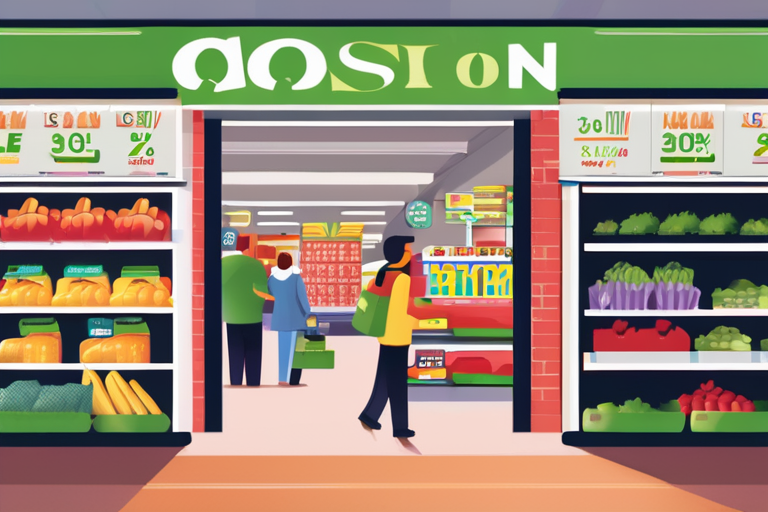
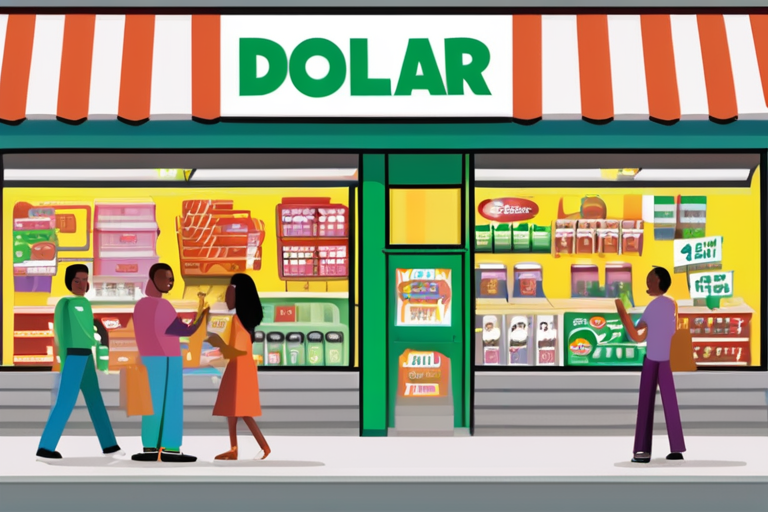
Dollar Tree and Dollar General reported significant growth in sales during the third quarter, with the discount retailers attracting a surge in customers from higher-income households. The trend underscores a deepening affordability crisis in the United States, where cumulative inflation has pushed prices up roughly 25% since 2020, while wage growth has not kept pace for most households.
According to Dollar Tree's CEO Michael Creedon Jr., the Virginia-based chain saw 60 new households earning more than $100,000 per year shop its stores in the third quarter, out of 3 million new households that shopped its stores during the same period. Creedon noted that higher-income households are trading into Dollar Tree, while lower-income households are relying on the discount retailer more than ever. Dollar Tree reported same-store sales growth of 4.2% during the quarter, with 85% of its sales priced at $2 or less.
Dollar General, the nation's largest dollar-store chain with nearly 21,000 locations, also reported similar dynamics in its earnings report. CEO Todd Vasos noted disproportionate growth coming from higher-income households in the third quarter, as same-store sales rose 2.5% on a 2.5% increase in customer traffic. The company's net profit climbed 44% to $282.7 million.
The trend highlights a growing divide in the American economy, where households are struggling to make ends meet despite rising prices. According to data from the Bureau of Labor Statistics, cumulative inflation has pushed prices up roughly 25% since 2020, while wage growth has not kept pace for most households. As a result, consumers across the income spectrum are hunting for deals, leading to a surge in sales at discount retailers like Dollar Tree and Dollar General.
Experts say the trend is a symptom of a broader economic issue. "The fact that higher-income households are shopping at dollar stores is a sign that the economy is not working for everyone," said Dr. Susan Baker, an economist at the University of California, Berkeley. "It's a sign that wages are not keeping pace with inflation, and that households are struggling to make ends meet."
The trend is also a reflection of changing consumer behavior, as households seek to stretch their budgets in a tight economy. "We're seeing a shift in consumer behavior, where households are looking for ways to save money and stretch their budgets," said Dr. David Johnson, a marketing expert at the University of Michigan. "Dollar stores are filling a gap in the market, offering affordable prices on essential items."
As the economy continues to navigate the affordability crisis, discount retailers like Dollar Tree and Dollar General are likely to remain popular destinations for households seeking to save money. However, experts say the trend also highlights the need for policymakers to address the underlying economic issues driving the crisis. "The fact that households are struggling to make ends meet is a sign that we need to do more to support workers and families," said Dr. Baker. "We need to address the root causes of the affordability crisis, rather than just treating the symptoms."
Higher-Income Households Flock to Discount Stores Amid Soaring Inflation
1
0
Multi-Source Journalism
This article synthesizes reporting from multiple credible news sources to provide comprehensive, balanced coverage.












Share & Engage Share
Share this article