

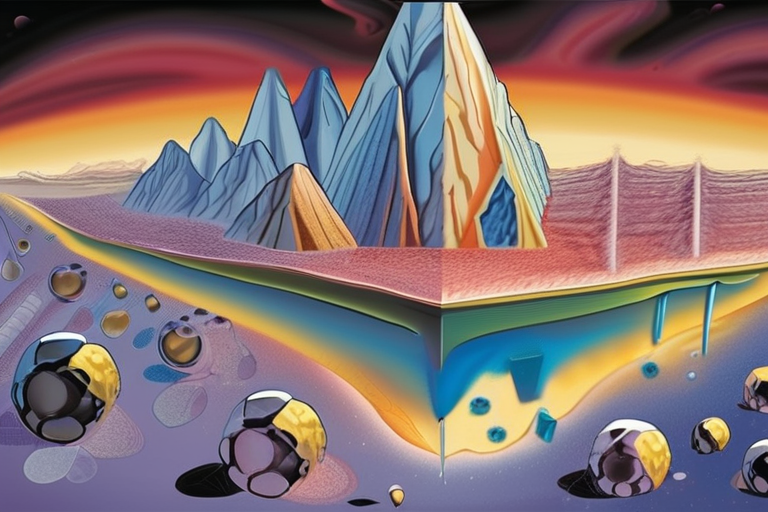
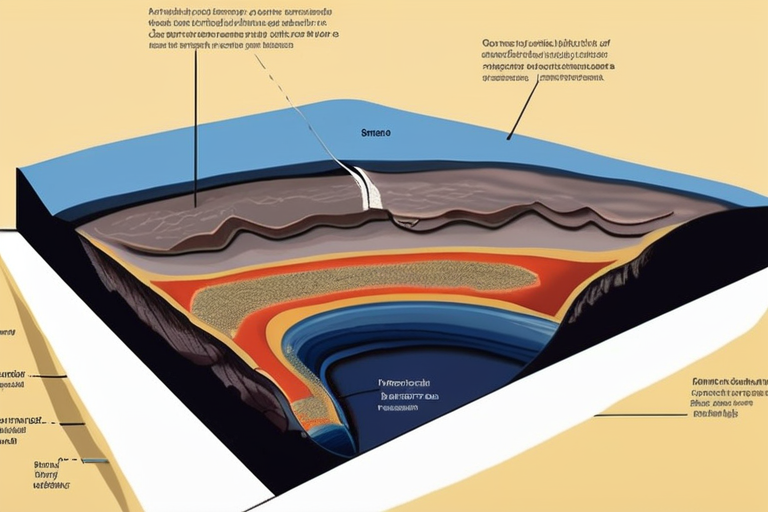
The researchers, led by Dr. A. Vezinet, analyzed the ancient melt inclusions within the crystals and used advanced simulations to recreate the conditions under which they formed. Their findings suggest that the early Earth was not a stagnant, rigid lid, as previously thought, but rather a dynamic and active world, with processes such as subduction and continental formation occurring much earlier than expected.
"We were surprised to find that the early Earth was already experiencing intense subduction, which is a process that we typically associate with more modern geological times," said Dr. Vezinet. "This challenges our understanding of the Hadean Eon and suggests that the Earth's early history was more complex and dynamic than we previously thought."
The discovery has significant implications for our understanding of the Earth's early history and the processes that shaped our planet. It also raises questions about the potential for life on early Earth and the possibility of similar processes occurring on other planets.
The Hadean Eon is a critical period in Earth's history, marking the transition from the planet's formation to the development of a stable crust. The new findings suggest that this period was more dynamic and complex than previously thought, with processes such as subduction and continental formation occurring in a relatively short period of time.
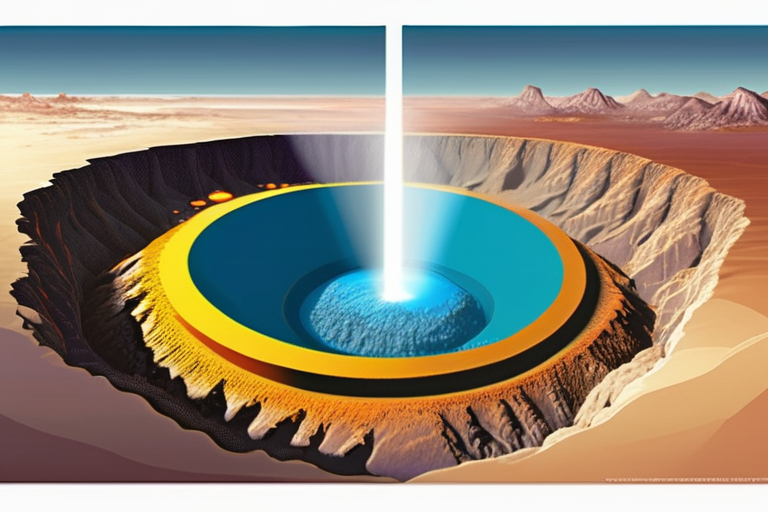
The research team used advanced simulations to recreate the conditions under which the crystals formed, including the temperature, pressure, and chemical composition of the Earth's mantle and crust. These simulations allowed them to model the formation of the crystals and the processes that occurred during the Hadean Eon.
The discovery of the 3.3 billion-year-old crystals and the analysis of their melt inclusions have provided a unique window into the Earth's early history. The findings have significant implications for our understanding of the Earth's evolution and the potential for life on early Earth.
The research team is now working to further analyze the crystals and the processes that occurred during the Hadean Eon. They are also exploring the potential for similar processes to occur on other planets and moons in our solar system.
In a related development, the GFZ Helmholtz-Zentrum für Geoforschung has announced plans to launch a new research initiative focused on the study of the Earth's early history and the processes that shaped our planet. The initiative, which will be led by Dr. Vezinet, will bring together researchers from around the world to study the Earth's early history and to explore the potential for life on early Earth.
The discovery of the 3.3 billion-year-old crystals and the analysis of their melt inclusions have provided a significant breakthrough in our understanding of the Earth's early history. The findings have significant implications for our understanding of the Earth's evolution and the potential for life on early Earth.
Early Earth Shaken, Not Stagnant: 3.3 Billion-Year-Old Crystals Reveal Dynamic Past
1
0
Multi-Source Journalism
This article synthesizes reporting from multiple credible news sources to provide comprehensive, balanced coverage.
















Share & Engage Share
Share this article