

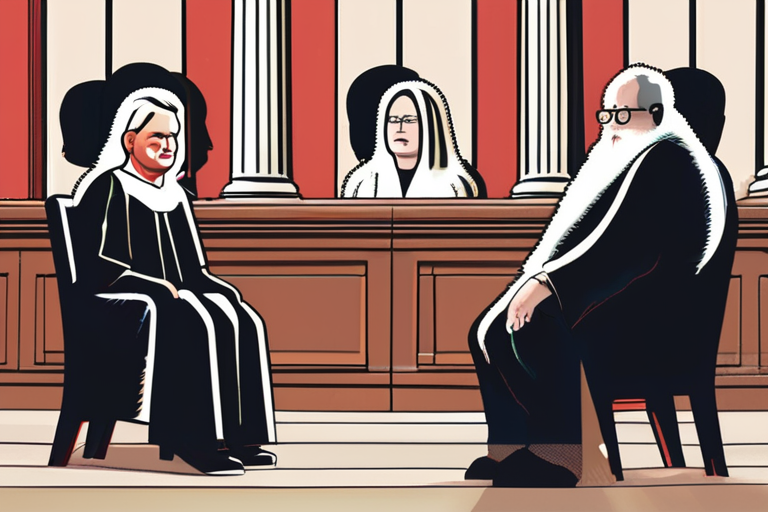
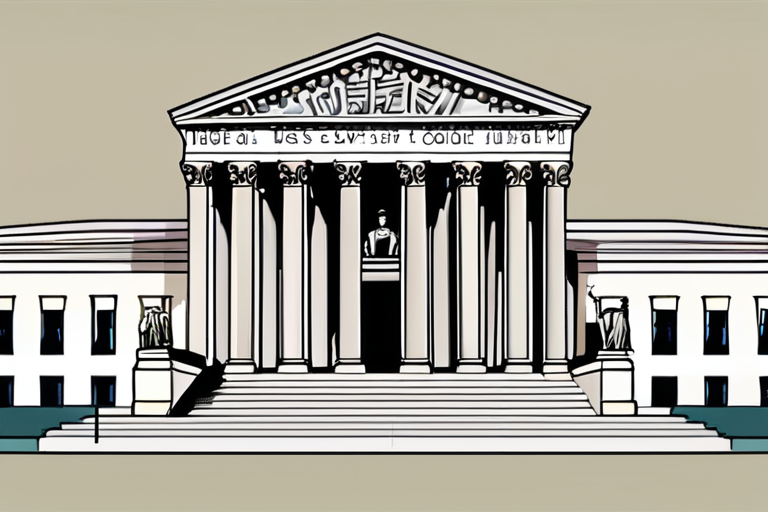
As the Supreme Court prepares to hear arguments in Hamm v. Smith, a case that could redefine the limits of "cruel and unusual" punishment, the nation is holding its breath. For decades, the Court has grappled with the question of whether it is constitutional to execute individuals with intellectual disabilities. But with a new conservative majority on the bench, the outcome of this case is far from certain.
The story of Hamm v. Smith begins with a man named Dustin Hamm, who was sentenced to death in 2014 for a crime he committed in 2013. Hamm's lawyers argued that he was intellectually disabled, and therefore ineligible for the death penalty under the Supreme Court's 2002 ruling in Atkins v. Virginia. But the state of Alabama disagreed, and Hamm's case has been making its way through the courts ever since.
At the heart of Hamm v. Smith is a question that has puzzled the Supreme Court for decades: what does it mean to be "intellectually disabled"? In Atkins v. Virginia, the Court held that executing individuals with intellectual disabilities was a form of cruel and unusual punishment, prohibited by the Eighth Amendment to the Constitution. But the Court also left open the question of how to determine whether an individual is intellectually disabled in the first place.
In the years since Atkins, the Court has struggled to provide a clear answer to this question. In a 2017 case called Moore v. Texas, the Court held that states could use a variety of methods to determine intellectual disability, including the use of IQ tests and other clinical evaluations. But the Court also emphasized that these methods must be used in a way that is "consistent with the Court's decision in Atkins."
Now, in Hamm v. Smith, the Supreme Court is being asked to revisit this question once again. The case involves a man named Vernon Madison, who was sentenced to death in 1985 for a crime he committed in 1983. Madison's lawyers argue that he is intellectually disabled, and therefore ineligible for the death penalty. But the state of Alabama disagrees, and the case has been making its way through the courts ever since.
The implications of Hamm v. Smith are far-reaching. If the Court were to rule that states have too much leeway to determine intellectual disability, it could lead to a significant increase in the number of executions of individuals with intellectual disabilities. This, in turn, could have a profound impact on the lives of individuals with intellectual disabilities and their families.
"It's not just about the individuals who are at risk of being executed," says Rachel King, a lawyer with the National Disability Rights Network. "It's about the message that this sends to society as a whole. If we're willing to execute people with intellectual disabilities, what does that say about our values as a society?"
The Supreme Court's decision in Hamm v. Smith will also have significant implications for the broader debate over capital punishment in the United States. If the Court were to rule that states have too much leeway to determine intellectual disability, it could be seen as a victory for those who argue that the death penalty is too often applied in a way that is arbitrary and capricious.
But the outcome of Hamm v. Smith is far from certain. In a 2019 opinion, Justice Neil Gorsuch seemed to call for a wholesale rethinking of the Supreme Court's approach to excessive punishments. And with a new conservative majority on the bench, it's possible that the Court could take a more lenient view of the death penalty.
As the Supreme Court prepares to hear arguments in Hamm v. Smith, the nation is holding its breath. Will the Court continue to uphold the limits on capital punishment established in Atkins v. Virginia, or will it take a more lenient view of the death penalty? Only time will tell.
In the meantime, the case of Hamm v. Smith serves as a reminder of the ongoing struggle to define what it means to be "cruel and unusual." As the Supreme Court grapples with this question, it's clear that the stakes are high. The outcome of this case will have significant implications for individuals with intellectual disabilities, their families, and the broader debate over capital punishment in the United States.
Supreme Court Set to Redefine Limits of "Cruel and Unusual" Punishment
1
0

Multi-Source Journalism
This article synthesizes reporting from multiple credible news sources to provide comprehensive, balanced coverage.

























Share & Engage Share
Share this article