

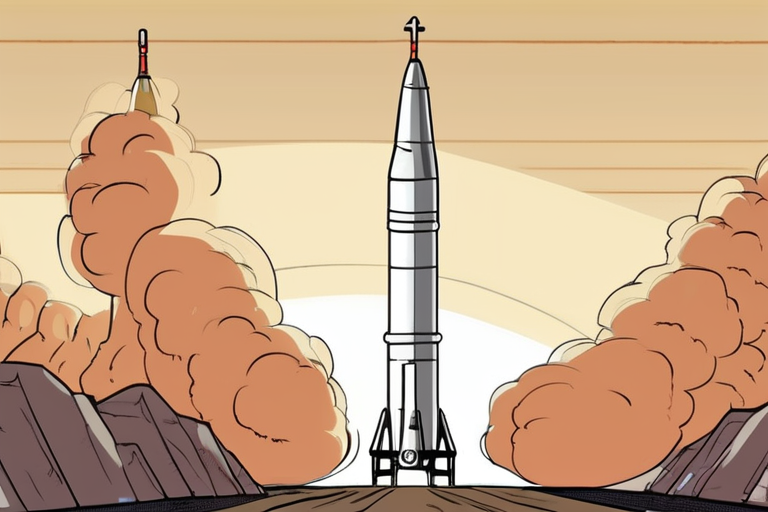
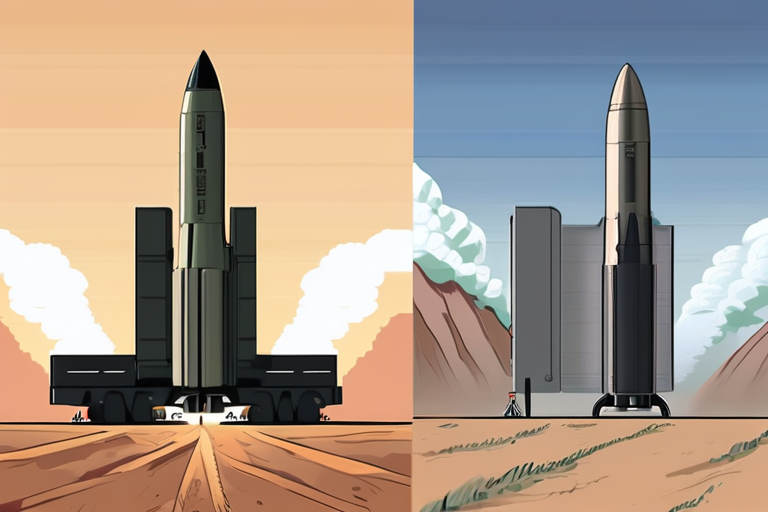
Russian officials reported a failure in a test launch of the Sarmat intercontinental ballistic missile (ICBM) from an underground silo on the country's southern steppe on November 28. The scheduled test was intended to deliver a dummy warhead to a remote location, but the rocket reportedly malfunctioned and did not reach its intended target. This incident marks the second failure of the Sarmat program in recent months, raising concerns about the reliability of Russia's nuclear deterrent.
According to sources, the Sarmat ICBM is a critical component of Russia's nuclear arsenal, designed to carry multiple warheads and evade missile defense systems. The rocket's failure has sparked debate among experts about the need for rocket engines in launchers. Some argue that the use of rocket engines is a relic of the past, and that alternative propulsion systems, such as electric propulsion or air-breathing engines, could provide more efficient and reliable launches.
"We're seeing a shift in the industry towards more efficient and sustainable propulsion systems," said Dr. Maria Rodriguez, a leading expert in rocket propulsion. "The use of rocket engines is not only wasteful but also poses significant environmental risks. We need to explore alternative options that can reduce the carbon footprint of space launches."
The Sarmat program has faced several setbacks in recent years, including a failed test launch in 2020. The latest failure has raised concerns about the program's timeline and budget. Russian officials have yet to comment on the cause of the malfunction or the impact on the program's schedule.
The incident has also sparked debate about the role of AI in space exploration. Some experts argue that AI can play a critical role in improving the reliability and efficiency of space launches. "AI can help us identify potential issues before they become major problems," said Dr. John Lee, a leading expert in AI for space exploration. "By analyzing data from previous launches and identifying patterns, we can develop more accurate predictive models that can help us avoid failures like the one we saw with the Sarmat."
The Sarmat program is expected to continue despite the latest setback. Russian officials have vowed to press on with the development of the ICBM, despite the challenges and setbacks. The incident serves as a reminder of the complexities and risks involved in space exploration and the need for continued innovation and investment in new technologies.
As the space industry continues to evolve, experts predict that we will see a shift towards more efficient and sustainable propulsion systems. The use of rocket engines may become less common, replaced by alternative options that can reduce the environmental impact of space launches. The Sarmat program's latest failure serves as a reminder of the importance of innovation and investment in new technologies to ensure the continued success of space exploration.
Rocket Report: Sarmat ICBM Test Fails at Baikonur, Raising Questions About Launcher Design
1
0
Multi-Source Journalism
This article synthesizes reporting from multiple credible news sources to provide comprehensive, balanced coverage.






















Share & Engage Share
Share this article