

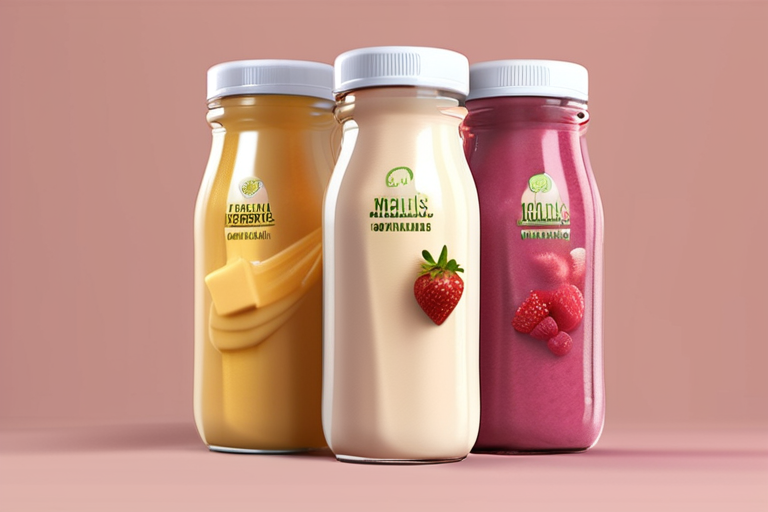
Shares of meal replacement shake companies have seen a significant surge in popularity in recent years, with many consumers turning to these products as a convenient and healthy alternative to traditional meals. According to market research, the global meal replacement shake market is expected to reach $13.8 billion by 2025, up from $3.5 billion in 2020.
Industry experts attribute the growth to the increasing demand for convenient and healthy food options, particularly among busy professionals and individuals with active lifestyles. "Meal replacement shakes have become a staple in many people's diets, offering a quick and easy way to get the nutrients they need," said Dr. Emily Chen, a nutritionist at the University of California, Los Angeles. "They're particularly popular among fitness enthusiasts and individuals with dietary restrictions, such as vegans and gluten-free dieters."
The market is dominated by several key players, including Huel, Hlth Code, Soylent, and SlimFast. These companies offer a range of products, from high-protein meal replacement shakes to low-calorie options designed for weight loss. According to Amazon sales rankings, Huel's Black Edition RTD High-Protein Meal is the best-selling meal replacement shake, followed closely by Hlth Code's Complete Meal Replacement Shake and Soylent's High Protein Nutrition Shake.
The rise of meal replacement shakes has also sparked concerns about the impact on traditional food industries and the potential consequences for public health. "While meal replacement shakes can be a convenient option, they should not be relied upon as a sole source of nutrition," said Dr. David Katz, a physician and nutrition expert at Yale University. "A balanced diet that includes a variety of whole foods is still the best way to ensure optimal health and well-being."
Despite these concerns, the meal replacement shake industry continues to grow, with new products and innovations emerging regularly. For example, Huel has recently launched a new line of meal replacement shakes made with plant-based protein sources, while Soylent has introduced a range of low-calorie options designed for weight loss.
In addition to the growing demand for meal replacement shakes, the industry is also being driven by advances in food technology and the increasing use of artificial intelligence (AI) in product development. "AI is being used to create personalized meal replacement shakes that cater to individual nutritional needs and preferences," said Dr. Rachel Kim, a food scientist at the Massachusetts Institute of Technology. "This is a game-changer for the industry, as it allows companies to create products that are tailored to specific consumer needs."
As the meal replacement shake industry continues to evolve, it remains to be seen how it will impact traditional food industries and public health. However, one thing is clear: the demand for convenient and healthy food options is here to stay, and meal replacement shakes are likely to remain a popular choice for many consumers.
Meal Replacement Shakes: The Surging Market That's Redefining Nutrition
1
0
Multi-Source Journalism
This article synthesizes reporting from multiple credible news sources to provide comprehensive, balanced coverage.


























Share & Engage Share
Share this article