

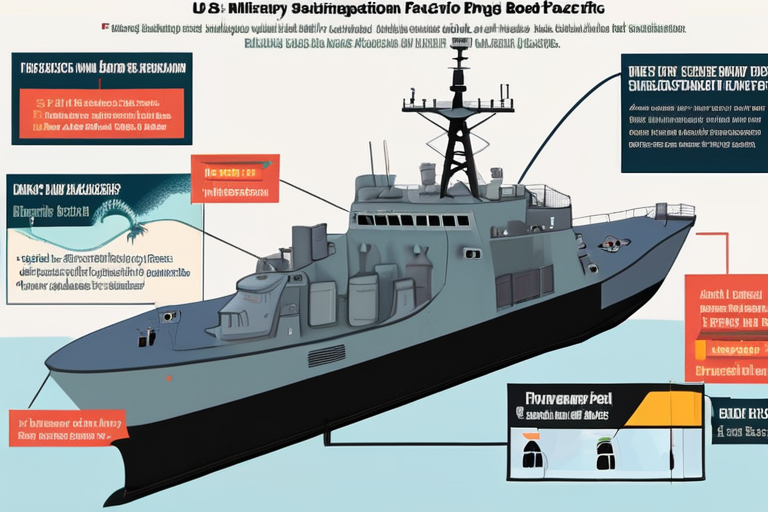
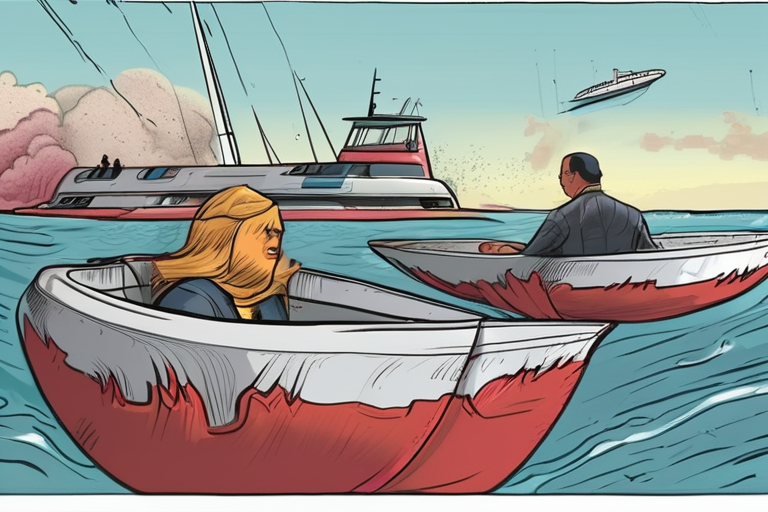
Defense Secretary Pete Hegseth faced scrutiny on two fronts yesterday as lawmakers viewed video of the deadly September strikes on an alleged drug boat in the Caribbean. The strikes, which killed two survivors, were the subject of a closed-door meeting where lawmakers addressed questions about the incident. Hegseth was also faulted for using Signal to discuss a U.S. attack on Yemen, raising concerns about the use of encrypted messaging apps by government officials.
Lawmakers viewed footage of the September strikes, which were carried out by U.S. forces in the Caribbean. The strikes killed two survivors and raised questions about the use of force in the region. "We need to understand the circumstances surrounding these strikes and ensure that they were carried out in accordance with international law," said a congressional aide, who spoke on condition of anonymity.
The use of Signal by Hegseth has also raised concerns about the use of encrypted messaging apps by government officials. Signal is a popular encrypted messaging app that is designed to provide secure communication. However, its use by government officials has raised questions about the potential for unauthorized access to sensitive information.
The incident has sparked a debate about the use of force in the Caribbean and the role of encrypted messaging apps in government communication. "The use of Signal by government officials is a concern because it raises questions about the security of our communication systems," said a cybersecurity expert. "We need to ensure that our communication systems are secure and that we are not putting sensitive information at risk."
The incident has also raised questions about the accountability of government officials for their use of encrypted messaging apps. "We need to have a clear policy on the use of encrypted messaging apps by government officials and ensure that they are held accountable for their actions," said a congressional aide.
The incident is currently under investigation, and lawmakers are expected to hold further hearings on the matter. The outcome of the investigation and the potential consequences for Hegseth and other government officials remain to be seen.
Meanwhile, a separate investigation into the January 6 pipe bomb suspect has identified a suspect, but the individual's identity has not been publicly disclosed. The suspect is believed to have planted a pipe bomb near the U.S. Capitol on January 6, 2021, during the storming of the building by a mob of Trump supporters. The incident was widely condemned, and the suspect is believed to have been motivated by extremist ideology.
The investigation into the January 6 pipe bomb suspect is ongoing, and the suspect's identity is expected to be disclosed in the coming days. The incident has sparked a debate about the threat of domestic extremism and the need for increased security measures to prevent similar incidents in the future.
In related news, a Texas court has ruled that the state's redistricting plan is unconstitutional, citing concerns about racial gerrymandering. The ruling has sparked a debate about the role of politics in the redistricting process and the need for increased transparency and accountability.
The ruling has also raised questions about the potential impact on the 2024 elections. "This ruling has significant implications for the 2024 elections and the future of democracy in Texas," said a voting rights expert. "We need to ensure that the redistricting process is fair and transparent to prevent the manipulation of electoral outcomes."
Defense Secretary Faces Scrutiny Over Deadly Boat Strike and Jan 6 Pipe Bomb Suspect
1
0

Multi-Source Journalism
This article synthesizes reporting from multiple credible news sources to provide comprehensive, balanced coverage.





















Share & Engage Share
Share this article