

A Shift in Vaccination Policy: What the Science Says About Hepatitis B in Newborns
In a move that has left many in the medical community stunned, a top US vaccine advisory panel has voted to roll back a decades-old recommendation that all newborns receive a hepatitis B vaccine shortly after birth. The decision, which was made after more than a day of discussion, has sparked a heated debate about the implications of this change on public health and the lives of newborns.
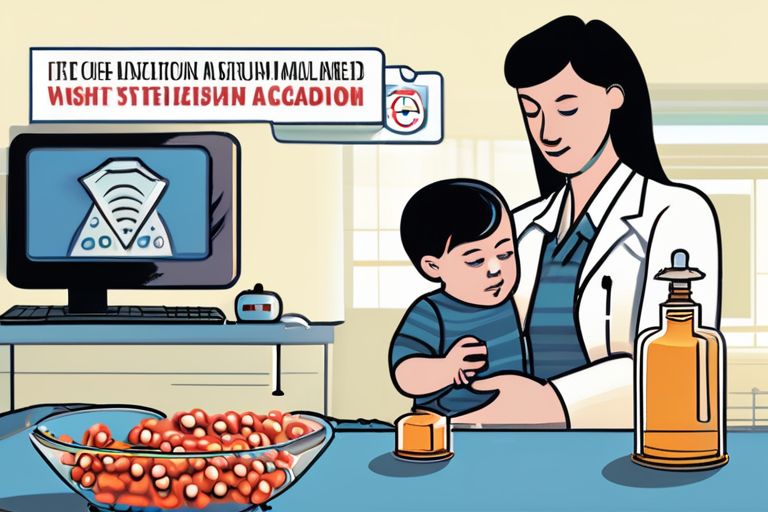
For decades, the US Advisory Committee on Immunization Practices (ACIP) has recommended that all newborns receive a hepatitis B vaccine shortly after birth, a measure that has been associated with a sharp decline in mother-to-child transmission of the hepatitis B virus, which causes liver disease. However, the ACIP has now voted to recommend that decisions about hepatitis B vaccination be made individually, suggesting that babies who do not receive a birth dose of the vaccine be vaccinated no earlier than the age of two months.
The decision was made after a review of the existing evidence on the effectiveness of the hepatitis B vaccine in preventing mother-to-child transmission of the virus. While the vaccine has been shown to be highly effective in preventing transmission, the ACIP has raised concerns about the potential risks associated with administering the vaccine to newborns, particularly in cases where the mother's hepatitis B status is unknown.
For babies born to mothers who have tested positive for the virus, or whose mothers infection status is unknown, the ACIP still recommends that newborn vaccination be given. However, for babies born to mothers who have tested negative for the hepatitis B virus, the decision to vaccinate will now be made on a case-by-case basis.
The implications of this change are far-reaching and have significant implications for public health. According to the Centers for Disease Control and Prevention (CDC), hepatitis B is a major public health concern, with over 4,000 new cases reported in the US each year. The virus can cause liver disease, liver cancer, and even death, making it a serious threat to public health.
Dr. Peter Hotez, a leading expert on vaccine development and policy, expressed concerns about the implications of this change. "The decision to roll back the recommendation for universal hepatitis B vaccination in newborns is a step backward for public health," he said. "We have a proven vaccine that has been shown to be highly effective in preventing mother-to-child transmission of the virus. By rolling back this recommendation, we risk leaving newborns vulnerable to a serious and potentially life-threatening disease."
Others, however, argue that the decision is a necessary step towards reducing the risks associated with administering the vaccine to newborns. "We need to be careful about how we administer vaccines to newborns," said Dr. Paul Offit, a pediatrician and vaccine expert. "While the hepatitis B vaccine is highly effective, it's not without risks. By giving the vaccine at birth, we may be exposing newborns to unnecessary risks. This decision is a step towards reducing those risks and ensuring that we are using vaccines in the most effective and safest way possible."
As the debate continues, one thing is clear: the decision to roll back the recommendation for universal hepatitis B vaccination in newborns is a complex one that has significant implications for public health. While some argue that the decision is a necessary step towards reducing risks, others see it as a step backward for public health. Ultimately, the decision will be made by the director of the CDC, who will review the ACIP's recommendations and make a final decision.
As the medical community continues to grapple with the implications of this change, one thing is clear: the science is complex, and the decision is not a simple one. However, by examining the evidence and considering the perspectives of experts, we can begin to understand the implications of this change and what it means for public health.
US Vaccine Panel Votes to Reconsider Hepatitis B Vaccine for Newborns
1
0

Multi-Source Journalism
This article synthesizes reporting from multiple credible news sources to provide comprehensive, balanced coverage.




















Share & Engage Share
Share this article