

Researchers at the University of Tokyo and a U.S.-based structural engineer have developed a new computational form-finding method that significantly speeds up the process of designing complex curved structures, such as gridshells. The technique, which utilizes NURBS surfaces, a widely used surface representation format in computer-aided design (CAD), can now complete tasks that previously took 90 hours on a high-end GPU in about 90 minutes on a standard CPU.
According to Dr. Masaaki Miki, the researcher from the University of Tokyo who led the development of the new method, "This breakthrough has the potential to revolutionize the way architects and engineers design lightweight and free-form structures covering large spaces. Our technique can be applied to a wide range of applications, from sports stadiums to concert halls, and even to the design of laminated timber gridshells, which can be fabricated using computer numerical control (CNC) technologies."
The new method is based on a combination of NURBS surfaces and a novel optimization algorithm that allows for the efficient computation of complex curved structures. This approach enables architects and engineers to create more creative and practical designs, while also reducing the computational cost associated with traditional methods.
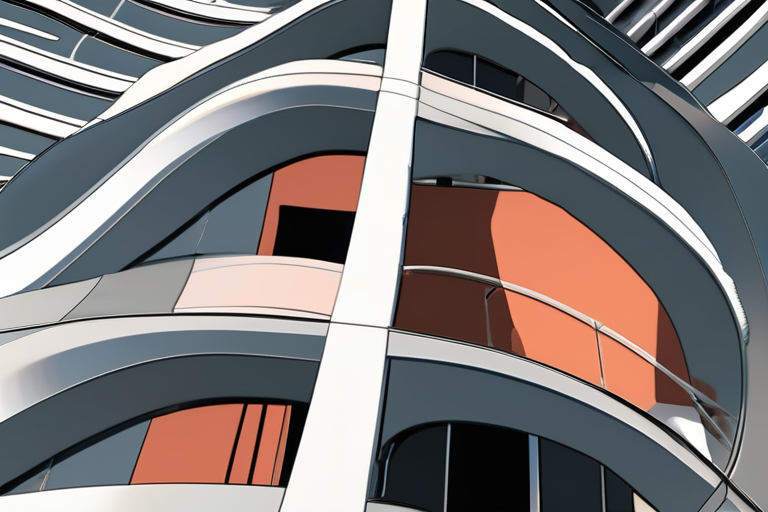
The development of this new method has significant implications for the field of architecture and engineering. Gridshells, which are thin, curved surfaces whose members form a networked grid, are becoming increasingly popular due to their ability to provide large, open spaces while minimizing material usage. However, designing these structures has traditionally been a time-consuming and computationally intensive process.
The new method is expected to make gridshell design more accessible and efficient, allowing architects and engineers to explore new and innovative designs that were previously impractical or impossible to create. As Dr. Miki noted, "This breakthrough has the potential to open up new possibilities for architects and engineers, and we are excited to see the impact it will have on the field."
The researchers plan to continue refining the new method and exploring its applications in various fields, including architecture, engineering, and materials science. They also hope to collaborate with industry partners to develop new products and technologies that can take advantage of the efficiency and creativity offered by the new method.
In related news, the University of Tokyo has announced plans to establish a new research center focused on the development of innovative computational methods for architecture and engineering. The center will be led by Dr. Miki and will bring together researchers from various disciplines to explore the potential of new technologies and methods for designing and building complex structures.
As the development of this new method continues to unfold, it is clear that the future of architecture and engineering is becoming increasingly exciting and innovative. With the ability to design and build complex curved structures more efficiently and creatively, architects and engineers will be able to push the boundaries of what is possible and create new and inspiring spaces for people to live, work, and play.
Researchers Unlock Faster Design of Complex Curved Structures with AI-Powered NURBS Method
1
0
Multi-Source Journalism
This article synthesizes reporting from multiple credible news sources to provide comprehensive, balanced coverage.




















Share & Engage Share
Share this article