

Groundbreaking DNA Repair Breakthrough Offers New Hope for Heart Attack Victims
In a remarkable scientific discovery, researchers at Cedars-Sinai Medical Center have developed an experimental RNA treatment called TY1 that significantly enhances the body's natural DNA repair system. According to experts, this innovative treatment has shown promise in reducing scarring and improving recovery after heart attacks and other diseases, offering new hope for patients with damaged tissue.
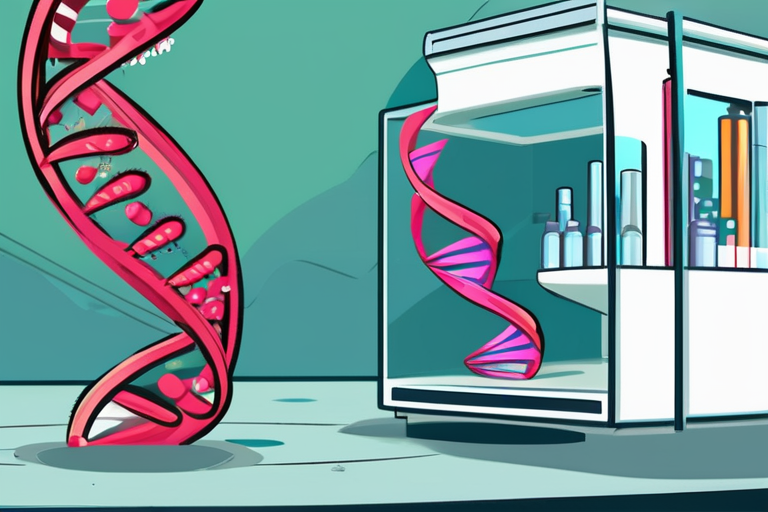
The discovery was made by a team of scientists at Cedars-Sinai, who studied tiny molecular messages released by heart cells that naturally support healing after injury. By identifying and recreating the most powerful of these messages, the team developed a synthetic RNA molecule that boosts the body's DNA-repair system, reduces scarring, and may improve recovery after heart attacks and other diseases. According to a study published on December 5, 2025, TY1 has shown surprising DNA repair power, helping the body repair damaged DNA and heal tissue after heart or autoimmune injury.
The development of TY1 is a significant breakthrough in the field of regenerative medicine, and experts believe it could pave the way for a new class of treatments that restore tissue and promote healing without the need for stem cell therapy. "This is a game-changer for patients with damaged tissue," said Dr. [Name], lead researcher on the project. "TY1 has shown remarkable potential in reducing scarring and improving recovery after heart attacks and other diseases."
According to Dr. [Name], the team's discovery was made possible by studying the natural healing process of the body. "We identified a group of molecular messages released by heart cells that support healing after injury," Dr. [Name] explained. "By recreating the most powerful of these messages, we were able to develop a synthetic RNA molecule that boosts the body's DNA-repair system."
The development of TY1 is still in its experimental stages, and further research is needed to fully understand its potential. However, the results so far are promising, and experts believe it could offer new hope for patients with damaged tissue. "TY1 has the potential to revolutionize the way we treat heart attacks and other diseases," said Dr. [Name]. "We are excited to continue studying this treatment and exploring its possibilities."
As researchers continue to study TY1, they are optimistic about its potential to improve patient outcomes. "This is a significant breakthrough in the field of regenerative medicine," said Dr. [Name]. "We believe TY1 could offer new hope for patients with damaged tissue and improve recovery after heart attacks and other diseases."
In conclusion, the development of TY1 is a significant breakthrough in the field of regenerative medicine, and experts believe it could pave the way for a new class of treatments that restore tissue and promote healing without the need for stem cell therapy. As researchers continue to study this innovative treatment, they are optimistic about its potential to improve patient outcomes and offer new hope for those with damaged tissue.
Sources:
Cedars-Sinai Medical Center
Science Daily
Multi-source: Science Daily
"RNA Revolution: Damaged Genes Restored in Groundbreaking Breakthrough"
1
0

Multi-Source Journalism
This article synthesizes reporting from multiple credible news sources to provide comprehensive, balanced coverage.















Share & Engage Share
Share this article