

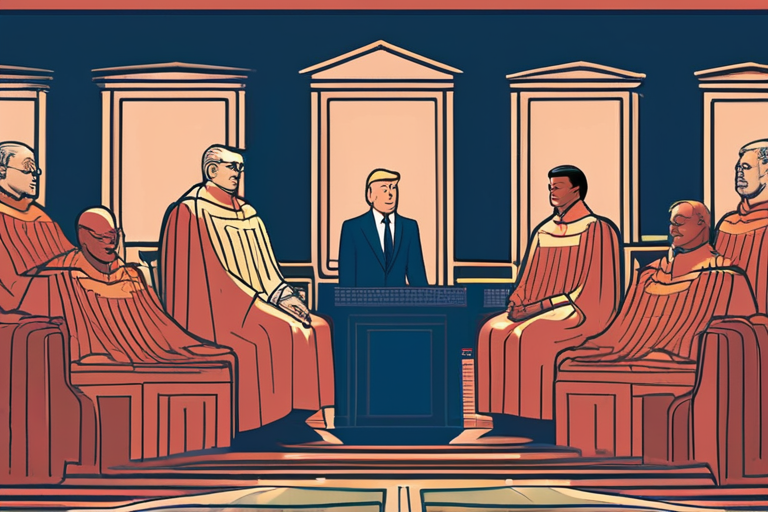
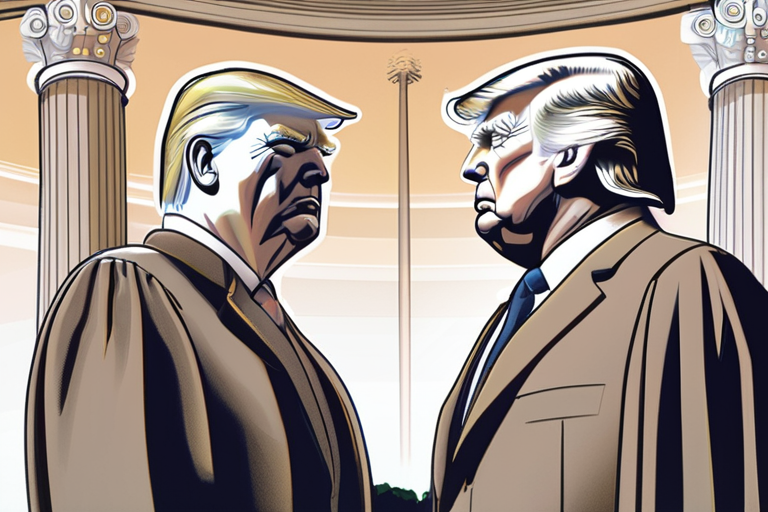
The Supreme Court has agreed to take up the case of President Donald Trump's executive order aimed at ending birthright citizenship, a move that has been deemed unconstitutional by several federal judges. The court's decision to hear the case marks a significant development in the ongoing debate over the president's authority to unilaterally alter the nation's immigration policies.
In January, U.S. District Judge John Coughenour became the first federal judge to block Trump's executive order, stating that the question presented was "as clear as this one is." Since then, numerous judges have reached similar conclusions, citing the 14th Amendment to the U.S. Constitution, which guarantees citizenship to anyone born on U.S. soil. Trump's executive order, issued in 2024, sought to redefine the term "subject to the jurisdiction" of the United States, which is a key phrase in the 14th Amendment.
According to Ian Millhiser, a senior correspondent at Vox, there is no plausible argument that Trump's attack on birthright citizenship is constitutional. "The 14th Amendment is clear and unambiguous," Millhiser said. "It guarantees citizenship to anyone born on U.S. soil, regardless of their parents' immigration status." Millhiser added that Trump's executive order is an attempt to "rewrite" the Constitution, which is a power reserved for Congress.
The issue of birthright citizenship has been a contentious one, with some arguing that it incentivizes undocumented immigration. However, supporters of birthright citizenship argue that it is a fundamental right that is essential to the nation's values of equality and justice. "Birthright citizenship is a cornerstone of our democracy," said Olga Urbina, a mother who has been advocating for the rights of immigrant families. "It is a reminder that we are a nation of immigrants, and that everyone deserves to be treated with dignity and respect."
The Supreme Court's decision to take up the case is seen as a significant development in the ongoing debate over immigration policy. The court is expected to hear oral arguments in the coming months, with a decision likely to be issued in the summer of 2026. In the meantime, the case will likely continue to be a contentious issue, with both sides presenting their arguments in the court of public opinion.
The Supreme Court's decision to take up the case marks a significant development in the ongoing debate over immigration policy. The court's ruling will have far-reaching implications for the nation's immigration policies and will likely be closely watched by lawmakers and advocacy groups on both sides of the issue.
Supreme Court to Review Trump's Challenged Birthright Citizenship Policy
1
0

Multi-Source Journalism
This article synthesizes reporting from multiple credible news sources to provide comprehensive, balanced coverage.

























Share & Engage Share
Share this article