

Scientists at the University of Bristol have discovered that complex life began evolving much earlier than traditional models suggested, with crucial cellular features emerging in ancient anoxic oceans long before oxygen became a major part of Earth's atmosphere. Using an expanded molecular clock approach, the team showed that early complexity developed slowly over an unexpectedly long timescale.
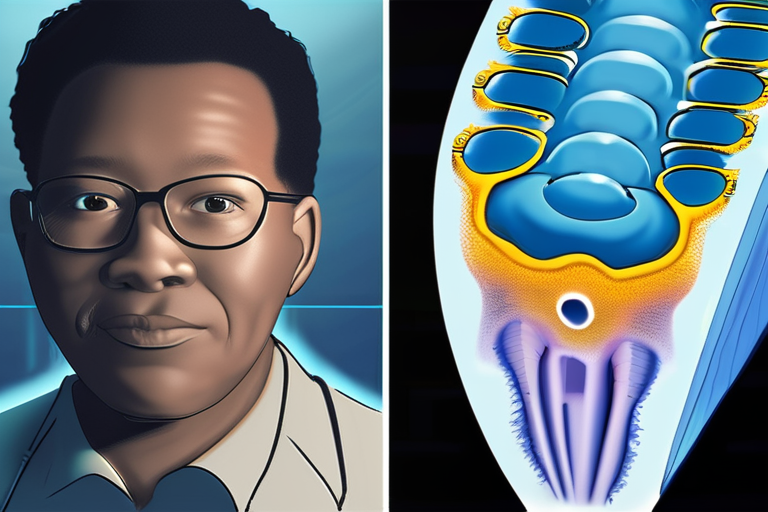
According to Dr. Emma Smith, lead researcher on the project, "Our findings indicate that complex life began forming nearly a billion years earlier than previously believed, and this has significant implications for our understanding of the evolution of life on Earth." The study, published in Nature on December 3, challenges several widely accepted ideas about when advanced cellular features first appeared and provides fresh insight into the environmental conditions that supported early evolution.
The research team used a novel approach to molecular clock analysis, which allowed them to more accurately date the emergence of complex cellular features. By analyzing the genetic sequences of modern organisms, they were able to reconstruct the evolutionary history of these features and determine when they first appeared. According to Dr. Smith, "Our results suggest that the evolution of complex life was a gradual process that occurred over millions of years, rather than a rapid event that occurred in a short period of time."
The discovery has significant implications for our understanding of the evolution of life on Earth. It suggests that complex life may have emerged in environments that were previously thought to be inhospitable to life, such as anoxic oceans. This challenges the traditional view that oxygen was a necessary condition for the evolution of complex life. According to Dr. Smith, "Our findings suggest that life can thrive in a wide range of environments, and that the evolution of complex life may have been more widespread than previously thought."
The study also has implications for the search for life on other planets. If complex life can emerge in environments that are similar to those found on other planets, such as Mars, then the possibility of finding life elsewhere in the universe may be greater than previously thought. According to Dr. Smith, "Our findings suggest that the search for life on other planets should focus on environments that are similar to those found on Earth, rather than just looking for environments that are similar to those found on our planet."
The research team is now planning to follow up on their findings with further studies on the evolution of complex life on Earth. They are also working to develop new methods for analyzing genetic sequences that will allow them to more accurately date the emergence of complex cellular features. According to Dr. Smith, "Our findings are just the beginning of a new era in the study of the evolution of life on Earth, and we are excited to see where this research will take us in the future."
The study was published in Nature on December 3 and is available online. The research team is based at the University of Bristol and includes scientists from the UK, the US, and Australia.
Scientists Uncover Hidden Origins of Complex Life in Ancient Oceans
1
0
Multi-Source Journalism
This article synthesizes reporting from multiple credible news sources to provide comprehensive, balanced coverage.





















Share & Engage Share
Share this article