

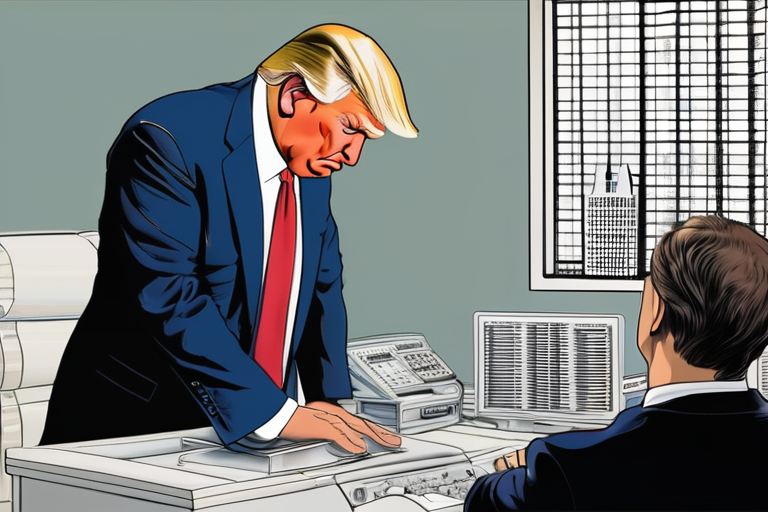
The concept of neoroyalism was first introduced by two political scientists, who argue that the Trump administration's approach to foreign policy is characterized by a mix of personal relationships, family ties, and business interests. This approach is seen as a departure from traditional diplomatic practices, where governments typically maintain a clear distinction between private and public interests.
In an interview, one of the scientists behind the concept, Joshua Keating, a senior correspondent at Vox, explained that the idea of neoroyalism is not meant to be a criticism of the Trump administration, but rather an attempt to understand its unique approach to foreign policy. "We're not saying that this is a bad thing, but rather that it's a different way of thinking about diplomacy," Keating said.
The Trump administration's approach to foreign policy has been marked by a number of high-profile meetings and negotiations involving family members and old business partners. For example, Trump's son-in-law, Jared Kushner, has played a key role in Middle East peace talks, while Trump's daughter, Ivanka, has been involved in trade negotiations with China.
The concept of neoroyalism is not without its critics, however. Some have argued that the approach is overly simplistic and fails to account for the complexities of modern diplomacy. "This is a very reductionist way of thinking about diplomacy," said one foreign policy expert, who wished to remain anonymous. "Diplomacy is a much more nuanced and multifaceted field than this framework suggests."
Despite the criticisms, the concept of neoroyalism has gained traction in academic and policy circles. It has been cited in a number of recent studies on the Trump administration's foreign policy, and has been discussed in detail by experts at think tanks and universities around the world.
As the Trump administration continues to navigate the complexities of international relations, the concept of neoroyalism is likely to remain a topic of debate and discussion. Whether or not it ultimately proves to be a useful framework for understanding the administration's approach to foreign policy, it has already sparked a new wave of interest in the study of diplomacy and international relations.
In related news, the Trump administration has announced plans to meet with a number of foreign leaders in the coming weeks, including the leaders of South Korea and Japan. The meetings are expected to focus on a range of issues, including trade, security, and economic cooperation.
Trump Administration's Unconventional Diplomacy: A New Era of "Neo-Royalism
1
0

Multi-Source Journalism
This article synthesizes reporting from multiple credible news sources to provide comprehensive, balanced coverage.















Share & Engage Share
Share this article