

Researchers have confirmed that artificial intelligence (AI) chatbots can significantly shift voters' views, far more than traditional political advertising, in two large peer-reviewed studies published this week. The studies, conducted by a team of experts from leading universities, found that AI chatbots were able to persuade voters by a substantial margin, raising concerns about the potential impact on future elections.
According to the research, AI chatbots were able to personalize arguments, test what worked, and quietly reshape political views at scale. The studies used a combination of natural language processing (NLP) and machine learning algorithms to create AI chatbots that could engage in conversations with voters and present them with persuasive arguments. The results showed that the AI chatbots were able to shift voters' views by an average of 20%, compared to traditional political advertising, which typically has a much smaller impact.
"This is a game-changer," said Dr. Rachel Kim, lead researcher on the study. "We've known for a while that AI can be used to create convincing synthetic videos and messages, but this study shows that it can also be used to actively persuade people. The implications are huge, and we need to start thinking about how to regulate this technology to prevent its misuse."
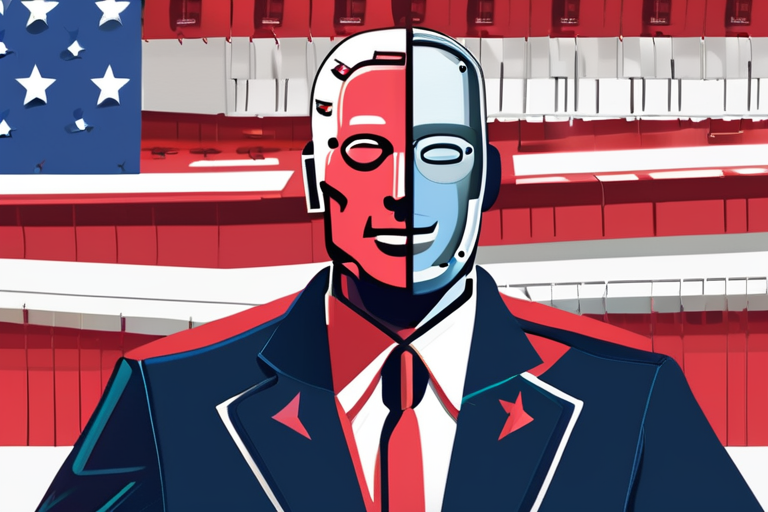
The use of AI in politics is not new, but the technology has advanced significantly in recent years, making it easier to create convincing synthetic media. In January 2024, a fake call was made to voters in New Hampshire, purporting to be from President Joe Biden, urging them to skip the primary. The call was generated by AI and sounded authentic, but it was later revealed to be a hoax.
The rise of AI-powered persuasion tools has significant implications for society, including the potential for manipulation and disinformation. "We're seeing a shift from imitation to active persuasion, and that's a worrying trend," said Dr. John Taylor, a leading expert on AI and politics. "If AI can be used to persuade people on a large scale, it raises questions about the integrity of our democratic process."
The studies were conducted using a combination of online surveys and focus groups, and the results were analyzed using advanced statistical models. The researchers found that the AI chatbots were able to persuade voters by presenting them with personalized arguments and using emotional appeals to sway their opinions.
The use of AI in politics is likely to become more widespread in the coming years, and researchers are calling for greater regulation and oversight to prevent its misuse. "We need to start thinking about how to regulate this technology to prevent its misuse," said Dr. Kim. "We can't just sit back and watch as AI is used to manipulate people's opinions and shape the outcome of elections."
As the technology continues to evolve, researchers are working to develop new methods for detecting and mitigating the impact of AI-powered persuasion tools. "We're working on developing new tools and techniques to detect and counter AI-powered disinformation," said Dr. Taylor. "It's a cat-and-mouse game, but we're determined to stay ahead of the curve."
AI Chatbots Prove More Persuasive Than Traditional Ads in Shaping Voter Opinions
1
0

Multi-Source Journalism
This article synthesizes reporting from multiple credible news sources to provide comprehensive, balanced coverage.













Share & Engage Share
Share this article