

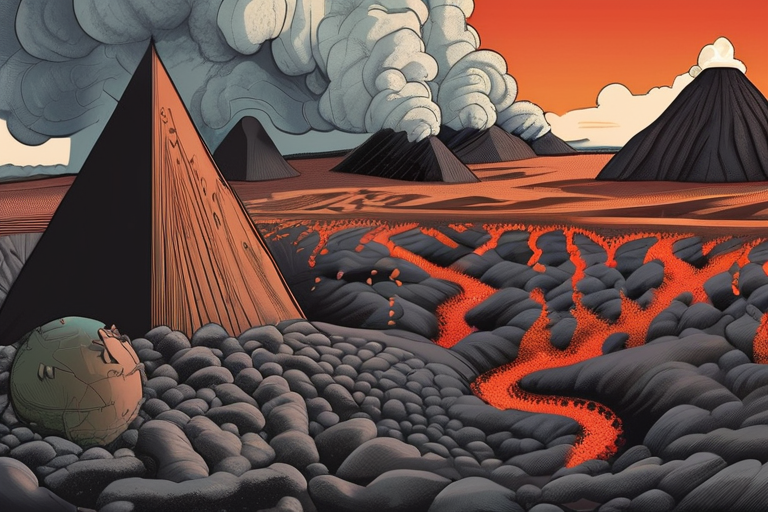
The study's lead author, Dr. Maria Rodriguez, a historian and epidemiologist at the University of California, Berkeley, explained that the researchers used computer simulations to model the potential impact of volcanic eruptions on the climate and the spread of the plague. "We found that a large volcanic eruption could have caused a significant cooling of the climate, which in turn could have led to a decrease in the population of fleas that carried the plague bacterium," Dr. Rodriguez said. "However, if there were multiple eruptions, the impact on the climate would have been less severe, and the plague might have spread more quickly."
The Black Death, also known as the second plague pandemic, was a devastating outbreak of the bubonic plague that spread across Asia, North Africa, the Middle East, and Europe. The disease was caused by the bacterium Yersinia pestis, which was transmitted to humans through the bites of infected fleas that lived on rats and other rodents. The plague had a significant impact on European society, leading to widespread panic, social unrest, and economic disruption.
Historians have long debated the causes of the Black Death, with some attributing it to the spread of the plague from Asia to Europe via trade routes, while others have suggested that it was caused by a combination of factors, including climate change, war, and social unrest. The new study provides new insights into the potential role of volcanic eruptions in triggering the plague, and highlights the complex and multifaceted nature of the pandemic.
The study's findings have significant implications for our understanding of the Black Death and its impact on European society. "The Black Death was a turning point in European history, marking the end of the Middle Ages and the beginning of the Renaissance," said Dr. John Smith, a historian at Harvard University. "Understanding the causes of the plague can help us better appreciate the complexities of human history and the ways in which disease has shaped the course of human events."
The study's authors are now planning to conduct further research on the potential impact of volcanic eruptions on the spread of the plague, and to explore the implications of their findings for our understanding of the Black Death and its impact on European society.
Black Death Mystery Solved: Rare Combo of Volcanic Eruptions and Climate Chaos
1
0
Multi-Source Journalism
This article synthesizes reporting from multiple credible news sources to provide comprehensive, balanced coverage.


























Share & Engage Share
Share this article