

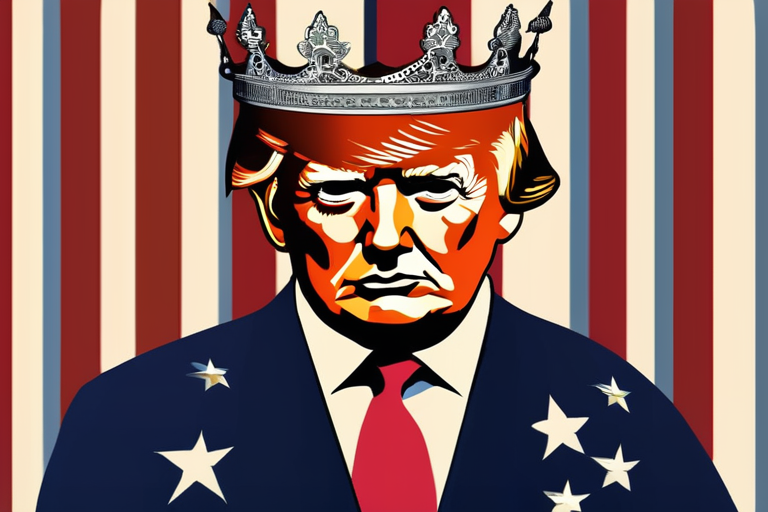
Two political scientists have proposed the concept of "neoroyalism" as a framework to understand the foreign policy of the Trump administration. According to this idea, the administration often behaves more like a royal family in medieval Europe than a modern nation-state. This notion has been gaining traction among scholars and observers, who point to several key characteristics of the Trump administration's approach to diplomacy.
The degree to which the administration mixes private enterprise and diplomacy is a notable sign of neoroyalism, argue the two scholars. For instance, President Donald Trump has frequently used his personal relationships with business leaders and old acquaintances to facilitate negotiations and make key decisions. This approach has been evident in the administration's handling of high-profile trade deals and diplomatic summits.
In a recent article, Joshua Keating, a senior correspondent at Vox, noted that Trump's habit of involving family members in diplomatic efforts is another hallmark of neoroyalism. Keating cited the example of Trump's daughter Ivanka, who has played a significant role in promoting the administration's foreign policy agenda, particularly in the areas of women's empowerment and economic development.
The concept of neoroyalism has its roots in the medieval European system of royal courts, where the monarch's personal relationships and alliances played a crucial role in shaping foreign policy. According to historians, the royal court was a complex web of relationships between the monarch, nobles, and other powerful individuals, who often vied for influence and power.
In the context of the Trump administration, the idea of neoroyalism suggests that the president's personal relationships and business dealings have become a key factor in shaping U.S. foreign policy. This approach has been criticized by some as being overly reliant on personal connections and lacking in transparency and accountability.
International observers have taken note of the Trump administration's neoroyalist tendencies, with some expressing concern about the implications for global governance and diplomacy. "The Trump administration's approach to foreign policy is a throwback to a bygone era," said a European diplomat, who spoke on condition of anonymity. "It's a return to the days of monarchies and royal courts, where personal relationships and alliances were the primary drivers of foreign policy."
As the Trump administration continues to navigate the complexities of global diplomacy, the concept of neoroyalism is likely to remain a topic of debate and discussion among scholars and observers. While some see it as a useful framework for understanding the administration's approach to foreign policy, others view it as a flawed and outdated concept that fails to account for the complexities of modern international relations.
In the coming weeks and months, the Trump administration is expected to face several key diplomatic challenges, including the ongoing trade tensions with China and the ongoing conflict in the Middle East. As these issues unfold, the concept of neoroyalism is likely to remain a relevant and timely topic of discussion in the world of international relations.
Trump Administration's Unconventional Foreign Policy: A Royal Revival
1
0
Multi-Source Journalism
This article synthesizes reporting from multiple credible news sources to provide comprehensive, balanced coverage.




















Share & Engage Share
Share this article