

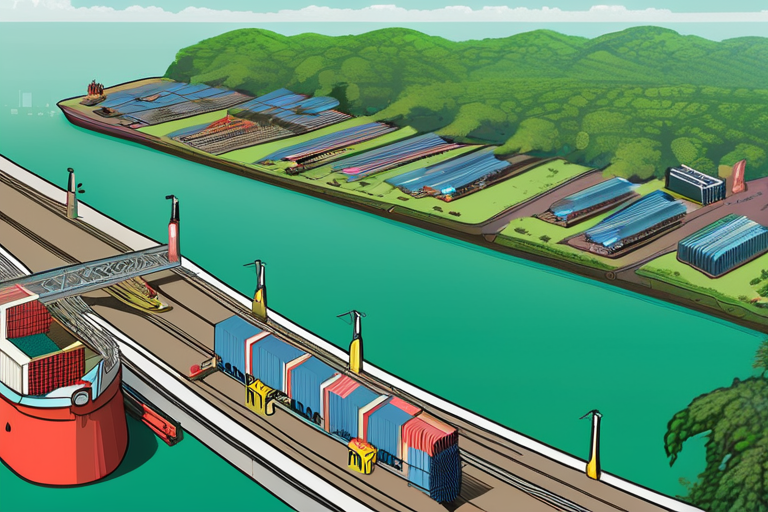
According to officials, the port will be equipped with advanced digital technologies, including a sophisticated operations productivity dashboard that displays real-time data on shipping times, entry times, loading data, unloading data, and efficiency statistics. The dashboard will also track the routes of cargo ships, illustrating the direct routes across the Pacific from Peru's coast to major ports in Asia, including Shanghai, the world's largest.
"We are proud to be a part of this ambitious project, which will not only boost Peru's economy but also provide a significant boost to our trade relations with Asia," said a spokesperson for the Peruvian Ministry of Transportation and Communications. "However, we are also aware of the potential environmental concerns associated with this project, and we are committed to ensuring that it is implemented in a sustainable and responsible manner."
The port project has been met with skepticism by environmental groups, who argue that it will exacerbate the already dire situation in the Amazon Rainforest. "The Amazon is on the brink of collapse, and this project will only make things worse," said a spokesperson for the Amazon Watch organization. "We urge the Peruvian government to reconsider its decision and explore more sustainable and environmentally-friendly options for economic development."
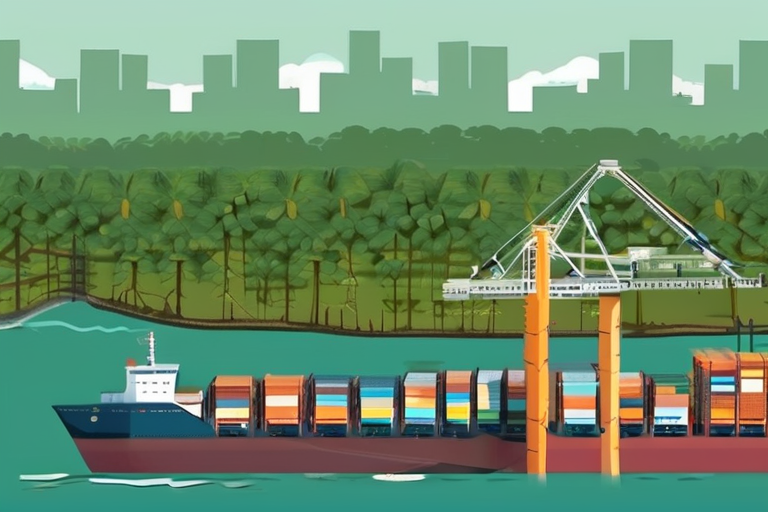
The Amazon Rainforest, which spans across nine countries in South America, is home to an estimated 10% of all known plant and animal species. However, it is facing unprecedented threats from deforestation, climate change, and other human activities. The construction of the Chancay port is expected to lead to an increase in cargo shipments and trade, which could result in further deforestation and habitat destruction in the Amazon region.
The project is expected to be completed by 2025, with an estimated investment of $1.5 billion. The Chinese government has provided significant funding for the project, which is seen as a key component of its Belt and Road Initiative, a massive infrastructure development program aimed at connecting China with other parts of the world.
As the project moves forward, environmental groups and local communities are expected to continue their opposition, highlighting the need for sustainable and responsible economic development in the region. "We hope that the Peruvian government will take into account the concerns of local communities and environmental groups and ensure that this project is implemented in a way that prioritizes the well-being of the Amazon Rainforest and its inhabitants," said a spokesperson for the Amazon Watch organization.
Amazon Rainforest on Brink: China-Backed Port to Unleash Digital Surge
1
0
Multi-Source Journalism
This article synthesizes reporting from multiple credible news sources to provide comprehensive, balanced coverage.



























Share & Engage Share
Share this article