

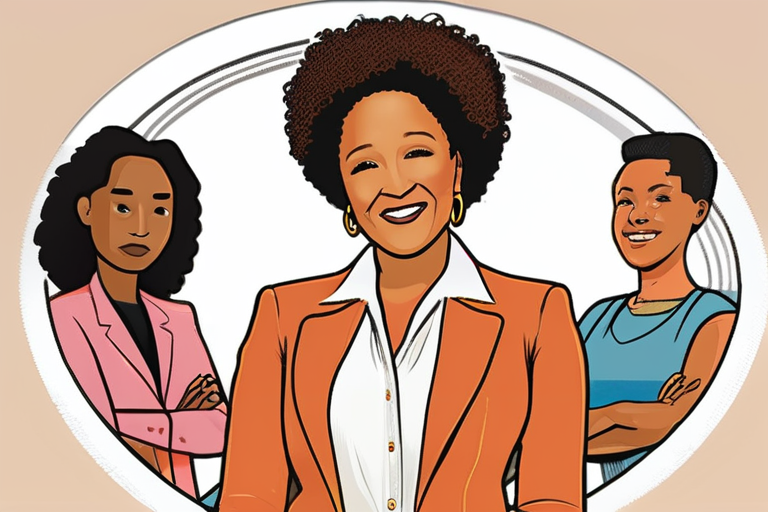
Tamera Fenske, the chief supply chain officer at Kimberly-Clark, has shared a personal anecdote that highlights the challenges women face in the corporate world. According to Fenske, her former bosses would often compare her to their daughters when she received promotions, a comment that she believes was meant to be a compliment but ultimately diminished her professional accomplishments.
Fenske, who oversees a global team of 22,665 employees, has spoken out about the unique set of challenges women face in the workforce. As one of the few women in the Fortune 500 to hold the coveted role of chief supply chain officer, Fenske is well-positioned to speak to the issues affecting women in leadership positions. In an interview, Fenske noted that the comment from her former bosses was a subtle reminder of the bias that women often face in the corporate world. "It was a way of saying, 'You're doing well, but you're doing well because you're like our daughter,'" Fenske said. "It was a way of diminishing my accomplishments and making me feel like I was only successful because I was liked."
Fenske's experience is not unique. Women in the corporate world often face a range of challenges, from the motherhood penalty to the gender pay gap. According to a 2025 Spencer Stuart analysis, only about 18% of chief supply chain officers are women, and 12% come from underrepresented racial and ethnic backgrounds. The analysis also found that the gender pay gap has widened again, with women earning an average of 82 cents for every dollar earned by men.
Despite these challenges, Fenske remains optimistic about the future of women in the corporate world. "I think there's a lot of progress being made," Fenske said. "But we still have a long way to go." Fenske's own career is a testament to the progress that can be made. As a woman in a male-dominated field, Fenske has had to work hard to prove herself and earn the respect of her colleagues. But she remains committed to her work and is determined to make a difference in the lives of women around the world.
The challenges faced by women in the corporate world are not unique to the United States. Globally, women face a range of barriers to achieving leadership positions, from lack of access to education and training to cultural and societal norms that discourage women from pursuing careers in business. According to the World Economic Forum, women hold only 22% of senior leadership positions globally, and the gap is widest in the Middle East and North Africa.
As Fenske continues to navigate the challenges of her role, she remains committed to empowering women and girls around the world. "I think it's essential that we create opportunities for women and girls to succeed," Fenske said. "We need to create a world where women can thrive and reach their full potential." With her experience and expertise, Fenske is well-positioned to make a difference in the lives of women around the world.
Women in Leadership: When Promotion Means Being Compared to Someone's Daughter
1
0

Multi-Source Journalism
This article synthesizes reporting from multiple credible news sources to provide comprehensive, balanced coverage.























Share & Engage Share
Share this article