

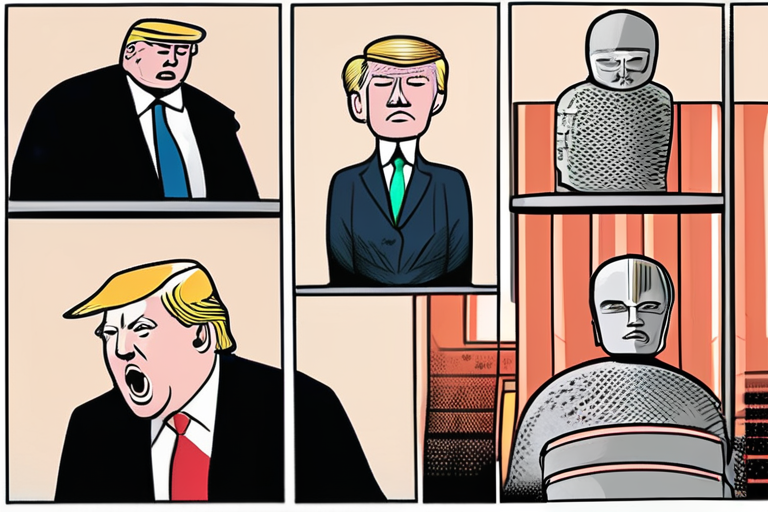
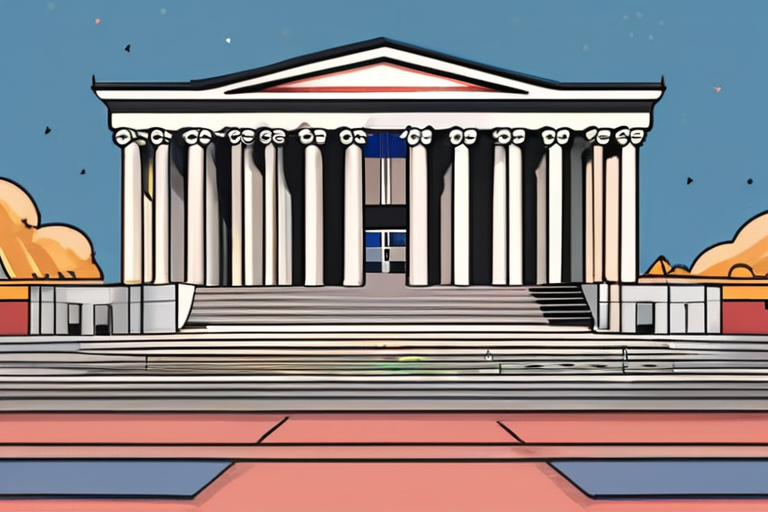
The Supreme Court is set to hear a case that has significant implications for the balance of power between the executive and judicial branches. In Trump v. Slaughter, the Court will consider whether President Donald Trump has the authority to fire high-ranking federal officials who are protected from termination by federal law. The case, which is expected to be decided in the coming months, has sparked concerns that the Court's Republican majority may use it to expand its own power and limit the authority of the executive branch.
According to court documents, the case centers on the question of whether the president has the power to fire officials who are protected by federal law, including the director of the Federal Bureau of Investigation and the head of the Federal Election Commission. The Trump administration has argued that the president has the authority to fire these officials, citing the unitary executive theory, which holds that the president has complete control over the executive branch.
However, critics of the Trump administration's position argue that this would give the president unchecked power over the federal government. "This is a case about the president's ability to wield power without any checks or balances," said Ian Millhiser, a senior correspondent at Vox. "If the Court rules in favor of the Trump administration, it would be a significant expansion of the president's authority and a major blow to the system of checks and balances that is designed to prevent any one branch of government from becoming too powerful."
The case has also raised concerns that the Court's Republican majority may be using it to expand its own power and limit the authority of the executive branch. "The Court's Republican majority has been clear in its support for the unitary executive theory, and this case is a prime example of how they are using it to expand their own power," said a Democratic staffer, who spoke on condition of anonymity.
Background on the case dates back to 2024, when President Trump issued a series of executive orders that gave him the authority to fire high-ranking federal officials without cause. The orders were challenged in court by several federal agencies, including the Federal Bureau of Investigation and the Federal Election Commission. The case eventually made its way to the Supreme Court, where it is currently pending.
Additional perspectives on the case come from constitutional scholars, who argue that the Court's decision will have significant implications for the balance of power between the executive and judicial branches. "This case is a test of the Court's commitment to the system of checks and balances that is designed to prevent any one branch of government from becoming too powerful," said a constitutional scholar, who spoke on condition of anonymity. "If the Court rules in favor of the Trump administration, it would be a significant blow to the system of checks and balances and a major expansion of the president's authority."
The case is currently pending before the Supreme Court, with a decision expected in the coming months. The Court's decision will have significant implications for the balance of power between the executive and judicial branches, and will likely be closely watched by constitutional scholars and lawmakers alike.
Supreme Court Set to Weigh Trump's Authority in High-Stakes Power Struggle
1
0
Multi-Source Journalism
This article synthesizes reporting from multiple credible news sources to provide comprehensive, balanced coverage.










Share & Engage Share
Share this article