

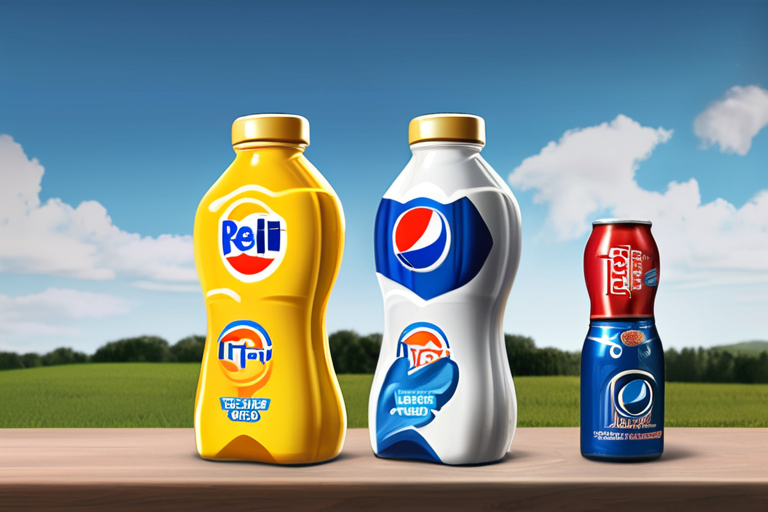
PepsiCo, the multinational food and beverage giant, has announced a significant overhaul of its product portfolio in response to pressure from activist investor Elliott Investment Management. The Purchase, New York-based company plans to cut nearly 20% of its product offerings by early next year, a move aimed at improving profitability and competitiveness in the North American market.
According to the company's statement, the product eliminations will result in cost savings, which will be invested in marketing and improved value for consumers. However, PepsiCo has declined to disclose which specific products will be discontinued or how much prices will be cut. The company has also pledged to accelerate the introduction of new offerings with simpler and more functional ingredients, such as its recently launched prebiotic cola and the Doritos Protein and Simply NKD Cheetos lines, which contain no artificial flavors or colors.
The financial implications of this move are substantial. With a global market capitalization of over $250 billion, PepsiCo's decision to cut nearly 20% of its product offerings will likely have a significant impact on its revenue and profitability. According to a report by Bloomberg, the company's North American food and beverage business has been experiencing decelerating growth and eroding profitability, prompting Elliott Investment Management to take a $4 billion stake in the company in September.
Market analysts have welcomed the move, citing the need for PepsiCo to adapt to changing consumer preferences and intensifying competition in the food and beverage industry. "This is a positive step for PepsiCo, as it seeks to simplify its portfolio and focus on more profitable products," said a spokesperson for a leading market research firm. "The company's commitment to introducing new products with simpler ingredients will also help to appeal to health-conscious consumers."
PepsiCo's decision to cut product offerings is also a response to the growing trend of consolidation in the food and beverage industry. In recent years, companies such as Kraft Heinz and Mondelez International have undergone significant restructuring efforts, resulting in the elimination of thousands of products and brands. By following suit, PepsiCo is seeking to position itself for long-term success in a rapidly evolving market.
The company's background is marked by a long history of innovation and expansion. Founded in 1965 through the merger of Pepsi-Cola and Frito-Lay, PepsiCo has grown into one of the world's largest food and beverage companies, with a portfolio of iconic brands including Cheetos, Tostitos, and Gatorade. However, in recent years, the company has faced increasing competition from smaller, more agile rivals, as well as growing concerns about the health and environmental impact of its products.
Looking ahead, PepsiCo's decision to cut product offerings and invest in new, more sustainable products will likely have a significant impact on the company's future performance. With a strong brand portfolio and a commitment to innovation, the company is well-positioned to navigate the challenges of the food and beverage industry. However, the success of this strategy will ultimately depend on the company's ability to execute effectively and adapt to changing consumer preferences.
PepsiCo to Slash Product Line by 20% Amid Elliott Investment Pressure
1
0
Multi-Source Journalism
This article synthesizes reporting from multiple credible news sources to provide comprehensive, balanced coverage.














Share & Engage Share
Share this article