

Edgar Loesch, a man who grew up in a German household, recalls his childhood Christmas celebrations as a time of both joy and terror. His parents, who were of German descent, incorporated a unique tradition into their holiday festivities: the legend of Krampus, a half-goat, half-demon creature said to punish misbehaving children during the Christmas season.
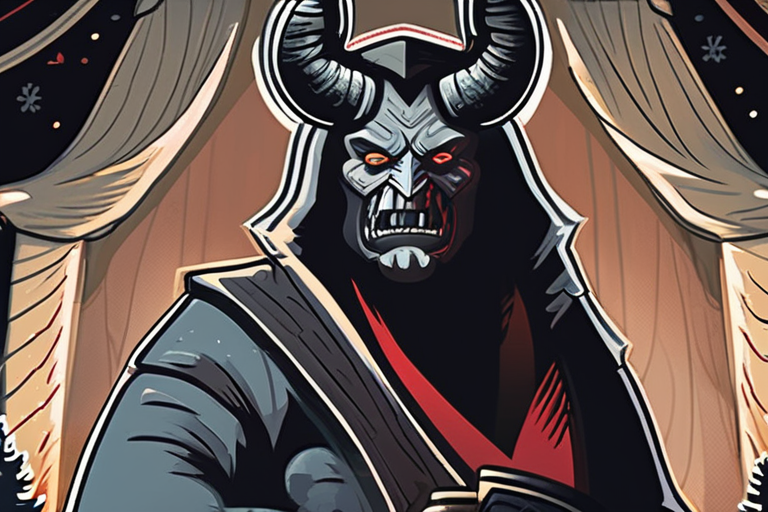
According to Loesch, his parents would often sneak outside his bedroom window and rattle chains to create the illusion that Krampus was lurking in the shadows, waiting to carry him away if he didn't behave. "You go to bed, and then suddenly at some point you hear like somebody shuffling outside a bedroom door, scratching on the door," Loesch remembered. This eerie ritual was meant to drive home the threat of Krampus, a creature with goat horns, gnashing teeth, and a long tongue to taste one's sins.
Krampus, a figure from pre-Christian Alpine folklore, is often depicted as the antithesis of St. Nicholas, who rewards good children during the holiday season. While St. Nicholas is typically portrayed as a jolly, gift-giving figure, Krampus is a terrifying creature who is said to punish the naughty. This dichotomy between good and evil is a common theme in many cultures, and Krampus is a unique example of this concept.
In recent years, the legend of Krampus has gained popularity in the United States, with many cities hosting Krampus parades and events. These events often feature costumed participants dressed as Krampus, who march through the streets and interact with attendees. The Portland Krampuslauf, which took place on December 5, 2025, was one such event, where participants marched through the city dressed in Krampus costumes.
Experts say that the rise of Krampus events is a reflection of a growing interest in folklore and mythology. "People are looking for ways to connect with their cultural heritage and to experience something unique and different," said Dr. Maria Rodriguez, a folklorist at the University of California, Berkeley. "Krampus is a fascinating figure who represents the darker side of the holiday season, and people are drawn to that."
The implications of this trend are far-reaching, with some experts suggesting that it may be a response to the commercialization of Christmas. "Christmas has become a very commercialized holiday, and people are looking for ways to reclaim its original meaning and significance," said Dr. John Taylor, a cultural anthropologist at the University of Michigan. "Krampus represents a return to the roots of the holiday season, and a recognition of the darker aspects of human nature."
As for Loesch, he says that his childhood experience with Krampus has stayed with him to this day. "It's a reminder that the holiday season is not just about joy and giving, but also about accountability and responsibility," he said. "Krampus may be a scary figure, but he's also a reminder of the importance of behaving and being good."
In the years to come, it's likely that the legend of Krampus will continue to grow in popularity, with more cities and towns hosting Krampus events and parades. As the holiday season approaches, people may find themselves drawn to the darker side of Christmas, and the terrifying figure of Krampus.
Unwrapping the Dark Side of Christmas: The Forgotten Legend of Krampus
1
0
Multi-Source Journalism
This article synthesizes reporting from multiple credible news sources to provide comprehensive, balanced coverage.























Share & Engage Share
Share this article