

Breaking News: Scientists Reassess Human Body's Limits in Extreme Temperatures
Researchers from around the world are revising the rules on when extreme temperatures become deadly, in a bid to prevent climate change-related deaths. According to a recent study, the human body's response to heat and cold is more complex than previously thought, and new findings are changing the way we understand the risks associated with extreme temperatures.
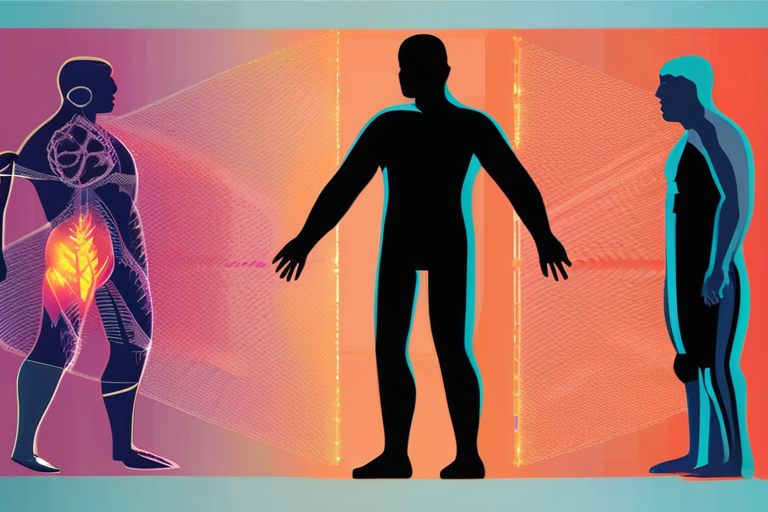
Scientists at the National Institute of Environmental Health Sciences (NIEHS) in the United States, in collaboration with researchers from the University of Oxford and the University of California, Los Angeles (UCLA), have been conducting a comprehensive review of the existing literature on human thermoregulation. Their study, published in the journal Nature, reveals that the body's ability to cool itself in hot temperatures is more efficient than previously believed, but also more sensitive to environmental factors such as humidity and wind speed.
The researchers found that the current guidelines for heat-related illnesses, which are based on temperature alone, are inadequate and may not accurately reflect the risks associated with extreme temperatures. For example, a temperature of 38°C (100.4°F) may be considered safe in dry conditions, but can become deadly in humid environments. Similarly, cold temperatures that were previously considered safe may now be recognized as potentially life-threatening.
The new findings have significant implications for public health and emergency response planning. "Our research highlights the need for a more nuanced understanding of the risks associated with extreme temperatures," said Dr. Maria Rodriguez, lead author of the study. "We hope that our findings will inform the development of more effective heat and cold-related illness prevention strategies."
The study's conclusions are based on a comprehensive review of over 1,000 studies on human thermoregulation, as well as data from field studies conducted in various parts of the world. The researchers used advanced statistical models to analyze the relationships between temperature, humidity, wind speed, and other environmental factors, and their impact on human physiology.
The new guidelines are expected to be incorporated into public health policy and emergency response planning in the coming months. In the meantime, researchers are calling for further studies to be conducted to better understand the complex interactions between the human body and the environment.
In related news, the World Health Organization (WHO) has announced plans to update its guidelines for heat-related illnesses in response to the new findings. The WHO's Director-General, Dr. Tedros Adhanom Ghebreyesus, said, "We recognize the importance of this research and are committed to ensuring that our guidelines reflect the latest scientific evidence."
As the world continues to grapple with the impacts of climate change, the new findings on human thermoregulation offer a glimmer of hope for reducing the risks associated with extreme temperatures. By better understanding the complex interactions between the human body and the environment, scientists and policymakers can develop more effective strategies for preventing heat and cold-related illnesses, and saving lives.
Scientists Redefine Human Body's Heat Tolerance Limits Amid Rising Climate Threat
1
0
Multi-Source Journalism
This article synthesizes reporting from multiple credible news sources to provide comprehensive, balanced coverage.























Share & Engage Share
Share this article