

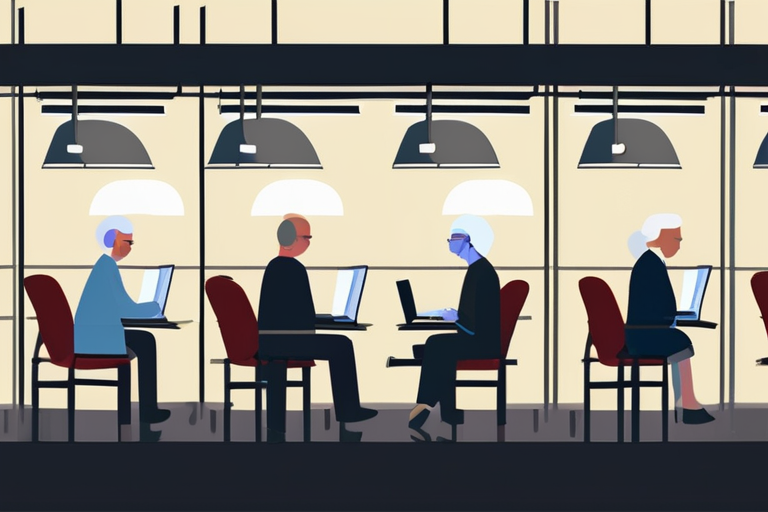
Shares of older voters in the US electorate have been steadily increasing, with seniors accounting for 29 percent of the electorate in 2024, according to recent data. This demographic shift is expected to have significant implications for American politics and the economy, with younger generations potentially bearing the brunt of the consequences.
The trend is largely driven by the aging of the US population, with the share of Americans over 65 doubling from 9 percent in 1960 to 18 percent in 2024, according to the US Census Bureau. Projections suggest that within a decade, seniors will outnumber children for the first time in history, and by 2060, those over 65 will comprise about one quarter of the population.
"This demographic transition will be a defining fact of the 21st century, shaping nearly every part of American life," said Eric Levitz, a senior correspondent at Vox. "The political implications are liable to be especially profound and immediate, as seniors already exert disproportionate influence on the electoral process."
According to Levitz, the increasing power of older voters is not solely driven by their numbers, but also by their voting behavior. "Seniors tend to be more conservative and more likely to vote, which gives them a disproportionate say in the electoral process," he explained.
The implications of this trend are far-reaching, with some experts warning that it could lead to a decline in economic growth and an increase in social inequality. "As the population ages, the workforce will shrink, and the tax base will decline, making it more difficult to fund social programs and infrastructure," said Dr. John Taylor, a demographer at the Urban Institute.
Others argue that the trend is a natural consequence of a aging population and that it can be managed through policy changes. "We need to rethink our social security system and other programs to ensure that they are sustainable and equitable for all generations," said Senator Maria Rodriguez, a Democrat from California.
The current status of the trend is unclear, but experts agree that it will continue to shape American politics and society in the coming years. "The demographic transition is a slow-moving process, but its consequences will be felt for decades to come," said Levitz.
As the US population continues to age, policymakers will need to grapple with the implications of this trend and find ways to balance the needs of different generations. "It's a complex issue, but one that requires careful consideration and planning to ensure that we create a society that is equitable and sustainable for all," said Taylor.
Younger Generations Face Growing Electoral Disadvantage as Seniors Gain Power
1
0

Multi-Source Journalism
This article synthesizes reporting from multiple credible news sources to provide comprehensive, balanced coverage.




















Share & Engage Share
Share this article