

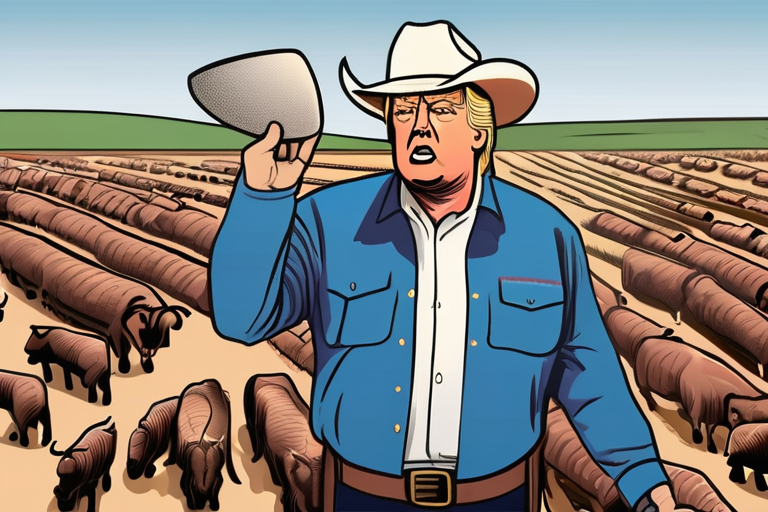
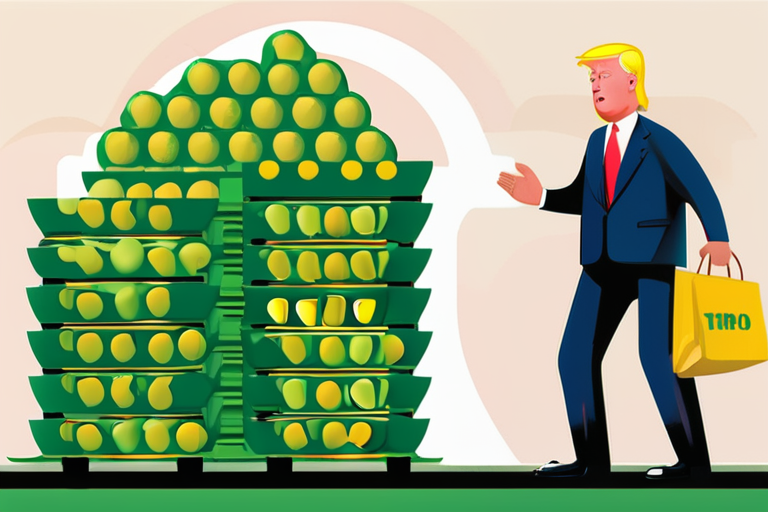
President Donald Trump's administration announced a $12 billion farm aid program on Monday, aimed at providing relief to U.S. farmers hit by his sweeping tariff policy. The package, which will begin disbursing funds by the end of February, is seen as a much-needed gesture to address increasing input costs and fewer export opportunities amid ongoing trade tensions.
According to Agriculture Secretary Brooke Rollins, the 12 billion farm aid program is a direct response to the concerns raised by farmers about the impact of Trump's trade policies on their livelihoods. The package includes a combination of direct payments to farmers, as well as purchases of surplus commodities to support prices. Farmers will receive the funds through a combination of direct payments, market facilitation payments, and agricultural trade promotion programs.
The financial details of the package reveal a significant allocation of funds, with 3.9 billion going towards direct payments to farmers, 1.4 billion for market facilitation payments, and 1.3 billion for agricultural trade promotion programs. Additionally, 2.4 billion will be used to purchase surplus commodities, such as pork, corn, and dairy products.
The market impact of the package is significant, as it aims to mitigate the effects of Trump's trade policies on the agriculture industry. The tariffs imposed by the Trump administration have led to a decline in exports, particularly in the soybean and corn markets. The 12 billion farm aid program is seen as a way to stabilize prices and provide a safety net for farmers, but many experts believe that it is a "Band-Aid on a bigger wound" and does not address the deeper structural issues facing the industry.
The agriculture industry is a significant contributor to the U.S. economy, accounting for around 5% of the country's GDP. The industry is also a major employer, with over 2 million people working in agriculture-related jobs. However, the industry has been facing significant challenges in recent years, including declining commodity prices, increasing input costs, and volatile markets.
The company/industry background of the agriculture industry is complex, with a diverse range of players, from large multinational corporations to small family-owned farms. The industry is also heavily influenced by government policies, including trade agreements and subsidies. The 12 billion farm aid program is a reflection of the industry's dependence on government support, which has been a contentious issue in recent years.
Looking ahead, the future outlook for the agriculture industry remains uncertain. While the 12 billion farm aid program provides some relief, many experts believe that it is a temporary fix and does not address the deeper structural issues facing the industry. The industry will continue to face challenges, including declining commodity prices, increasing input costs, and volatile markets. However, the package may provide some stability and support for farmers, at least in the short term.
In conclusion, the 12 billion farm aid program announced by the Trump administration is a significant development in the agriculture industry. While it provides some relief to farmers, it does not address the deeper structural issues facing the industry. The industry will continue to face challenges, but the package may provide some stability and support for farmers, at least in the short term.
Trump's $12 Billion Farm Bailout: A Temporary Fix for a Wider Agricultural Crisis
1
0

Multi-Source Journalism
This article synthesizes reporting from multiple credible news sources to provide comprehensive, balanced coverage.


















Share & Engage Share
Share this article