

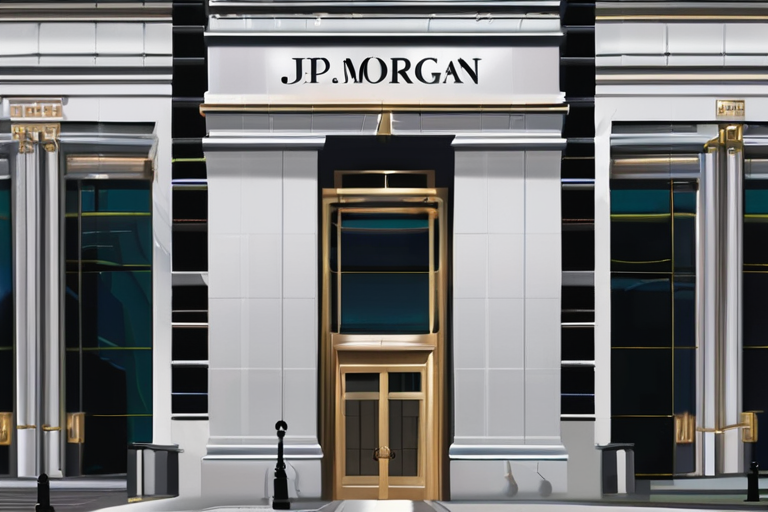
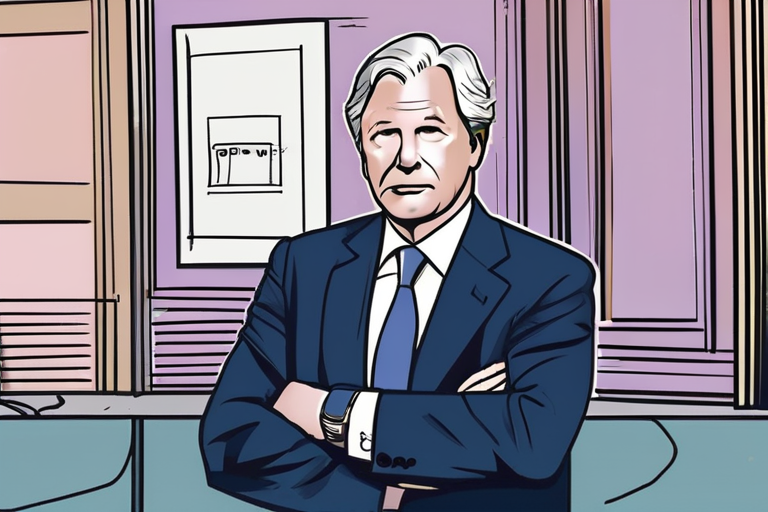
As Jamie Dimon, the CEO of JPMorganChase, stood at the podium, flanked by the likes of Jeff Bezos and Michael Dell, it was clear that the financial giant was making a bold move into the realm of national security. The announcement of a new advisory council, comprising some of the world's most influential business leaders and national security experts, marked the beginning of a $1.5 trillion initiative that promises to reshape the way the United States approaches its economic and security needs.
The Security and Resilience Initiative (SRI), as it has been dubbed, is a 10-year plan that aims to invest up to $10 billion in direct equity and venture capital in companies deemed critical to national security. With the likes of Bezos, Dell, and Ford CEO Jim Farley on board, the advisory council is poised to bring a level of expertise and innovation to the table that will be crucial in driving growth and innovation in industries critical to the United States' national security and economic resiliency.
But what lies behind this move, and what does it mean for the global landscape? To understand the context, it's essential to look back at the events that have led to this moment. The COVID-19 pandemic, the rise of China, and the increasing reliance on technology have all contributed to a growing sense of unease about the United States' economic and security vulnerabilities. As Dimon himself noted, "The world is changing at an unprecedented pace, and we need to be prepared to adapt and innovate to stay ahead."
The SRI is a direct response to these challenges, and it's clear that Dimon is taking a long-term view. "This is not a short-term initiative," he emphasized. "We're talking about a 10-year plan that will require patience, perseverance, and a willingness to take calculated risks." The advisory council, which will convene periodically to provide guidance and support, is a key part of this strategy.
One of the most significant aspects of the SRI is its focus on innovation. By investing in companies that are pushing the boundaries of technology and innovation, JPMorganChase is betting on the idea that the key to national security lies not in traditional defense spending, but in the ability to adapt and innovate in the face of an ever-changing global landscape.
"This is not just about investing in defense companies," said Michael Dell, co-founder and CEO of Dell Technologies. "It's about investing in the technologies and industries that will drive growth and innovation in the years to come." Bezos, who has long been a proponent of the idea that innovation is key to national security, echoed this sentiment. "We need to be thinking about the future, not just the present," he said. "We need to be investing in the technologies and industries that will drive growth and innovation in the decades to come."
As the SRI gets underway, it's clear that JPMorganChase is taking a bold step into the unknown. But with the likes of Bezos, Dell, and Farley on board, it's also clear that the bank is committed to making a meaningful impact. As Dimon noted, "We're not just talking about investing in companies. We're talking about investing in the future of the United States."
As the world watches with bated breath, it's clear that the SRI is just the beginning of a new era in national security and economic resiliency. With its focus on innovation, its commitment to long-term thinking, and its willingness to take calculated risks, JPMorganChase is poised to make a significant impact on the global landscape. As the SRI unfolds, one thing is clear: the future of national security has never looked brighter.
JPMorgan Assembles Global Powerhouse Advisory Council for $1.5 Trillion National Security Push
1
0
Multi-Source Journalism
This article synthesizes reporting from multiple credible news sources to provide comprehensive, balanced coverage.























Share & Engage Share
Share this article