

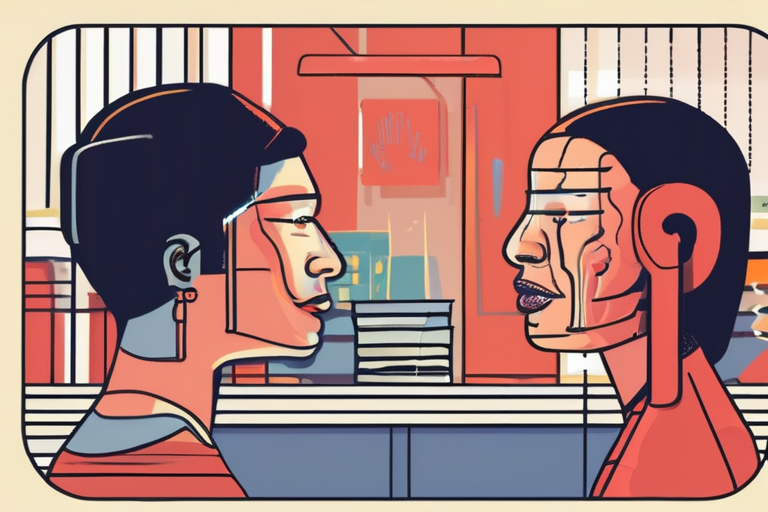
Researchers have discovered that people consistently underestimate how much others like them, a phenomenon known as the liking gap. This social prediction error, as experts call it, can have significant consequences on individuals' social lives, relationships, and overall well-being.
According to a recent study published in the field of social psychology, people tend to overestimate how much others dislike them, particularly in situations where they feel awkward or unsure of themselves. This pessimism can lead to a self-fulfilling prophecy, causing individuals to behave in ways that reinforce their negative expectations. "We consistently underestimate everything from people's empathy toward us to how willing they are to help us," said Dr. Hannah Seo, lead researcher on the study. "These patterns are strongest when we interact with strangers or acquaintances but can persist for many months into a friendship."
The liking gap is not limited to casual interactions; it can also affect relationships with close friends, family members, and even romantic partners. In fact, research suggests that people tend to underestimate how much their loved ones care about them. This can lead to feelings of isolation and disconnection, even in the midst of strong relationships. "We often assume that others are thinking about us in ways that are more critical or judgmental than they actually are," said Dr. Seo. "This can lead to a kind of emotional armor, where we become more guarded and less open with others."
The implications of the liking gap are far-reaching, affecting not only individuals but also society as a whole. By recognizing and addressing this phenomenon, researchers hope to develop more effective strategies for building and maintaining strong relationships. "If we can learn to be more optimistic about others' attitudes toward us, we may be more likely to form deep and meaningful connections with others," said Dr. Seo.
As researchers continue to study the liking gap, they are exploring new ways to address this social prediction error. One potential solution is to encourage individuals to practice self-compassion and self-awareness, recognizing that their negative expectations may be unfounded. By doing so, people may become more open and receptive to others, leading to stronger and more fulfilling relationships.
The study's findings have significant implications for fields such as education, healthcare, and business, where building strong relationships is crucial for success. By understanding the liking gap, professionals can develop more effective strategies for building trust, fostering collaboration, and promoting a positive work environment.
As researchers continue to investigate the liking gap, they are working to develop more effective interventions and treatments. "Our goal is to help people develop a more realistic and positive understanding of others' attitudes toward them," said Dr. Seo. "By doing so, we hope to promote greater social connection, empathy, and understanding."
People Underestimate the Liking They Receive, Rewriting Social Dynamics
1
0
Multi-Source Journalism
This article synthesizes reporting from multiple credible news sources to provide comprehensive, balanced coverage.




















Share & Engage Share
Share this article