

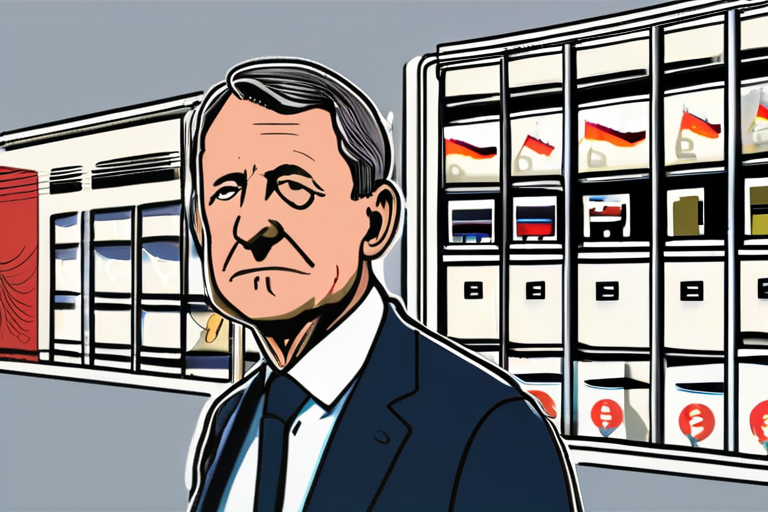
European Central Bank Governing Council member Gediminas Simkus stated that interest rates do not need to be lowered further after economic activity and inflation both turned out stronger than expected. Simkus, the Lithuanian central-bank chief, cited evidence including a recent upward revision to third-quarter gross domestic product, which showed that downside risks facing the 20-nation euro area have materialized to a lesser extent than feared.
According to Simkus, the stronger-than-expected economic performance has reduced the need for further rate cuts, which would have been a response to potential economic downturn. The Lithuanian central-bank chief emphasized that the current economic situation is more robust than initially anticipated, with inflation and economic activity showing resilience. "Downside risks facing the 20-nation euro area have materialized to a lesser extent than feared," Simkus said, highlighting the upward revision to third-quarter GDP.
The European Central Bank has been closely monitoring the economic situation in the euro area, and Simkus' comments suggest that the bank may not need to take further action to stimulate the economy. The ECB has already implemented several measures to support the economy, including a series of interest rate cuts. However, with the current economic performance exceeding expectations, the need for further rate cuts may be diminished.
The euro area's economic performance has been a topic of interest for investors and policymakers in recent months. The region's GDP growth has been steady, and inflation has remained within the ECB's target range. The upward revision to third-quarter GDP is a positive development, indicating that the economy is stronger than initially thought.
Market analysts have been watching the ECB's actions closely, and Simkus' comments are likely to have a positive impact on the euro. The euro has been under pressure in recent months due to concerns about the euro area's economic performance. However, with the current economic situation looking more robust, the euro may strengthen in the coming days.
The ECB's next policy meeting is scheduled for early next year, and Simkus' comments suggest that the bank may not need to take further action to stimulate the economy. However, the bank will continue to monitor the economic situation and adjust its policies accordingly. As the euro area's economic performance remains a key focus for investors and policymakers, Simkus' comments provide valuable insights into the ECB's thinking and the current economic situation.
ECB's Simkus Sees No Need for Further Rate Cuts Amid Surprising Economic Strength
1
0

Multi-Source Journalism
This article synthesizes reporting from multiple credible news sources to provide comprehensive, balanced coverage.


























Share & Engage Share
Share this article