

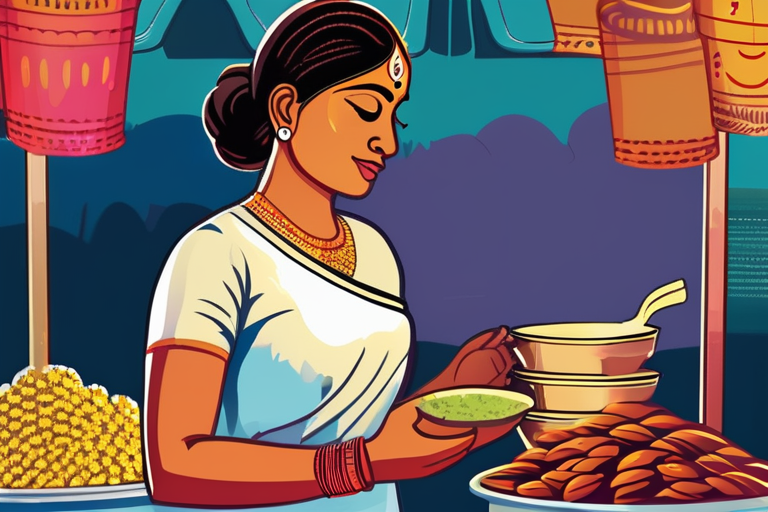
As the sun sets over the small town of Marikavalasa in India's eastern coastal state of Andhra Pradesh, the air is filled with the enticing aroma of pan-fried flat bread wafting from a brightly lit food stall. For working women like Sita, this smell is a beacon of hope, a reminder that even in the midst of financial struggles and debt, there is a chance to indulge in a little luxury. Sita, a 35-year-old mother of two, has been selling colorful bangles and devotional lamps on the main street for years, but her earnings barely cover the medical expenses and school fees of her children. Yet, every evening, she allows herself a small treat – a traditional Indian lunch-box meal, lovingly prepared by the owner of the food stall, a kind-hearted woman named Lakshmi.
Lakshmi's stall is a haven for women like Sita, who are often forced to juggle multiple responsibilities – earning a living, caring for their families, and managing their debt. The women of Marikavalasa, clad in neat saris, sit before tidy stalls made of rescued plywood and propped up by a few bricks, their faces a testament to the resilience and determination that defines them. They are the backbone of the Indian economy, contributing significantly to the country's GDP, yet they remain vulnerable to poverty, debt, and social inequality.
As the day wears on, the women of Marikavalasa go about their business, patiently explaining their financial struggles and the debt they owe to their neighbors. They are bound by a complex web of social obligations, where repayment of dues is essential to maintaining good standing in their community. But as dusk settles, Lakshmi's stall becomes a sanctuary, a place where women can momentarily forget their troubles and indulge in a delicious meal.
Lakshmi, a 45-year-old widow, has been running her food stall for over a decade. She takes pride in serving traditional Indian cuisine, carefully preparing each meal to ensure that it is not only delicious but also nutritious. Her stall is a testament to the power of entrepreneurship, a reminder that even in the face of adversity, women can create opportunities and build a better life for themselves.
"I see these women every day, struggling to make ends meet," Lakshmi says, her eyes filled with compassion. "But when they come to my stall, I see a glimmer of hope in their eyes. It's a small thing, but it gives them the strength to carry on."
Lakshmi's words are echoed by Dr. Rukmini Rao, a social scientist who has studied the lives of working women in India. "These women are not just struggling to survive; they are fighting for their dignity and their rights," she says. "They are the backbone of our economy, yet they remain invisible, marginalized, and excluded from decision-making processes."
The challenges faced by women like Sita and Lakshmi are not unique to India. Globally, women continue to face significant barriers to economic empowerment, including limited access to education, healthcare, and financial resources. According to the United Nations, women make up 70% of the world's poor, and their poverty is often exacerbated by debt, lack of property rights, and limited access to credit.
Yet, stories like Lakshmi's offer a glimmer of hope. Her food stall is not just a business; it's a symbol of resilience, determination, and the power of women to create opportunities and build a better life for themselves. As the sun sets over Marikavalasa, the women of this small town gather at Lakshmi's stall, their faces aglow with the warmth of a delicious meal and the promise of a brighter future.
In the end, it's not just about the food; it's about the women who make it possible. It's about the Sitas and Lakshmis of the world, who are fighting for their rights, their dignity, and their place in the sun. As we celebrate their achievements and challenges, we are reminded of the power of women to transform their lives, their communities, and the world around them.
Working Women Find Hope in the Aroma of Andhra Pradesh's Evening Stalls
1
0
Multi-Source Journalism
This article synthesizes reporting from multiple credible news sources to provide comprehensive, balanced coverage.
























Share & Engage Share
Share this article