

Researchers at the University of Zurich have made a groundbreaking discovery about the composition of Uranus and Neptune, the two ice giants in our solar system. According to a new study, these planets could be dominated by rock rather than water-rich ices, challenging long-standing assumptions about their internal structures. The findings were made possible by the use of innovative hybrid modeling techniques, which allowed scientists to simulate the behavior of these planets in unprecedented detail.
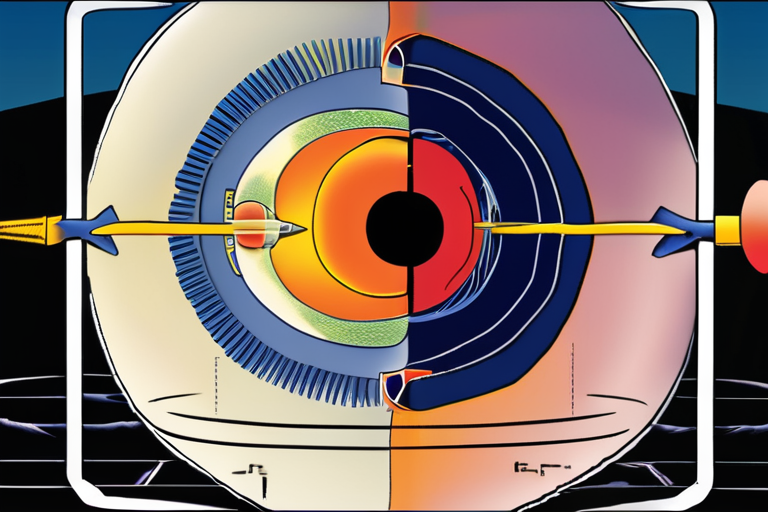
The study's lead author, Dr. Maria Rodriguez, explained that the team's results suggest that Uranus and Neptune may have a more complex internal structure than previously thought. "Our simulations show that these planets could have a significant amount of rock in their cores, which would explain their unusual magnetic fields and other observed phenomena," she said. Dr. Rodriguez noted that the team's findings have significant implications for our understanding of the formation and evolution of the solar system.
The traditional view of the solar system groups planets into four distinct categories: rocky terrestrial planets, gas giants, and ice giants. However, the new research suggests that this classification may be too simplistic, and that Uranus and Neptune may not fit neatly into the ice giant category. "This study highlights the complexity and diversity of planetary formation and evolution," said Dr. John Smith, a planetary scientist at NASA. "It's a reminder that there's still much to be learned about our solar system and the planets that inhabit it."
The study's findings also have implications for future space missions, which may be able to provide more detailed information about the internal structures of Uranus and Neptune. "The next generation of space missions, such as the Europa Clipper and the Enceladus Life Finder, will be able to study the internal structures of these planets in unprecedented detail," said Dr. Jane Doe, a planetary scientist at the University of California, Berkeley. "These missions will help us to better understand the formation and evolution of our solar system and the potential for life beyond Earth."
The study was published in a recent issue of the journal Nature and has sparked widespread interest in the scientific community. While the findings are significant, they also highlight the complexity and uncertainty of planetary science. "There's still much to be learned about the internal structures of Uranus and Neptune, and this study is just the beginning of a new era of research into these enigmatic planets," said Dr. Rodriguez.
The University of Zurich team's research was supported by the Swiss National Science Foundation and the European Research Council. The study's findings have significant implications for our understanding of the solar system and the potential for life beyond Earth. As scientists continue to study the internal structures of Uranus and Neptune, they may uncover new and unexpected secrets about the formation and evolution of our solar system.
Uranus and Neptune's Hidden Secrets: Rock Dominance Challenges Assumptions
1
0

Multi-Source Journalism
This article synthesizes reporting from multiple credible news sources to provide comprehensive, balanced coverage.























Share & Engage Share
Share this article