

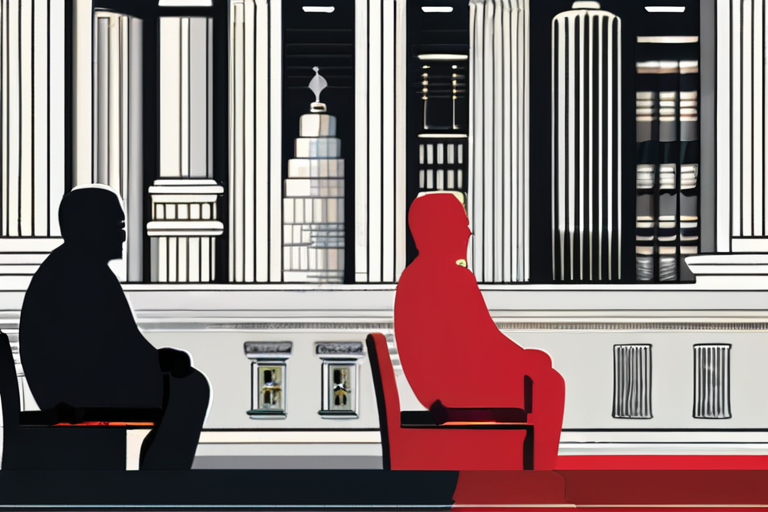
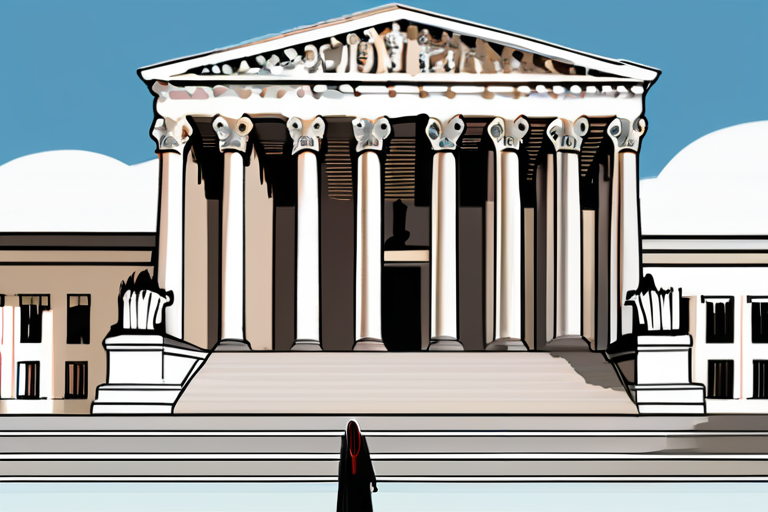
The Supreme Court justices seemed to reject Justice Neil Gorsuch's earlier call for major changes to the rules governing punishment, indicating a surprising openness to a case against a death sentence. During a recent hearing, the justices posed tough questions to the lawyers arguing in favor of upholding the death sentence, suggesting that they may be willing to reconsider the constitutionality of capital punishment.
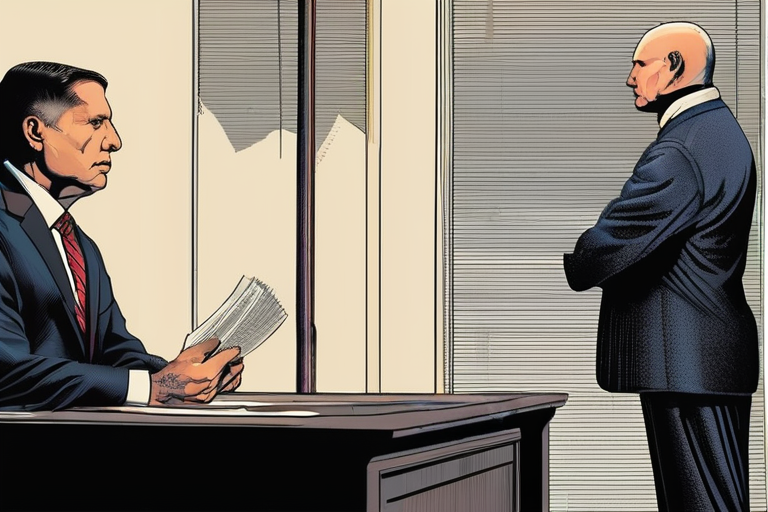
In a notable departure from the Court's recent trend of overturning landmark precedents, the justices appeared to be skeptical of the idea that the death penalty is constitutional. Justice Sonia Sotomayor, in particular, pressed the lawyers to explain why the death penalty should be allowed to stand, given the significant racial disparities in its application. "How can we justify a system that disproportionately affects communities of color?" she asked.
The case at hand involves a defendant who was sentenced to death for a crime committed when he was just 19 years old. The lawyers arguing on his behalf contend that the death penalty is unconstitutional because it is applied in a way that is arbitrary and capricious. They also argue that the Eighth Amendment's ban on cruel and unusual punishment prohibits the use of capital punishment.
The Supreme Court's recent trend of overturning landmark precedents has been a source of controversy, with many arguing that the Court is acting as a partisan body rather than an impartial arbiter of the law. The Court's decision to eliminate the constitutional right to an abortion, abolish affirmative action at nearly all universities, and expand religious conservatives' ability to violate state and federal laws has been seen as a significant departure from the Court's traditional role.
However, the justices' questions during the recent hearing suggest that they may be willing to take a more nuanced approach to the death penalty. "We need to be careful not to create a system that is arbitrary and capricious," said Justice Elena Kagan. "We need to make sure that the death penalty is applied in a way that is fair and just."
The case is currently under review, and a decision is expected in the coming months. If the Court were to rule in favor of the defendant, it would be a significant blow to the death penalty, which is currently used in 29 states. The decision would also have significant implications for the broader debate over capital punishment, which has been a contentious issue in the United States for decades.
In a statement, Ian Millhiser, a senior correspondent at Vox, noted that the Supreme Court's recent trend of overturning landmark precedents has been a source of concern for many. "The Court's decision to eliminate the constitutional right to an abortion and abolish affirmative action at nearly all universities has been seen as a significant departure from the Court's traditional role," he said. "However, the justices' questions during the recent hearing suggest that they may be willing to take a more nuanced approach to the death penalty."
Supreme Court Justices Challenge Death Penalty Ruling in Surprising Shift
1
0
Multi-Source Journalism
This article synthesizes reporting from multiple credible news sources to provide comprehensive, balanced coverage.















Share & Engage Share
Share this article