

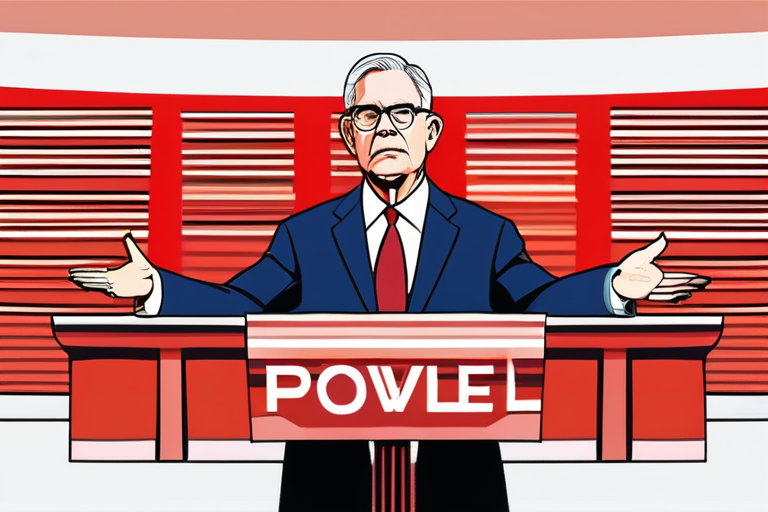
Federal Reserve Chair Jerome Powell's recent decision to cut interest rates by a quarter point has sparked a heated debate among economists, with KPMG chief economist Diane Swonk warning that the move may undermine the Fed's credibility on fighting inflation. According to Swonk, Powell's gamble on AI adoption and immigration may prove costly, as the underlying structural forces driving the slowdown in hiring may not be addressed by lower interest rates.
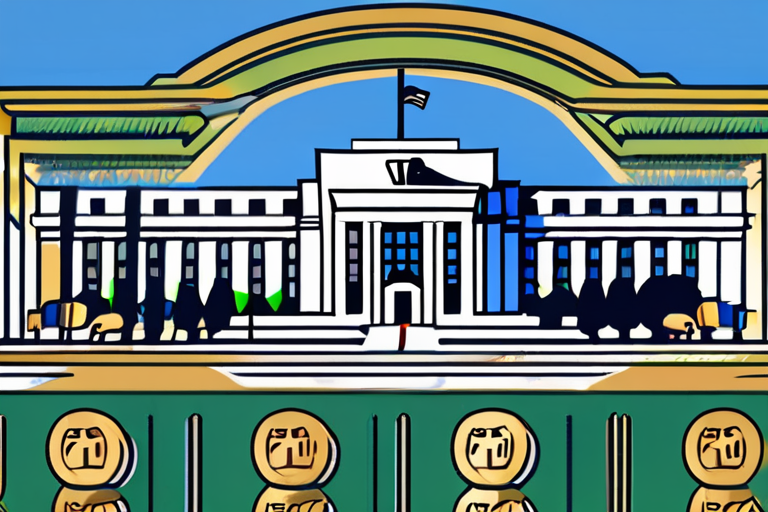
The Federal Open Market Committee (FOMC) voted to cut the federal funds rate to 3.53.75, marking the third consecutive rate cut. However, the vote was fractured, with three members dissenting from the decision. Swonk notes that this was the first time since 2019 that there were three dissents, indicating a growing divide within the committee.
The rate cut is a significant move, with the federal funds rate now at its lowest level since 2021. The decision is expected to have a ripple effect on the broader economy, with some analysts predicting a boost to consumer spending and business investment. However, Swonk's warning suggests that the move may not address the underlying structural issues driving the slowdown in hiring.
According to Swonk, the slowdown in hiring may be driven by the rapid adoption of artificial intelligence (AI) and sharp declines in immigration. AI adoption has been accelerating in recent years, with many companies investing heavily in automation and machine learning technologies. While AI has the potential to drive productivity gains and improve efficiency, it also has the potential to displace human workers, particularly in sectors with high levels of automation.
The decline in immigration is also a significant factor, with the number of foreign-born workers in the US labor market declining sharply in recent years. Immigration has long been a key driver of labor market growth, with foreign-born workers contributing to the US economy through their skills, entrepreneurship, and innovation.
The implications of Swonk's warning are significant, as the Fed's credibility on fighting inflation is at stake. If the weakness in employment is due more to AI and curbs in immigration than weak demand, cutting rates may not address the underlying problem and could worsen inflation. This could have far-reaching consequences for the US economy, including higher interest rates, reduced consumer spending, and lower business investment.
In recent years, the Fed has been grappling with the challenges of AI and automation, with some policymakers arguing that the benefits of AI adoption must be shared more equitably among workers. The decline in immigration has also been a growing concern, with some analysts warning that the US labor market may face significant shortages in key sectors such as healthcare and technology.
Looking ahead, the future outlook for the US economy remains uncertain. While the rate cut is expected to provide some short-term relief, the underlying structural issues driving the slowdown in hiring may prove more challenging to address. As Swonk notes, the Fed's credibility on fighting inflation is at stake, and policymakers must carefully consider the implications of their decisions.
In conclusion, the recent rate cut by the Federal Reserve has sparked a heated debate among economists, with KPMG chief economist Diane Swonk warning that the move may undermine the Fed's credibility on fighting inflation. The implications of Swonk's warning are significant, and policymakers must carefully consider the challenges of AI adoption and immigration in their decision-making.
Fed Chair Powell's AI and Immigration Gamble Risks Undermining the Fed's Credibility
1
0
Multi-Source Journalism
This article synthesizes reporting from multiple credible news sources to provide comprehensive, balanced coverage.













Share & Engage Share
Share this article