

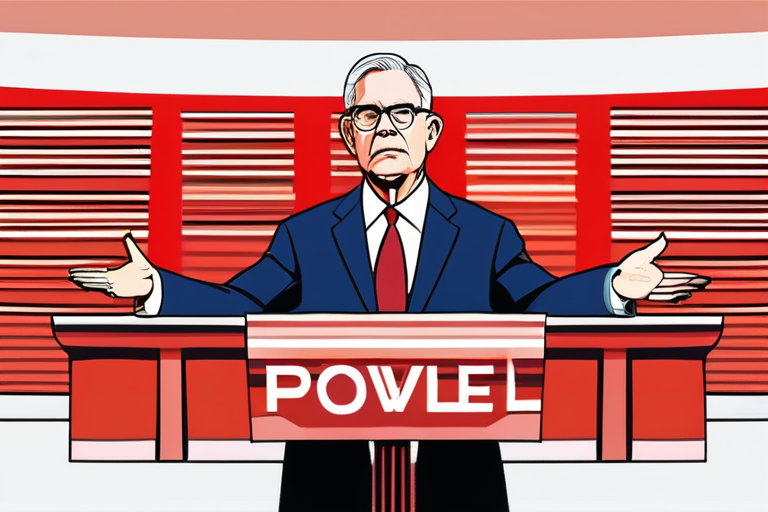
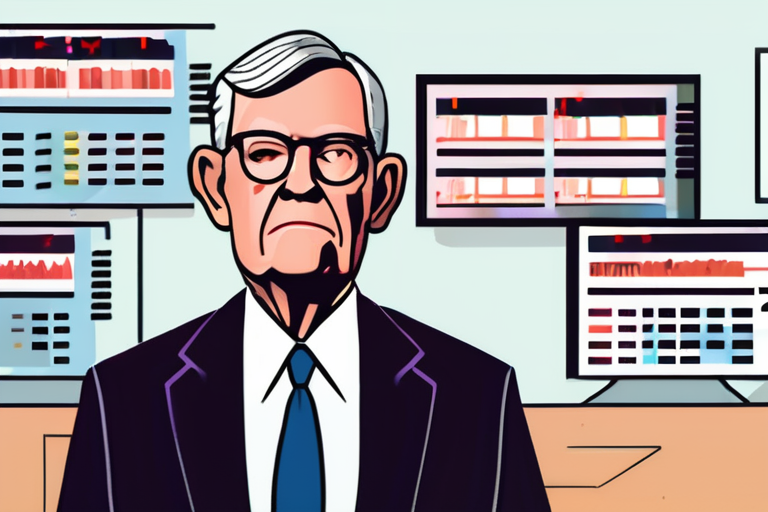
Federal Reserve Chair Jerome Powell described the U.S. economy as "very unusual" on Wednesday, citing a rare combination of tariff-driven goods inflation and a labor market that may be weaker than official data suggests. The Fed's decision to cut interest rates for the third consecutive meeting, a quarter-point reduction, was framed as a defensive move to keep the labor market from slipping further.
Powell emphasized the risks to employment have risen in recent months, and noted that behind the headline numbers, job creation may already be negative. The Fed believes the official payroll figures, which have slowed sharply since the summer, are overstating job growth by roughly 60,000 per month. This dynamic is not well understood by the public, as unemployment claims remain historically low, giving people a false sense of security about the job market.
The Fed's rate cut, which brings the target federal funds rate to 1.5-1.75%, is a significant move, considering the central bank had previously signaled a pause in rate hikes. The decision is expected to have a moderate impact on the economy, with the Fed projecting GDP growth of 2.2% in 2023, down from 2.3% in 2022. The unemployment rate is forecast to remain steady at 3.7%, while inflation is expected to ease to 2.1% by the end of 2023.
The labor market has been a key concern for policymakers, with Powell warning that the economy is facing a "perfect storm" of rising tariffs, slowing global growth, and a weakening labor market. The tariffs, imposed by the Trump administration, have led to a sharp increase in goods inflation, with the consumer price index (CPI) rising 2.3% in October, above the Fed's 2% target.
The impact of the rate cut is expected to be felt across various sectors, with some companies benefiting from lower borrowing costs and others facing increased competition. The S&P 500 index, which had been volatile in recent weeks, rose 0.5% on the news, while the Dow Jones Industrial Average gained 0.3%. The yield on the 10-year Treasury note fell to 1.83%, a 10-year low.
The Fed's decision to cut rates is a response to the growing uncertainty in the economy, with Powell acknowledging that the central bank is navigating uncharted territory. The labor market, which has been a key driver of the economy in recent years, is showing signs of weakness, with job creation slowing sharply since the summer. The Fed's admission that the official payroll figures are overstating job growth by 60,000 per month highlights the complexity of the labor market and the need for policymakers to be cautious.
As the economy navigates this "very unusual" period, companies will need to adapt to changing market conditions. With the Fed's rate cut and the uncertainty surrounding the labor market, businesses will need to be agile and responsive to shifting demand and supply chain disruptions. The impact of the rate cut will be felt across various sectors, with some companies benefiting from lower borrowing costs and others facing increased competition.
In the coming months, the Fed will continue to monitor the economy closely, with Powell warning that the central bank is prepared to take further action if necessary. The labor market will remain a key focus, with the Fed working to balance the need to support employment with the need to keep inflation in check. As the economy navigates this uncertain period, companies will need to be prepared to adapt and respond to changing market conditions.
Powell Warns of Unprecedented Economic Downturn Amid Tariff-Driven Inflation and Weakening Labor Market
1
0
Multi-Source Journalism
This article synthesizes reporting from multiple credible news sources to provide comprehensive, balanced coverage.
















Share & Engage Share
Share this article