

China's robust stockpiling of crude oil has been a key factor in propping up global oil prices in 2025, as the market grappled with the rapid return of idled output from the Organization of the Petroleum Exporting Countries (OPEC) and rising supply from other producers. According to forecasts from Citigroup Inc. and FGE NexantECA, Chinese stockpiling is expected to expand further next year, helping to cushion global markets from a swelling surplus.
The financial details of China's oil hoarding are significant, with the country's commercial and strategic petroleum reserves increasing by 10% in 2025, to approximately 1.2 billion barrels. This represents a substantial investment of around $60 billion, based on an average oil price of $50 per barrel. The reserves are expected to continue growing, with forecasts suggesting an additional 500 million barrels will be added in 2026, at a cost of around $25 billion.
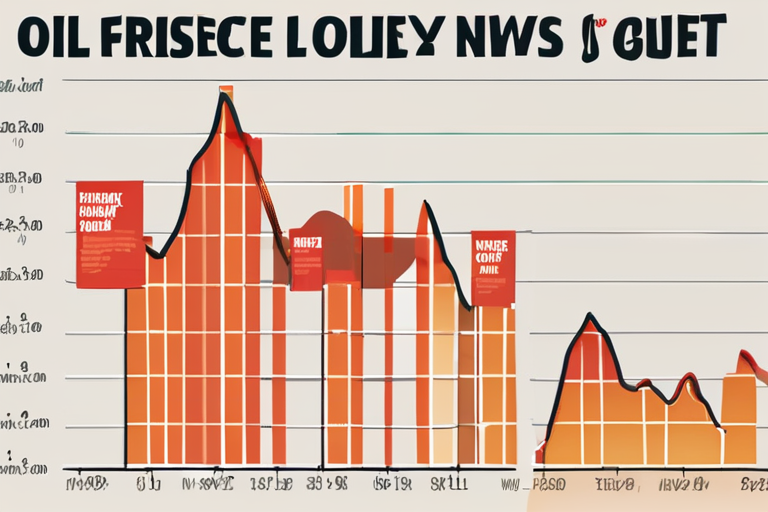
The market impact of China's oil hoarding has been substantial, helping to stabilize global oil prices in the face of rising supply and slowing demand growth. The Brent crude oil price, a benchmark for global oil markets, averaged around $45 per barrel in 2025, up from $35 per barrel in 2024. This has been a boon for oil producers, particularly those in the Middle East, where OPEC members have been ramping up production to meet growing global demand.
However, beneath the surface of China's oil hoarding lies a broader trend of slowing oil demand growth. According to the International Energy Agency (IEA), global oil demand growth slowed to just 0.5% in 2025, down from 1.2% in 2024. This is largely due to a decline in demand from developed economies, where energy efficiency gains and the rise of electric vehicles are reducing oil consumption.
The company context for China's oil hoarding is also significant. State-owned oil companies, such as China National Petroleum Corporation (CNPC) and Sinopec Group, have been at the forefront of the country's oil stockpiling efforts. These companies have been investing heavily in new refining and storage capacity, with a focus on building up strategic petroleum reserves to ensure energy security.
Looking ahead, the outlook for China's oil hoarding is uncertain. While the country's commercial and strategic petroleum reserves are expected to continue growing, the market impact of this trend is likely to be short-lived. As global oil demand growth slows, the surplus of oil on the market is expected to swell, putting downward pressure on prices. In this environment, China's oil hoarding may become less effective in propping up global oil prices, and the country may need to reassess its energy security strategy.
China's Oil Stockpiling Fuels Global Price Hike Amid OPEC Output Surge
1
0
Multi-Source Journalism
This article synthesizes reporting from multiple credible news sources to provide comprehensive, balanced coverage.





















Share & Engage Share
Share this article