

Shares of the Israeli-based geoengineering startup, Stardust Solutions, have not been publicly traded, but the company's proposal to launch specially equipped aircraft into the stratosphere to cool the planet has garnered significant attention in the scientific community. According to reports, Stardust Solutions expects nations to pay more than a billion dollars a year for the service, which would involve dispersing particles engineered to reflect away enough sunlight to cool down the planet.
Stardust Solutions' proposal has been met with skepticism by numerous solar geoengineering researchers, who question the feasibility of the company's plan to line up customers for a global deployment within the next decade. "The idea of a private company setting the global temperature for us is highly problematic," said Dr. Kate Ricke, a solar geoengineering researcher at the University of California, Berkeley. "We need to have a much more nuanced discussion about the risks and benefits of solar geoengineering, and we need to involve governments and international organizations in the decision-making process."
The concept of solar geoengineering involves injecting particles into the stratosphere to reflect sunlight back into space, thereby cooling the planet. While the idea has been proposed as a potential solution to mitigate the effects of climate change, it is still in its infancy and has not been widely tested. Stardust Solutions' proposal is one of the first to suggest a commercial-scale deployment of solar geoengineering technology.
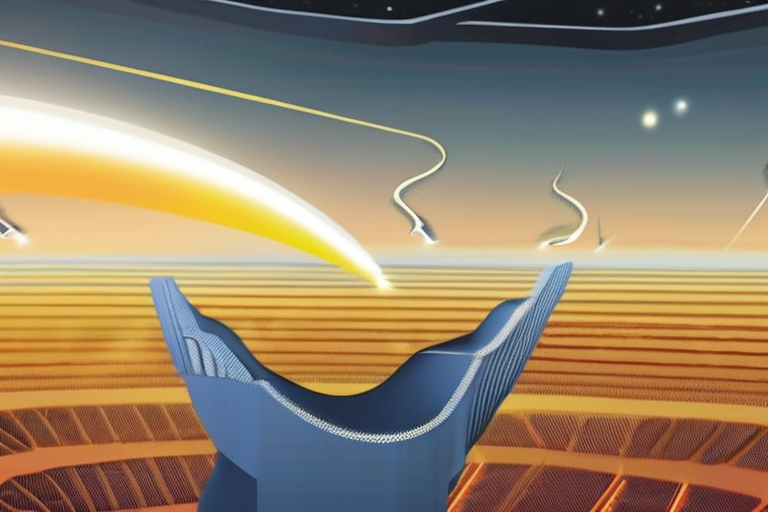
The company's plan involves launching specially equipped aircraft into the stratosphere, where they would disperse particles engineered to reflect sunlight. The particles would be designed to last for several years, allowing for a sustained cooling effect. However, the exact composition and properties of the particles have not been publicly disclosed.
Stardust Solutions' proposal has sparked a heated debate in the scientific community, with some researchers questioning the company's claims about the safety and efficacy of its technology. "We need to be careful not to oversell the benefits of solar geoengineering," said Dr. Alan Robock, a climate scientist at Rutgers University. "We need to have a much more realistic understanding of the risks and uncertainties involved."
Despite the controversy surrounding Stardust Solutions' proposal, the company remains optimistic about its chances of securing funding and launching a commercial-scale deployment of its technology. "We believe that our technology has the potential to make a significant impact in the fight against climate change," said a spokesperson for the company. "We are confident that we can work with governments and international organizations to deploy our technology on a global scale."
The proposal has also sparked interest in the renewable energy sector, with some companies and organizations expressing interest in exploring the potential of solar geoengineering technology. However, the development and deployment of such technology will require significant investment and regulatory support.
As the debate surrounding Stardust Solutions' proposal continues, the scientific community remains divided on the potential benefits and risks of solar geoengineering technology. While some researchers see it as a potential solution to mitigate the effects of climate change, others are more cautious, citing the need for further research and testing before any large-scale deployment.
Geoengineering Startup Takes Aim at Climate Change with Revolutionary Stratospheric Plan
1
0

Multi-Source Journalism
This article synthesizes reporting from multiple credible news sources to provide comprehensive, balanced coverage.
















Share & Engage Share
Share this article