

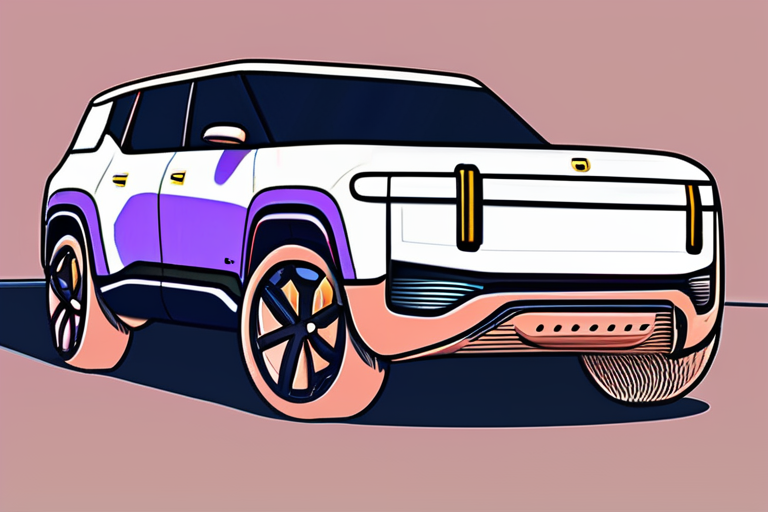
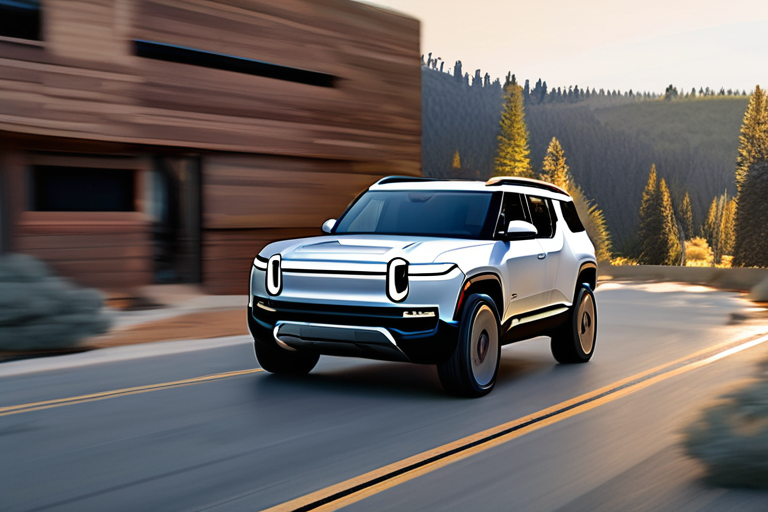
Rivian CEO RJ Scaringe recently made a compelling argument at the Fortune Brainstorm AI conference in San Francisco, stating that the notion that electric vehicles (EVs) are politicized is a misconception. According to Scaringe, the company's sales data reveals that buyers of its R1 electric SUV are split roughly 50-50 between Republicans and Democrats, contradicting the conventional wisdom that EVs are a left-leaning preference.
This statistic is significant, as it suggests that the decision to purchase an EV is driven more by individual needs and preferences rather than ideology. Scaringe emphasized that the questions car buyers ask when considering a purchase are the same regardless of the vehicle's powertrain: "Is it exciting? Are you attracted to the product? Does it draw you in? Does the brand positioning resonate with you? Do the features answer needs that you have?" This perspective highlights the importance of understanding consumer behavior and preferences in the EV market.
Rivian's sales data provides a fascinating insight into the EV market. The company has sold thousands of R1 electric SUVs, with the buyer demographics revealing a surprising lack of partisan bias. This is particularly noteworthy given the recent rollbacks of EV-related mandates, incentives, and targets by the previous administration. Despite these policy changes, Rivian's sales data suggests that the demand for EVs remains strong and is not driven by partisan politics.
The EV market has been growing rapidly in recent years, with many major automakers investing heavily in electric vehicle technology. According to a report by BloombergNEF, global EV sales are expected to reach 14.8 million units by 2025, up from 3.2 million units in 2020. The report also notes that EVs are becoming increasingly competitive with internal combustion engine vehicles in terms of price and performance.
Rivian is a relatively new player in the EV market, but the company has made a significant impact with its R1 electric SUV. The vehicle has received widespread critical acclaim for its performance, range, and design. Rivian's focus on sustainability and innovation has resonated with consumers, who are increasingly looking for eco-friendly and technologically advanced vehicles.
The implications of Rivian's sales data are significant for the EV market as a whole. If the demand for EVs is not driven by partisan politics, but rather by individual needs and preferences, it suggests that the market is more resilient and adaptable than previously thought. This could have important implications for policymakers and industry leaders, who may need to rethink their strategies for promoting EV adoption.
Looking ahead, the EV market is expected to continue growing rapidly in the coming years. As more automakers enter the market and technology improves, it is likely that EVs will become increasingly competitive with internal combustion engine vehicles. Rivian's sales data suggests that the company is well-positioned to take advantage of this trend, with its focus on sustainability and innovation resonating with consumers.
In conclusion, Rivian's sales data provides a fascinating insight into the EV market, highlighting the importance of understanding consumer behavior and preferences. The company's focus on sustainability and innovation has resonated with consumers, who are increasingly looking for eco-friendly and technologically advanced vehicles. As the EV market continues to grow and evolve, it will be interesting to see how Rivian and other players in the market adapt to changing consumer needs and preferences.
Rivian CEO Debunks EV Stereotype: R1 Buyers Split Evenly Across Party Lines
1
0
Multi-Source Journalism
This article synthesizes reporting from multiple credible news sources to provide comprehensive, balanced coverage.









Share & Engage Share
Share this article