
Scientists Unveil Groundbreaking Method to Unlock Aging Process
Multi-Source Journalism
This article synthesizes reporting from multiple credible news sources to provide comprehensive, balanced coverage.
Multi-Source Journalism
This article synthesizes reporting from multiple credible news sources to provide comprehensive, balanced coverage.
Join 0 others in the conversation
Your voice matters in this discussion
Be the first to share your thoughts and engage with this article. Your perspective matters!
Discover more articles
Researchers have discovered a potential new approach to protecting the brain from Alzheimer's damage by altering the body's natural rhythm. By disrupting the communication between the body's internal clock and the brain, they found that levels of bra
Here's a brief summary of the key newsworthy elements: Scientists are discovering that aging is not just about chronological age, but also about biological changes that can occur at different rates in individuals, leading to a reevaluation of how we
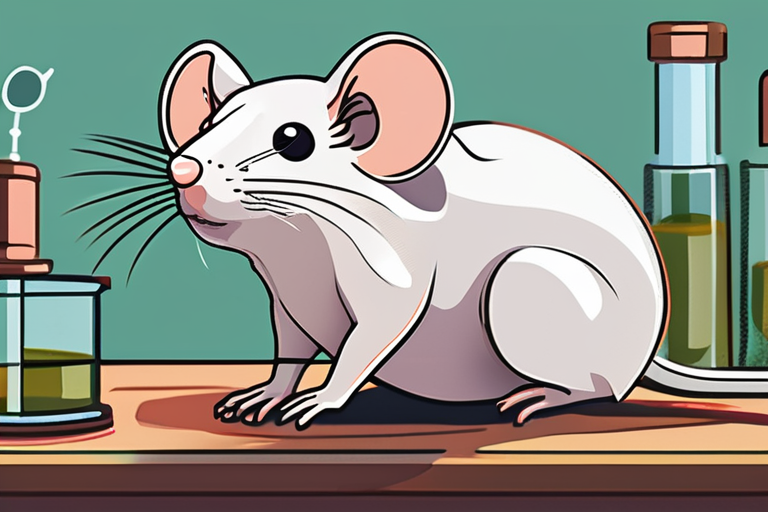
Researchers at the University of California, Berkeley have made a groundbreaking discovery in the field of aging biology, finding that a simple combination of two existing drugs - oxytocin and an Alk5 inhibitor - can significantly extend the lifespan
Researchers have made a groundbreaking discovery in the field of aging, revealing that a simple combination of two existing drugs, oxytocin and an Alk5 inhibitor, can significantly extend the lifespan of elderly male mice by 70% and restore their you
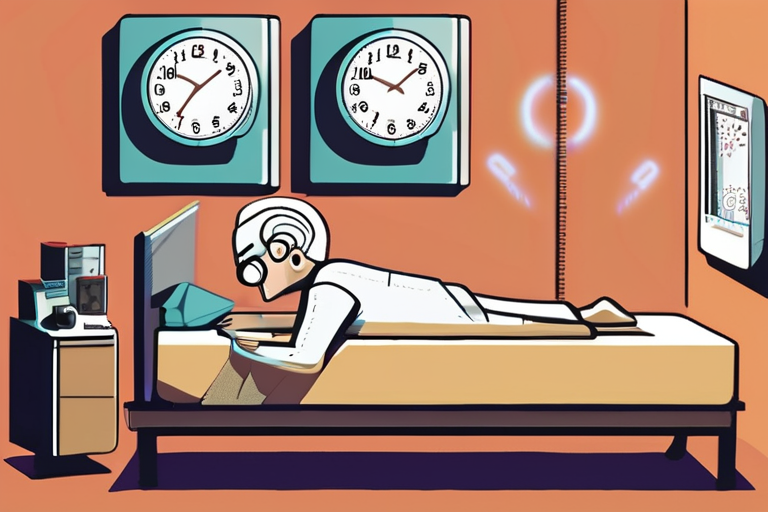
Researchers at Washington University have made a groundbreaking discovery linking Alzheimer's disease to a disrupted sleep-wake cycle, suggesting that the brain's internal clock may be hijacked by the disease. This disruption, triggered by amyloid bu
Scientists at the University of Cambridge have discovered five major stages of brain development, each marked by a significant shift in neural wiring, which occur from birth to late old age. These transitions reveal surprising periods of adolescent-s
Researchers at the University of Cambridge have identified five distinct stages of brain development, marked by sudden turning points, which significantly impact our cognitive abilities and risk profiles throughout life. These stages, spanning from b
Breaking science news has just dropped: a revolutionary next-gen cancer drug, rapalink-1, has stunned researchers by not only slowing cancer growth but also showing surprising anti-aging powers in yeast cells. This groundbreaking discovery has major
Scientists have identified a molecule called betaine, produced by the kidneys, that mimics the anti-aging effects of exercise, including improved immune function, metabolism, and reduced inflammation. Research suggests that taking betaine orally can
Scientists have made groundbreaking discoveries about aging by studying "biological age" - how well or poorly the body is aging internally - and are exploring ways to reverse it. Meanwhile, experts are proposing radical solutions to repair the intern
Here is a 2-3 sentence summary of the key newsworthy elements: Scientists are uncovering new methods to measure biological aging, revealing that some people's bodies can age at different rates despite their chronological age, and sparking hopes for
Scientists have developed a novel approach to studying the aging process, referred to as "aging clocks," which can help us better understand why our bodies age and potentially reverse it. This breakthrough method involves analyzing biological markers
Researchers at USC have developed a groundbreaking imaging technique that detects the brain's previously unknown microscopic blood vessel pulses, which may serve as an early indicator of Alzheimer's disease. This discovery could revolutionize our und
Researchers have made a groundbreaking discovery that intense mental exercise can reverse a brain change linked to aging, effectively turning back the clock by about 10 years. A 10-week study found that daily, 30-minute cognitive training sessions in
A groundbreaking blood test can now reveal the biological age of 11 key organs and systems in the body, providing a more accurate picture of an individual's overall health and disease risk. This innovative test uses epigenetic clocks to analyze DNA m
Scientists at the University of Bristol have made a groundbreaking discovery that could revolutionize the treatment of Progeria, a rare disease causing children to age rapidly. By identifying a longevity gene found in people who live beyond 100, rese
Scientists studying aging in a tiny worm have discovered that sensory inputs like touch and smell can override the benefits of dietary restriction on lifespan, revealing a complex interplay between the brain, metabolism, and environment. This breakth
Researchers have developed "aging clocks" that can measure a person's biological age by analyzing biomarkers such as cholesterol levels and inflammation markers, providing a more accurate picture of how well or poorly someone's body is aging. This ap
Scientists have developed a novel method to study human aging, known as "aging clocks," which can help understand why our bodies deteriorate over time. This breakthrough has significant implications for the field of longevity medicine, potentially pa
Scientists have made a groundbreaking discovery that could potentially reverse aging by reactivating the body's natural cellular cleanup system, known as the lysosome, which removes harmful proteins that drive premature aging. This breakthrough, made
Researchers at Karolinska Institutet have discovered a strong link between poor sleep quality and accelerated brain aging, with individuals who sleep poorly more likely to have brains that appear years older than their actual age. This association ma
Researchers at McMaster University have discovered that the pattern of blood vessels in the eyes can serve as a non-invasive indicator of cardiovascular health and biological aging, potentially allowing for early detection of vascular aging and disea
Researchers have found a significant link between strong, long-term social connections and slowed biological aging. Using DNA-based epigenetic clocks, studies from Cornell University and other research organizations discovered that individuals with c
Researchers have developed "aging clocks" to measure biological age, which can differ from chronological age. These tools assess factors like inflammation and cholesterol levels to determine a person's true age, revealing that some individuals may be
Share & Engage Share
Share this article