

The journal Nature has issued a correction to a recent article on the conservation and alteration of mammalian striatal interneurons. The correction, published on November 5, 2025, amends an error in the author's name, Mengyi Song, which was initially listed as "Menygi" in the article's HTML and PDF versions.
According to the correction, the mistake has been rectified in both the HTML and PDF versions of the article. The article, which was initially published on November 5, 2025, was a significant contribution to the field of evolutionary developmental biology and neuronal development. The research team, led by Michael DeBerardine, Aunoy Poddar, and Miguel Turrero García, conducted a comprehensive study on the conservation and alteration of mammalian striatal interneurons.
In an interview, Michael DeBerardine, a researcher at the Eli and Edythe Broad Center for Regeneration Medicine and Stem Cell Research at the University of California, San Francisco, expressed his appreciation for the correction. "We are grateful for the opportunity to correct this error and ensure the accuracy of our research," he said. "This correction is a testament to the importance of precision in scientific communication."
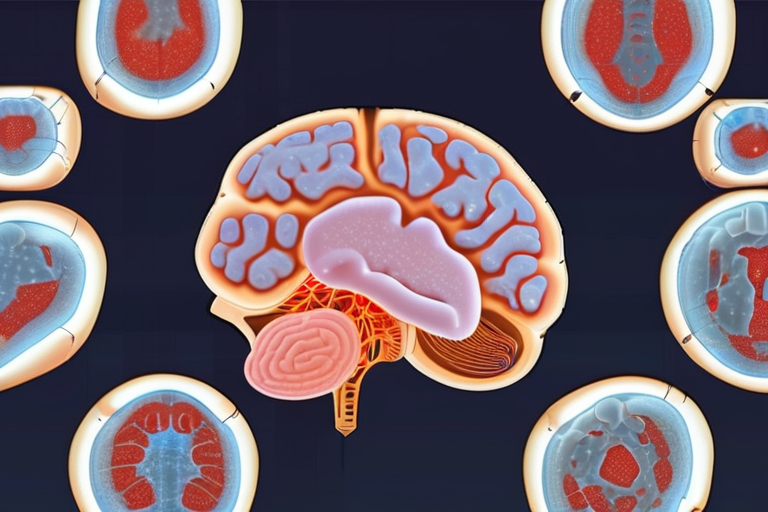
The research team's findings have significant implications for our understanding of mammalian striatal interneurons and their role in various neurological disorders. The study's results provide valuable insights into the evolutionary conservation and alteration of these cells, which could lead to the development of new therapeutic strategies for treating neurological conditions.
The correction is a minor one, but it highlights the importance of attention to detail in scientific research and publication. As the field of neuroscience continues to evolve, the need for accuracy and precision in research and communication will only continue to grow.
The article, "Conservation and alteration of mammalian striatal interneurons," remains a significant contribution to the field of evolutionary developmental biology and neuronal development. The research team's findings have the potential to impact our understanding of neurological disorders and inform the development of new treatments.
As for next steps, the research team is continuing to build on their findings and explore the implications of their research for the treatment of neurological disorders. With the correction now in place, the article remains a valuable resource for researchers and scientists working in the field of neuroscience.
Nature Corrects Mammalian Striatal Interneuron Study with Author Name Fix
1
0
Multi-Source Journalism
This article synthesizes reporting from multiple credible news sources to provide comprehensive, balanced coverage.















Share & Engage Share
Share this article