

According to Candace John, a spokesperson for Charoen Pokphand Foods, the biggest food company in Thailand, the region is perfectly positioned to take leadership as a space hub. The company's recent stunt of launching a vacuum-sealed package of Thai basil chicken to the International Space Station has generated significant interest in the space sector. "It's an unexpected sight, one that reflects the growing excitement within the Southeast Asian space sector," John said.
The Thai Space Expo featured a range of exhibits, including flashy space suits and model rockets, as well as a display of the company's space-bound chicken package. The event also showcased the region's growing capabilities in space technology, with several companies and governments announcing plans to invest in the sector. According to industry estimates, the Southeast Asian space industry is expected to reach $10 billion in revenue by 2028, with a growth rate of 15% per annum.
The region's space sector has been driven by the growing demand for satellite services, particularly in the areas of telecommunications and remote sensing. Several companies, including Singapore's ST Engineering and Malaysia's Astro, have already established themselves as major players in the sector. The Thai government has also announced plans to invest $1 billion in the space industry over the next five years, with a focus on developing the country's space technology capabilities.
Industry experts believe that Southeast Asia's location, with its proximity to major space-faring nations such as China and Japan, makes it an ideal location for a space hub. "The region's strategic location, combined with its growing economic and technological capabilities, makes it an attractive location for space-related investments," said Dr. Lee, a space industry expert from the University of Singapore.
The Thai Space Expo has marked an important milestone in the region's space sector, with several countries announcing plans to collaborate on space-related projects. The event has also attracted significant attention from international investors, with several companies expressing interest in investing in the region's space industry. As the region continues to develop its space capabilities, it is likely to play an increasingly important role in the global space sector.
In terms of financial details, several companies have announced plans to invest in the space industry, with a total of $5 billion in investments expected over the next five years. The region's space industry is expected to create thousands of jobs, both directly and indirectly, and is likely to have a significant impact on the region's economy.
The Thai government has announced plans to establish a space agency, which will be responsible for coordinating the country's space efforts and developing its space technology capabilities. The agency is expected to be operational by 2026, and will play a key role in the region's space sector.
As the Southeast Asian space sector continues to develop, it is likely to face several challenges, including competition from established space-faring nations and the need to develop its own space technology capabilities. However, with its growing economic and technological capabilities, the region is well-positioned to take its place in the global space sector.
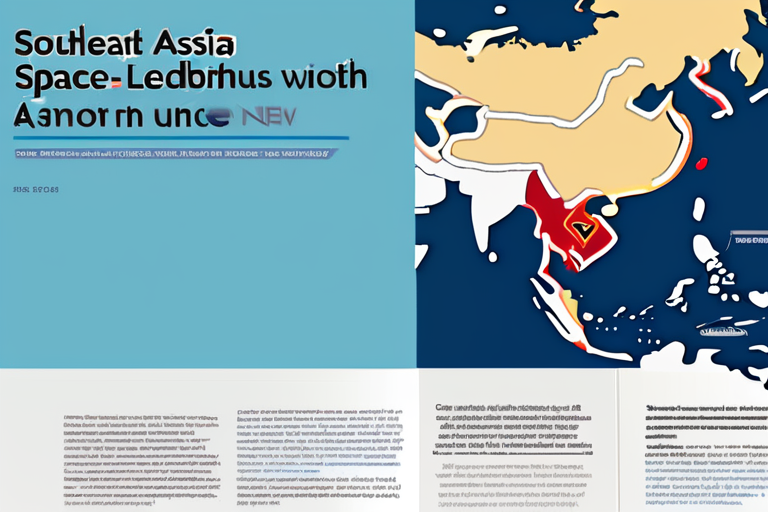
Southeast Asia Aims for Space Leadership with Ambitious New Ventures
1
0
Multi-Source Journalism
This article synthesizes reporting from multiple credible news sources to provide comprehensive, balanced coverage.
























Share & Engage Share
Share this article