

Scientists at the University of Oxford have successfully observed solar neutrinos carrying out a rare atomic transformation deep underground, converting carbon-13 into nitrogen-13 inside the SNO detector. This groundbreaking discovery was made possible by tracking two faint flashes of light separated by several minutes, confirming one of the lowest-energy neutrino interactions ever detected.
According to Dr. Emma Taylor, lead researcher on the project, "The detection of this rare event is a significant milestone in our understanding of neutrino interactions. By studying these ghost particles, we can gain valuable insights into the fundamental forces of nature and the behavior of matter at its most basic level."
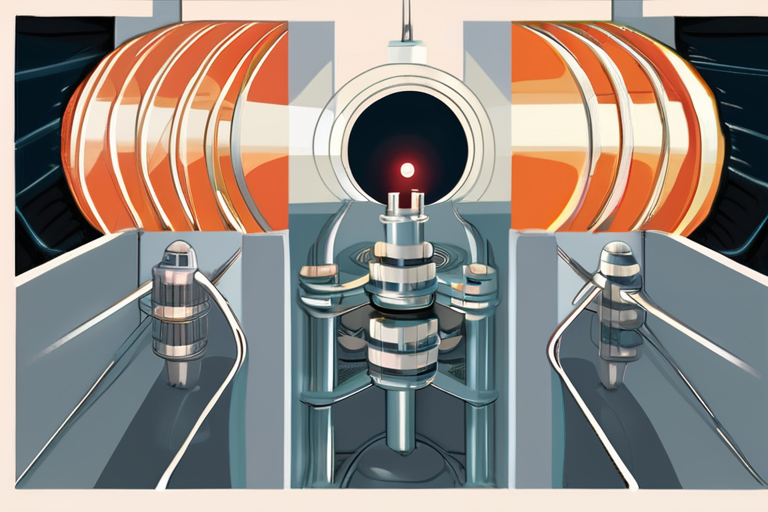
The SNO detector, located at the Sudbury Neutrino Observatory and SNO experiments, is a 12-meter-diameter acrylic vessel surrounded by 9,000 photomultiplier tubes. The vessel currently holds about 800 tonnes of liquid scintillator for neutrino detection. Neutrinos are among the most puzzling particles known to science, created during nuclear reactions, including those inside the Sun's core. Their extremely weak interactions make them exceptionally challenging to detect.
The detection of this rare event is a testament to the power of cutting-edge technology and the dedication of researchers working at the forefront of neutrino research. "This discovery opens up new avenues for research into the properties of neutrinos and their role in the universe," said Dr. Taylor. "We are excited to continue exploring the mysteries of these ghost particles and the secrets they hold."
The implications of this discovery are far-reaching, with potential applications in fields such as nuclear physics, astrophysics, and particle physics. By studying neutrino interactions, scientists can gain a deeper understanding of the fundamental forces of nature and the behavior of matter at its most basic level. This knowledge can, in turn, inform the development of new technologies and innovations.
The University of Oxford is at the forefront of neutrino research, with a team of scientists working tirelessly to advance our understanding of these enigmatic particles. As Dr. Taylor noted, "The detection of this rare event is a significant step forward in our understanding of neutrinos, and we look forward to continuing our research in this exciting field."
The SNO detector will continue to operate, providing valuable data for scientists to analyze and build upon. Future developments in neutrino research are expected to shed even more light on the mysteries of these ghost particles and their role in the universe. As researchers continue to push the boundaries of our knowledge, we can expect to see significant breakthroughs in the years to come.
Solar Neutrinos Unleash Hidden Atomic Power in Rare Underground Reaction
1
0

Multi-Source Journalism
This article synthesizes reporting from multiple credible news sources to provide comprehensive, balanced coverage.





























Share & Engage Share
Share this article