

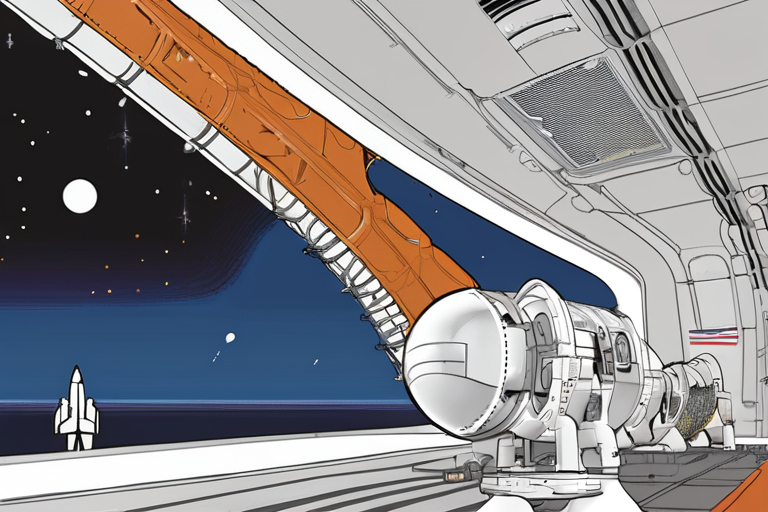
At the expo, Charoen Pokphand Foods, Thailand's largest food company, unveiled its latest achievement: a package of Thai basil chicken that was launched to the International Space Station. The company's spokesperson explained that the stunt was meant to showcase the capabilities of the region's space sector. "It's an unexpected sight, one that reflects the growing excitement within the Southeast Asian space sector," the spokesperson said.
The Thai Space Expo was attended by over 10,000 visitors, including entrepreneurs, scientists, and government officials. Candace John, a space industry expert, noted that Southeast Asia is "perfectly positioned to take leadership as a space hub." She attributed the region's potential to its strategic location, skilled workforce, and growing investment in space research and development.
Southeast Asia's space sector has been gaining momentum in recent years, with several countries investing heavily in space exploration and development. According to a report by the Asian Development Bank, the region's space industry is expected to grow to $10 billion by 2030, with a projected annual growth rate of 10%. The report also noted that the region's space sector is driven by a growing demand for satellite services, space-based telecommunications, and space tourism.
The Thai government has been actively promoting the country's space industry, with a budget allocation of $1.5 billion for space research and development in 2025. The country's space agency, GISTDA, has also partnered with several international companies to develop a satellite constellation for remote sensing and Earth observation.
While the region's space sector faces challenges such as limited funding and infrastructure, industry experts remain optimistic about its potential. "Southeast Asia has a unique opportunity to become a major player in the global space industry," said John. "With the right investment and support, we can achieve great things."
The Thai Space Expo was seen as a significant step towards realizing this potential, with several companies and governments announcing new partnerships and collaborations. The event also highlighted the region's growing interest in space tourism, with several companies showcasing their plans for space-based tourism services.
As the region continues to develop its space sector, industry experts will be watching closely to see how it evolves. With its growing investment, skilled workforce, and strategic location, Southeast Asia is well-positioned to become a major player in the global space industry.
Southeast Asia Takes Flight: Region's Companies Showcase Space Capabilities
1
0
Multi-Source Journalism
This article synthesizes reporting from multiple credible news sources to provide comprehensive, balanced coverage.





















Share & Engage Share
Share this article