

Researchers at the University of Birmingham have made a correction to a 2019 study published in the journal Nature, which shed light on the role of distinct fibroblast subsets in driving inflammation and damage in arthritis. The correction, which was published on May 29, 2019, clarifies the relationship between specific types of fibroblasts and their involvement in the development of arthritis.
According to the correction, in the original article, the legend of Extended Data Fig. 6 incorrectly stated that SL fibroblasts correspond to F1F4 fibroblast subsets and are PDPN-THY1. The corrected version states that SL fibroblasts correspond to F1F4 fibroblast subsets and are PDPN-THY1. This correction aims to provide a more accurate representation of the findings, which could have implications for the understanding and treatment of arthritis.
Dr. Stephen N. Sansom, one of the authors of the original study, acknowledged the importance of correcting the mistake. "We appreciate the opportunity to clarify this point and ensure that our findings are accurately represented," he said. "This correction is a testament to our commitment to scientific integrity and transparency."
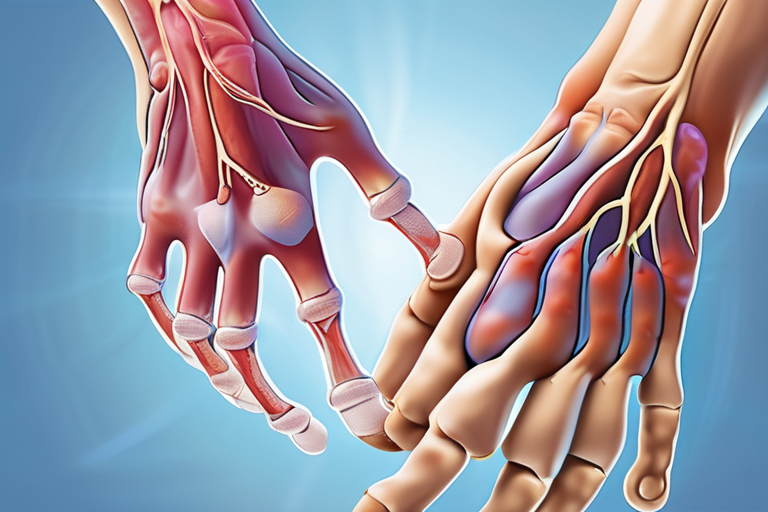
The original study, which was published in May 2019, explored the role of fibroblasts in the development of arthritis. Fibroblasts are a type of cell that plays a crucial role in the production of collagen and other proteins that contribute to the formation of scar tissue. In the context of arthritis, fibroblasts can contribute to the inflammation and damage that characterize the disease.
According to Dr. Andrew Filer, another author of the original study, the correction is an important step in advancing our understanding of the disease. "This correction highlights the complexity of the fibroblast subsets and their role in arthritis," he said. "It's a reminder that our understanding of the disease is constantly evolving, and we must be willing to revise and refine our knowledge as new evidence emerges."
The correction has no impact on the overall findings of the study, which suggested that distinct fibroblast subsets play a key role in driving inflammation and damage in arthritis. However, it does provide a more accurate representation of the data, which could have implications for the development of new treatments for the disease.
The University of Birmingham's Rheumatology Research Group continues to study the role of fibroblasts in arthritis, with a focus on developing new treatments that target these cells. As research in this area continues to evolve, it is likely that our understanding of the disease will become even more nuanced, and new treatments will be developed to address the complex needs of patients with arthritis.
Researchers Correct 2019 Study on Arthritis-Causing Fibroblast Subsets
1
0
Multi-Source Journalism
This article synthesizes reporting from multiple credible news sources to provide comprehensive, balanced coverage.






















Share & Engage Share
Share this article