

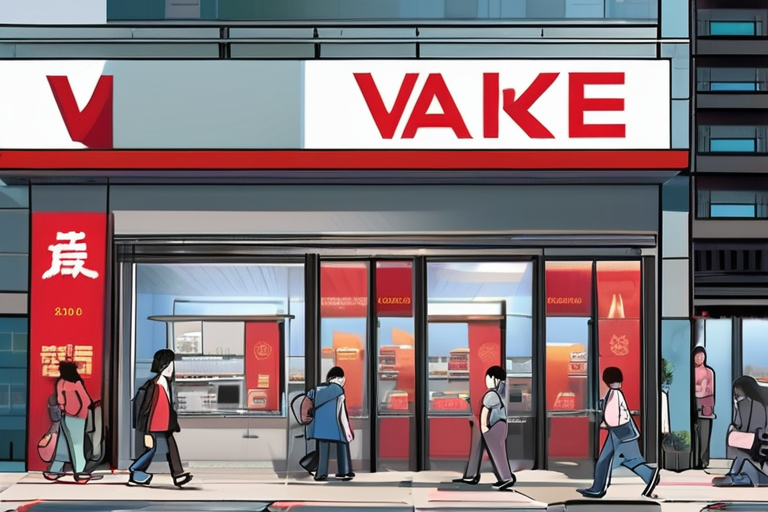
China's largest homebuilder by sales, Vanke, has been dealt a significant blow after failing to secure sufficient support from bondholders for its proposal to delay a looming bond payment. The company, which has thus far managed to avoid default amidst an unprecedented property crisis, was left with little time to keep debt failure at bay after creditors rejected its plan to push back a 2 billion yuan (283 million) note due on December 15.
According to a filing to the National Association of Financial Market Institutional Investors, the proposal, along with two others on the ballot, would have allowed a one-year extension. However, all three fell short of the more than 90% support required for passage. The rejection of Vanke's proposal has significant implications for the company's financial health, as it now faces a critical deadline to meet its debt obligations.
The bond in question is a 2 billion yuan note, which is a substantial amount for a single bond payment. To put this into perspective, 2 billion yuan is equivalent to approximately 283 million US dollars. The failure to secure sufficient support for the proposal has left Vanke with limited options to avoid default, which could have far-reaching consequences for the company's reputation and financial stability.
The property crisis in China has been a major concern for the country's economy, with many developers struggling to meet their debt obligations. Vanke, which was once China's largest homebuilder by sales, has managed to avoid default thus far, but the rejection of its proposal has raised concerns about its ability to meet its financial commitments.
The rejection of Vanke's proposal also has implications for the broader market. The property sector in China has been under significant pressure, with many developers facing financial difficulties. The rejection of Vanke's proposal could lead to a further decline in investor confidence in the sector, which could have broader implications for the Chinese economy.
Vanke is one of the largest property developers in China, with a significant presence in the country's major cities. The company has a long history of success, but has faced significant challenges in recent years due to the property crisis. The rejection of its proposal has raised concerns about its ability to meet its financial commitments and has significant implications for the company's future outlook.
In light of the rejection of Vanke's proposal, the company's future outlook is uncertain. The company will need to explore alternative options to meet its debt obligations, which could include seeking additional funding or restructuring its debt. However, these options may not be available to the company, which could lead to a further decline in its financial health.
The rejection of Vanke's proposal also has implications for the broader property sector in China. The sector has been under significant pressure in recent years, with many developers facing financial difficulties. The rejection of Vanke's proposal could lead to a further decline in investor confidence in the sector, which could have broader implications for the Chinese economy.
In conclusion, the rejection of Vanke's proposal to delay a looming bond payment has significant implications for the company's financial health and the broader property sector in China. The company will need to explore alternative options to meet its debt obligations, which could include seeking additional funding or restructuring its debt. However, these options may not be available to the company, which could lead to a further decline in its financial health.
Vanke's Bond Payment Delay Plan Hits Roadblock Amid Property Crisis
1
0
Multi-Source Journalism
This article synthesizes reporting from multiple credible news sources to provide comprehensive, balanced coverage.





















Share & Engage Share
Share this article