

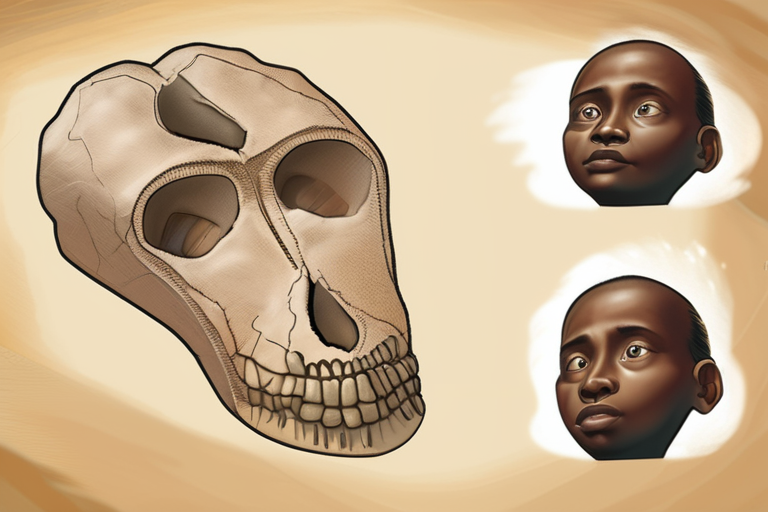
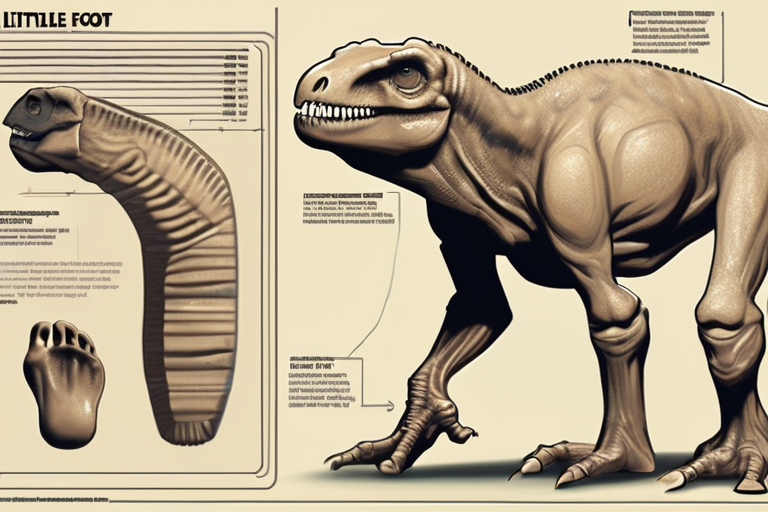
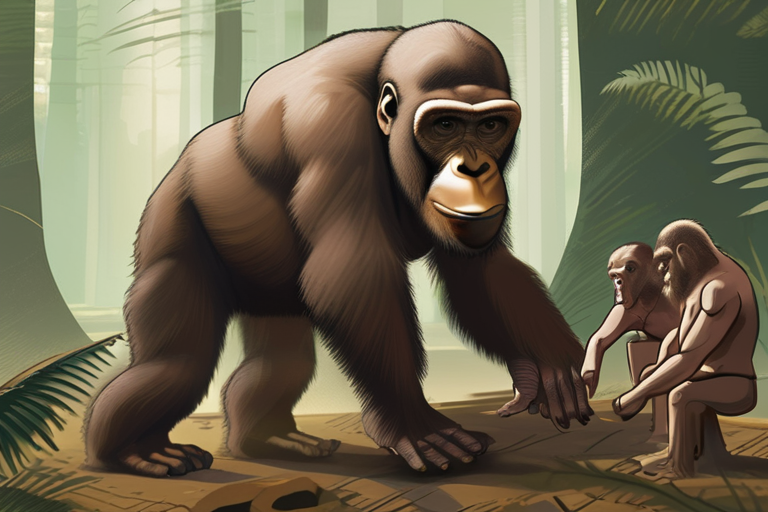
Dr. Martin and his team conducted a thorough analysis of the fossil's morphology and compared it to other known hominin species. Their research revealed significant differences in the fossil's foot bones, which led them to question the initial classification of Little Foot as Australopithecus prometheus or Australopithecus africanus. "Our study shows that Little Foot has a unique combination of characteristics that set it apart from other known hominin species," Dr. Martin explained. "This has significant implications for our understanding of human evolution and the diversity of early human ancestors."
The Little Foot fossil was discovered in 1994 in the Sterkfontein cave system in South Africa, where it was excavated over a period of 20 years. The fossil was publicly unveiled in 2017, and its significance was initially attributed to its completeness and the insights it provided into the evolution of the human foot. However, the new study suggests that Little Foot's significance may be even greater, as it could represent a previously unknown branch of the human family tree.
The discovery of a new human ancestor has significant implications for our understanding of human evolution and the diversity of early human species. It also raises questions about the origins of modern humans and the migration patterns of early human populations. "This finding highlights the complexity and richness of human evolution, and it challenges our current understanding of the human family tree," said Dr. Ronald Clarke, a paleoanthropologist at the University of the Witwatersrand, who led the team that excavated the Little Foot fossil.
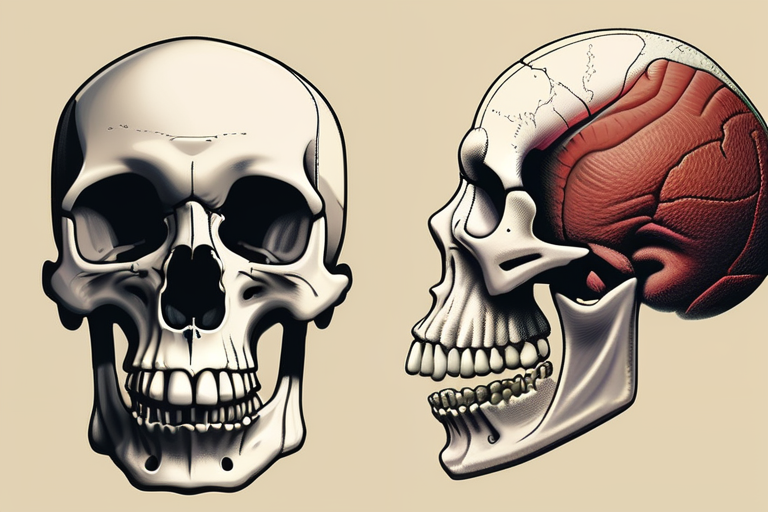
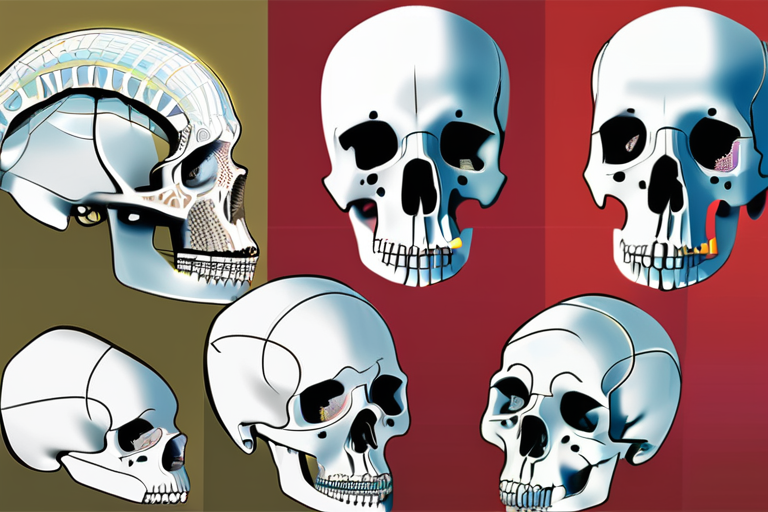
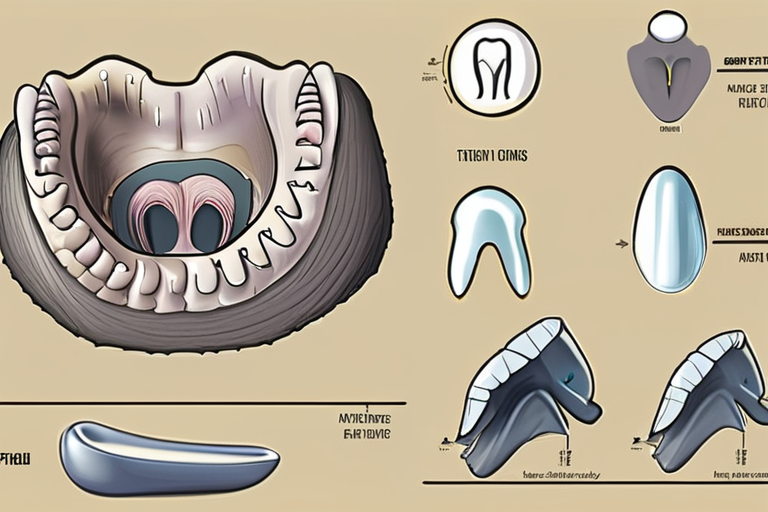
The study's findings are based on a comprehensive analysis of the fossil's morphology, including its foot bones, pelvis, and skull. The researchers used advanced imaging techniques, such as CT scans and 3D modeling, to examine the fossil's structure in detail. Their results suggest that Little Foot has a unique combination of characteristics that set it apart from other known hominin species.
The discovery of a new human ancestor also raises questions about the classification and naming of human species. "The naming of new human species is a complex process that requires careful consideration of the fossil's morphology, behavior, and evolutionary relationships," said Dr. Martin. "We need to be cautious in our classification and naming of new human species to ensure that we accurately reflect the diversity of human evolution."
The study's findings have significant implications for the field of paleoanthropology and our understanding of human evolution. Further research is needed to confirm the results and to better understand the significance of Little Foot in the human family tree. The researchers plan to continue their analysis of the fossil and to explore its evolutionary relationships with other known human species.
Little Foot Fossil's Hidden Secrets: A New Human Ancestor in the Making
1
0
Multi-Source Journalism
This article synthesizes reporting from multiple credible news sources to provide comprehensive, balanced coverage.
















Share & Engage Share
Share this article