

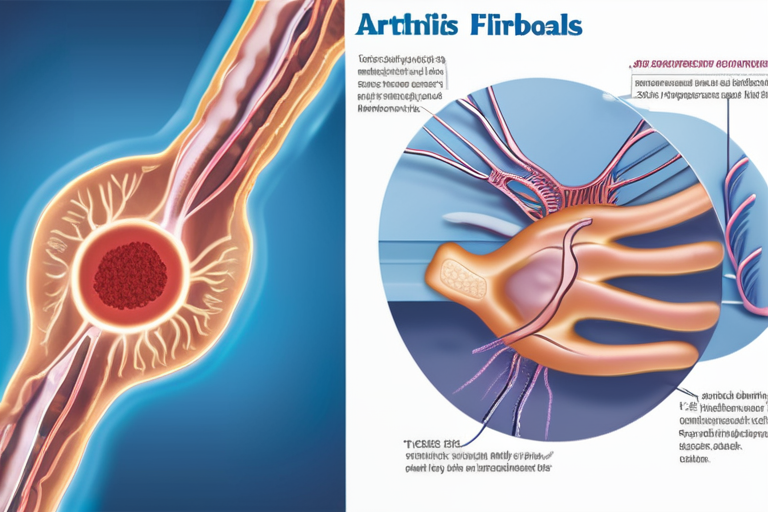
A correction has been made to a 2019 article published in the scientific journal Nature, which investigated the role of distinct fibroblast subsets in driving inflammation and damage in arthritis. The correction, published on May 29, 2019, clarifies the relationship between specific fibroblast subsets and their expression of certain markers.
According to the correction, in the original article, the legend of Extended Data Fig. 6 incorrectly stated that SL fibroblasts correspond to F1F4 fibroblast subsets and are PDPN-THY1. The corrected statement should read that SL fibroblasts correspond to F1F4 fibroblast subsets and are PDPN-THY1. This correction serves to clarify the original findings and ensure the accuracy of the research.
The original article, published on May 29, 2019, was a collaborative effort between researchers from the University of Birmingham's Rheumatology Research Group and the Versus Arthritis Centre of Excellence in the Pathogenesis of Rheumatoid Arthritis. The study aimed to understand the role of fibroblast subsets in driving inflammation and damage in arthritis, with a focus on the F1F4 fibroblast subsets.
Dr. Andrew Filer, a co-author of the original article, acknowledged the importance of correcting the mistake. "We strive for the highest level of accuracy in our research, and this correction is a testament to our commitment to scientific integrity," he said.
The correction has no significant impact on the overall findings of the study, which highlighted the distinct roles of different fibroblast subsets in driving inflammation and damage in arthritis. The research has important implications for the development of new treatments for arthritis, a chronic and debilitating condition that affects millions of people worldwide.
The study's findings have been widely cited in the scientific community, and the correction serves to reinforce the accuracy of the research. As researchers continue to explore the complex mechanisms underlying arthritis, this correction serves as a reminder of the importance of attention to detail and the pursuit of scientific accuracy.
The correction has been made available online, and the original article remains accessible through the Nature website.
Correcting the Record: Fibroblast Subsets' Role in Arthritis Revealed
1
0
Multi-Source Journalism
This article synthesizes reporting from multiple credible news sources to provide comprehensive, balanced coverage.



























Share & Engage Share
Share this article