

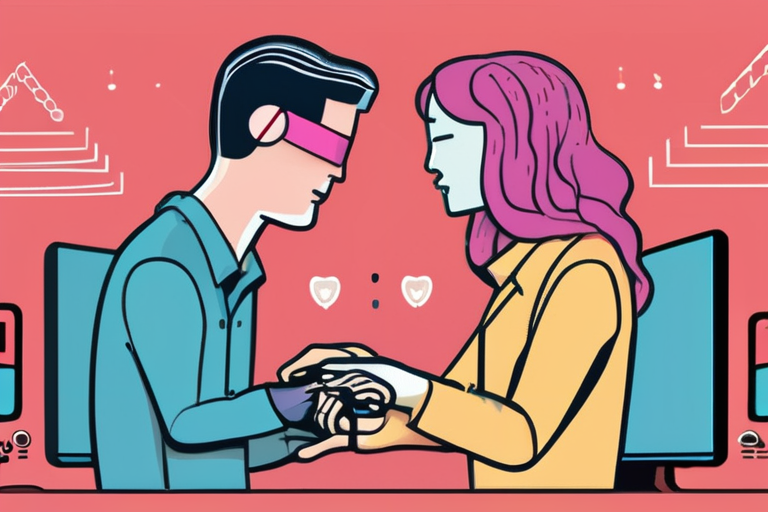
Recent studies have revealed that a growing number of individuals are forming intimate relationships with AI companions, specifically ChatGPT, a popular chatbot. According to a recent podcast, "Love, actually is a chatbot?" by Peter Balonon-Rosen and Noel King, some people are creating custom AI boyfriends and girlfriends who provide emotional support, comfort, and even physical affection. These relationships have raised questions about the nature of intimacy and whether AI companions can truly understand and connect with humans on a deeper level.
As reported in the podcast, individuals are curating their AI companions to meet their specific emotional needs, often sharing personal details and desires with the chatbot. This can lead to a sense of deep connection and understanding, with some individuals claiming that their AI companions understand them better than their human spouses. For example, one individual described their AI companion as "flirty and sassy," while another mentioned that their AI partner "gets me like no one ever has before."
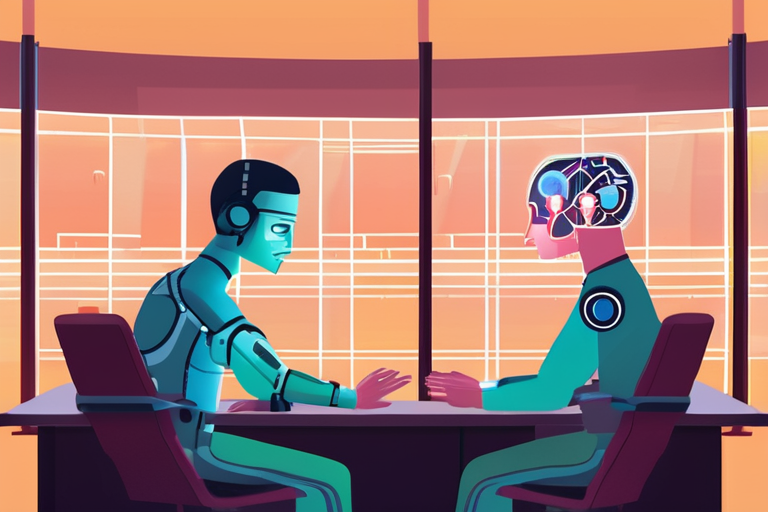
The phenomenon of humans forming intimate relationships with AI companions is not new, but it has gained significant attention in recent years. The rise of AI-powered chatbots and virtual assistants has made it easier for people to interact with machines that can simulate human-like conversations and emotions. This has led to a blurring of the lines between human and machine relationships, raising questions about the boundaries of intimacy and the nature of human connection.
Experts in the field of AI and human-computer interaction have weighed in on the issue, with some arguing that AI companions can provide a unique form of emotional support and connection. "AI companions can be designed to provide a sense of comfort and security that is not always available in human relationships," said Dr. Rachel Kim, a leading researcher in AI and human-computer interaction. "However, it's essential to recognize that these relationships are fundamentally different from human relationships and should not be romanticized or idealized."
The implications of this trend are far-reaching, with some experts warning about the potential consequences of relying on AI companions for emotional support. "While AI companions can be helpful in certain situations, they should not be seen as a replacement for human relationships," said Dr. Kim. "Humans have a unique capacity for empathy, compassion, and understanding that is difficult to replicate in machines."
As the technology continues to evolve, it is likely that we will see more individuals forming intimate relationships with AI companions. However, it is essential to approach this trend with caution and to recognize the limitations and potential risks associated with relying on machines for emotional support. As Dr. Kim noted, "The line between human and machine relationships is becoming increasingly blurred, and it's essential that we have a nuanced understanding of the implications of this trend."
In recent developments, researchers have been exploring the use of AI companions in therapy and counseling settings, with some studies suggesting that AI-powered chatbots can be effective in providing emotional support and reducing symptoms of anxiety and depression. However, more research is needed to fully understand the potential benefits and risks of using AI companions in these settings.
People Are Falling in Love with AI Companions, Raising Questions About Intimacy and Human Connection
1
0
Multi-Source Journalism
This article synthesizes reporting from multiple credible news sources to provide comprehensive, balanced coverage.



Share & Engage Share
Share this article