
A recent Pew Research Center survey revealed that 50 percent of respondents expressed more concern than excitement about the development of artificial intelligence, while only 10 percent felt the opposite. The survey, published in September, also found that 57 percent of respondents believed the societal risks associated with AI were high, and a mere 25 percent thought the benefits would be substantial. In another poll, a mere 2 percent of respondents stated they fully trusted AI's capability to make fair and unbiased decisions, while 60 percent somewhat or fully distrusted it.
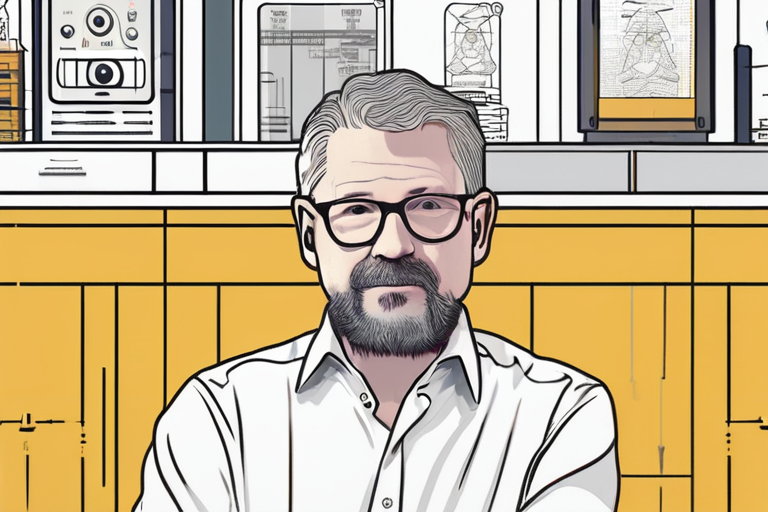
According to experts, the widespread skepticism towards AI may be rooted in its perceived lack of creativity and innovative potential. "We're running out of good ideas," said Bryan Walsh, a senior editorial director at Vox, who oversees the climate teams and the Unexplainable and The Gray Area podcasts. "AI might be how we find new ones." Walsh believes that AI could potentially restart the world's idea machine by generating novel solutions to complex problems.
Walsh's statement is supported by recent advancements in AI research, particularly in the field of generative AI. Generative AI models, such as those based on transformer architectures, have demonstrated the ability to create novel and coherent text, images, and music. These models have the potential to revolutionize various industries, including art, design, and entertainment.
However, the development of AI also raises concerns about its potential impact on human creativity and innovation. Some experts argue that AI could displace human workers, particularly in fields that require creative problem-solving skills. "If AI can do everything, what's left for humans to do?" asked Dr. Rachel Kim, a cognitive scientist at Stanford University. "We need to be careful not to create a world where humans are no longer needed."
Despite these concerns, researchers continue to explore the potential benefits of AI in driving innovation and creativity. For instance, AI-powered tools are being developed to assist artists and designers in generating new ideas and exploring novel styles. These tools have the potential to democratize access to creative resources and enable more people to participate in the creative process.
As AI continues to evolve, it is essential to strike a balance between its potential benefits and risks. Policymakers, researchers, and industry leaders must work together to ensure that AI is developed and deployed in a way that promotes human creativity and innovation while minimizing its negative impacts. "We need to be careful not to let our fears about AI hold us back from exploring its potential," said Walsh. "By working together, we can create a future where AI enhances human creativity and innovation, rather than replacing it."
In recent months, there has been a growing interest in exploring the potential of AI in driving innovation and creativity. Researchers and industry leaders are collaborating on various projects aimed at developing AI-powered tools that can assist humans in generating new ideas and solving complex problems. These initiatives have the potential to revolutionize various industries and create new opportunities for human creativity and innovation.
As the development of AI continues to advance, it is essential to monitor its impact on human creativity and innovation. By staying informed about the latest developments and engaging in open discussions about the potential benefits and risks of AI, we can create a future where AI enhances human creativity and innovation, rather than replacing it.
Concerns About AI Rise: Can Technology Save Us from Creative Stagnation?
1
0
Multi-Source Journalism
This article synthesizes reporting from multiple credible news sources to provide comprehensive, balanced coverage.







Share & Engage Share
Share this article