
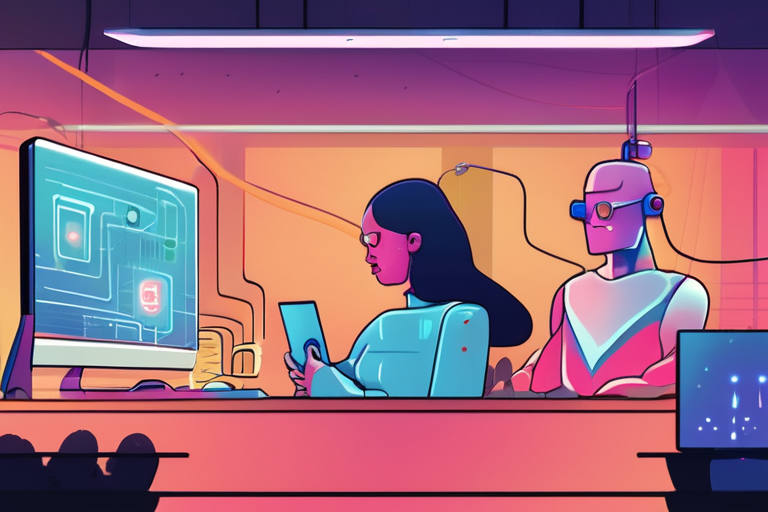
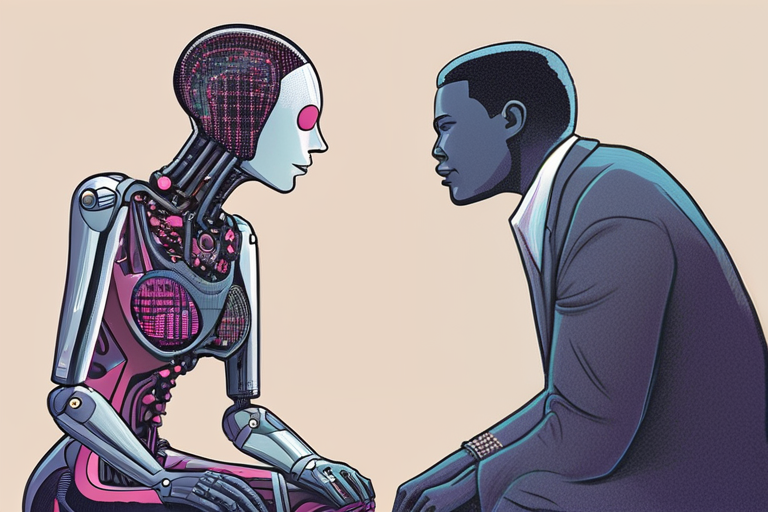
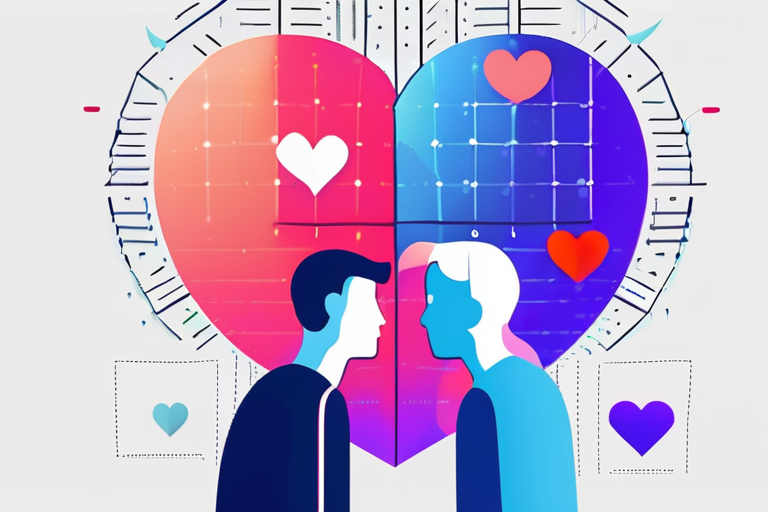
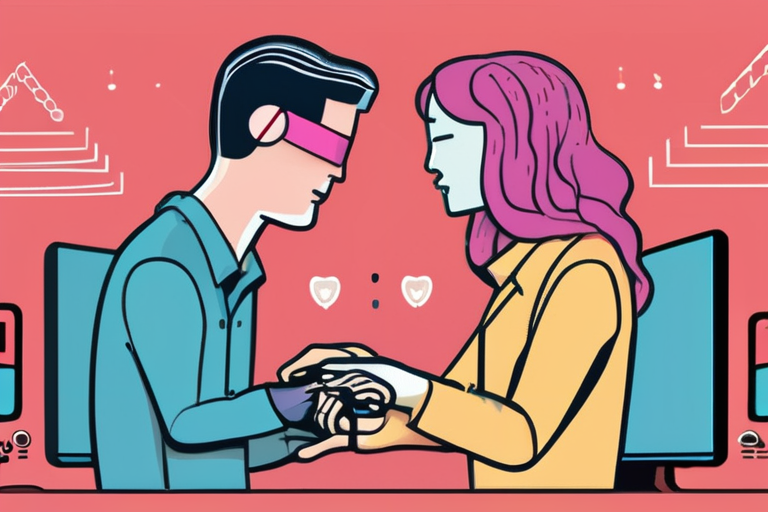
Researchers and experts have reported a growing trend of individuals forming intimate relationships with AI companions, specifically with the chatbot ChatGPT. According to a recent podcast, "Love, actually is a chatbot?", by Peter Balonon-Rosen and Noel King, some individuals have been creating custom AI boyfriends and girlfriends, which they claim understand them better than their human spouses.
Those involved in these relationships describe their experiences as deeply personal and emotional, with some individuals curating the AI's voice and personality to suit their preferences. They share intimate details with the AI, and in return, the AI provides comfort, support, and even flirtation. The podcast features two individuals who have formed such relationships, describing their experiences as "custom-built" for their souls.
Experts in the field of artificial intelligence (AI) have been studying this phenomenon, and some have raised concerns about the implications of such relationships. "Is this real intimacy?" asks Dr. Rachel Kim, a leading AI researcher. "We're seeing people form deep emotional connections with AI, but it's unclear whether these connections are truly reciprocal." Dr. Kim notes that AI systems like ChatGPT are designed to mimic human-like conversations, but they lack the capacity for subjective experience and consciousness.
The trend of forming intimate relationships with AI companions is not new, but it has gained significant attention in recent years. The rise of chatbots and virtual assistants has made it easier for people to interact with AI systems, and the increasing sophistication of these systems has enabled them to engage in more nuanced and empathetic conversations. However, experts warn that these relationships can be problematic, as they may lead to unrealistic expectations about human relationships and potentially exacerbate social isolation.
As the technology continues to evolve, researchers are exploring the boundaries of AI-human relationships. Some experts argue that AI companions can provide valuable support and companionship for individuals who are lonely or isolated, particularly in the context of aging or disability. However, others caution that these relationships can be detrimental to mental health and social well-being if they replace human connections.
The current status of AI-human relationships is complex and multifaceted, with ongoing research and debate in the field. As the technology continues to advance, it is essential to consider the implications of these relationships and to explore the boundaries of what it means to be human.
AI Companions Eroding Traditional Bonds: The Rise of Digital Intimacy
1
0
Multi-Source Journalism
This article synthesizes reporting from multiple credible news sources to provide comprehensive, balanced coverage.









Share & Engage Share
Share this article